


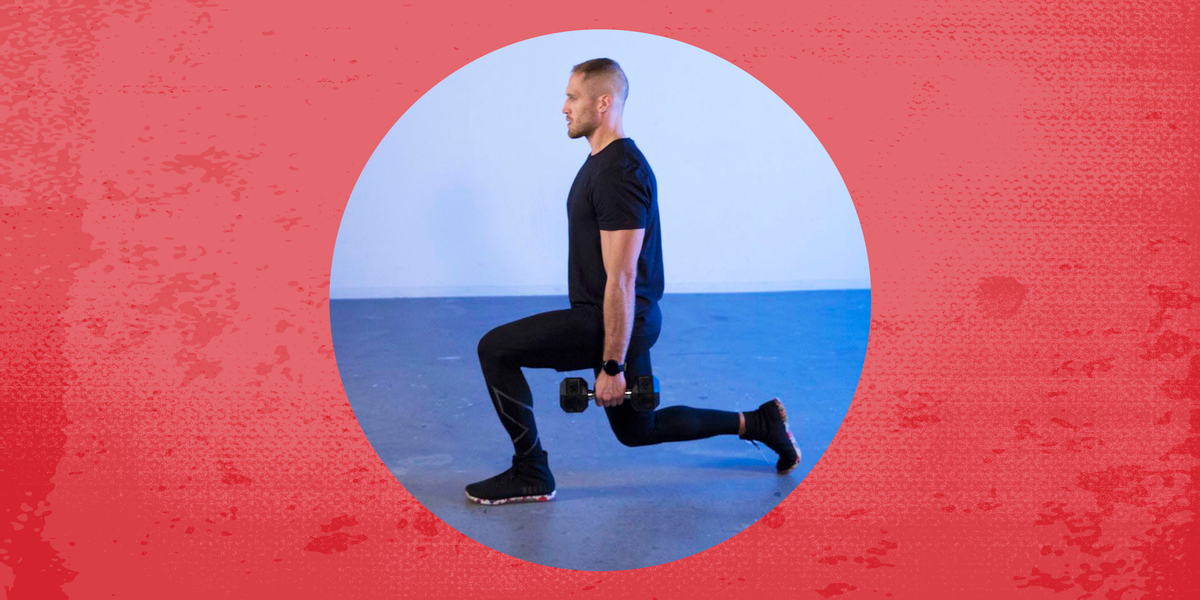
SINGLE-LEG EXERCISES can be tough to master. Whether you’re lunging or doing the dreaded Bulgarian split squat to build up your lower body, you’ve got to factor in balance, strength, and focus to ensure that you’ll work through the reps without falling down. If you’re struggling, you’ll be better served by starting with the simplest unilateral leg movement: the split squat.
When you take on the split squat, you’re laying the foundations for the more involved exercises you’ll take on down the line. But it’s good for more than just beginners, too—given the split squat’s simple setup, you’ll be able to load up a ton of weight to build unilateral muscle and strength.
But simple doesn’t mean easy, and you’ll have to understand the form before you start progressing to heavier loads. Before you grab some dumbbells step forward, and start jamming your knee into the floor, take note that it’s extremely important to pay attention the movement here. Let Men’s Health fitness director Ebenezer Samuel, C.S.C.S. and senior editor Brett William, NASM guide you through the split squat’s proper form.
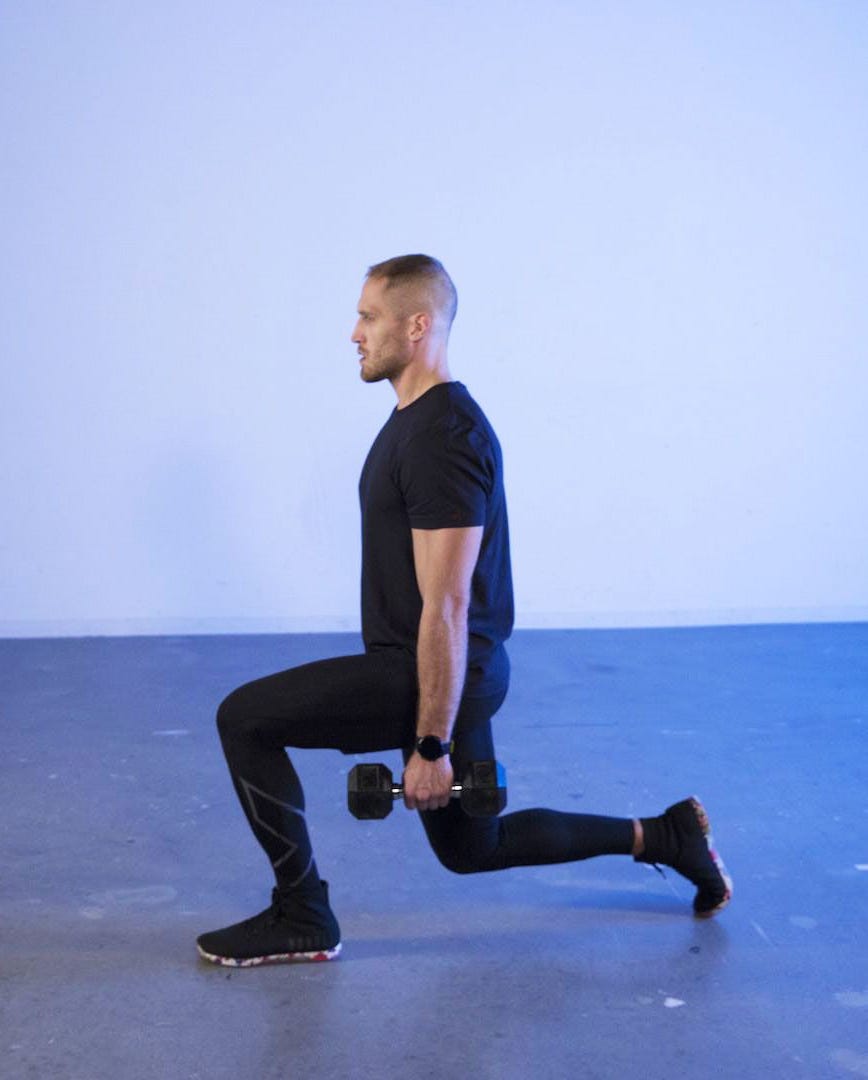
How to Do the Split Squat
- Start with a pair of dumbbells on the floor on either side of you. Lower down on one knee, creating 90 degree angles with both legs. Lean forward slightly.
- The midfoot and toes of your back foot should be on the floor. Your feet should be on “train tracks,”—in other words, parallel to each other. Gaze straight ahead to keep your neck in a neutral position.
- Squeeze your shoulder blades, abs, and glutes. Grip the dumbbells tightly.
- Fire your rear glute to stand up.
- Lower back down, but don’t slam your knee on the floor. Instead, keep your balance and float just above the floor, before firing back up to standing.
Take note of these additional cues from Samuel to shore up your split squat form:
Set Up
Eb says: The biggest problem people have with split squats—and this goes for all of them, including Bulgarians, not just this starter kit move—is that they underestimate the setup. They think they can just set their feet apart and drop into the movement without any intention and without any focus, and then they drop down and press up awkwardly.
Start the split squat by letting your body understand where it has to end: Set up in that bottom position, making sure your front knee and back knee both have ninety-degree angles. Rise up from this position, squeezing your glutes, quads, and hamstrings to do so. Understand that your legs won’t be perfectly straight at the top but that’s OK; there’s more constant tension in the top of a split squat than people realize.
Glutes Tight
Eb says: Squeeze your glutes both at the bottom of a split squat and as you rise up. Much like a traditional squat, you want the knee to track outwards (and not towards the center of your body) throughout the motion, protecting your ligaments and soft tissue, and that requires a dominant, focused glute squeeze throughout the split squat.
Load It Up
Eb says: Your tendency will be to view the split squat as a regression for unilateral leg training moves, and to assume that lunges and Bulgarian split squats offer more overall body benefit. That’s not true. Once you master the split squat, this can be a powerful strength move in your arsenal, one that you can use to build overall strength, athleticism, and power.
After you’ve gotten a feel for the balance, don’t be afraid to do it with a heavy barbell, hold kettlebells in a front rack for it, or hold heavy dumbbells at your sides. It has benefit as a power move, even if you’re only doing 3 sets of 4 to 6 reps.
Benefits of the Split Squat
The split squat is the most basic lower body unilateral movement. When you train unilaterally, you’ll be able to address balance and stability issues and muscle imbalances while building strength and muscle, one limb at a time. Since you’re not moving (like you would in a lunge) or getting into a more challenging position by elevating your off-leg (Bulgarian split squat), you’ll be able to focus on just moving on the working leg.
Muscles Worked By the Split Squat
This is a lower body muscle-builder, so you’ll hit your quads, glutes, and hamstrings. Depending on how you load the movement (holding dumbbells at your sides, or holding weights in a rack position), you can add some forearm or core engagement, too.
Common Split Squat Mistakes
Feet Flat on the Floor
Your front foot should be flat on the floor so you can fire your glutes to raise off the ground, but your rear foot should be planted at the midfoot, up on your toes.
Feet Off Track
Your foot position is also important. You should be in a position so that you can balanced 90 degree bend in your knees. That means your stance can’t be too close together or far apart, and your feet should be parallel to each other at about hip-width apart.
Leaning the Wrong Way
You want some forward lean, but shifting your torso too far forward will throw off your balance. It’s also an issue to lean back, putting your lower back into extension.
Slamming the Knee
Control the weight and don’t slam your knee on the ground with every rep. You’ll keep your full-body tension, and you’ll save your knees in the long run.
How to Add the Split Squat to Your Workouts
This leg day staple gives you a chance to fine-tune your single-leg work, so include it in your lower body training days after bigger compound lifts like bilateral squats. Start with 3 to 4 sets of 8 to 10 reps, focused on slow, controlled reps.
Want to master even more moves? Check out our entire Form Check series.
Read the full article here