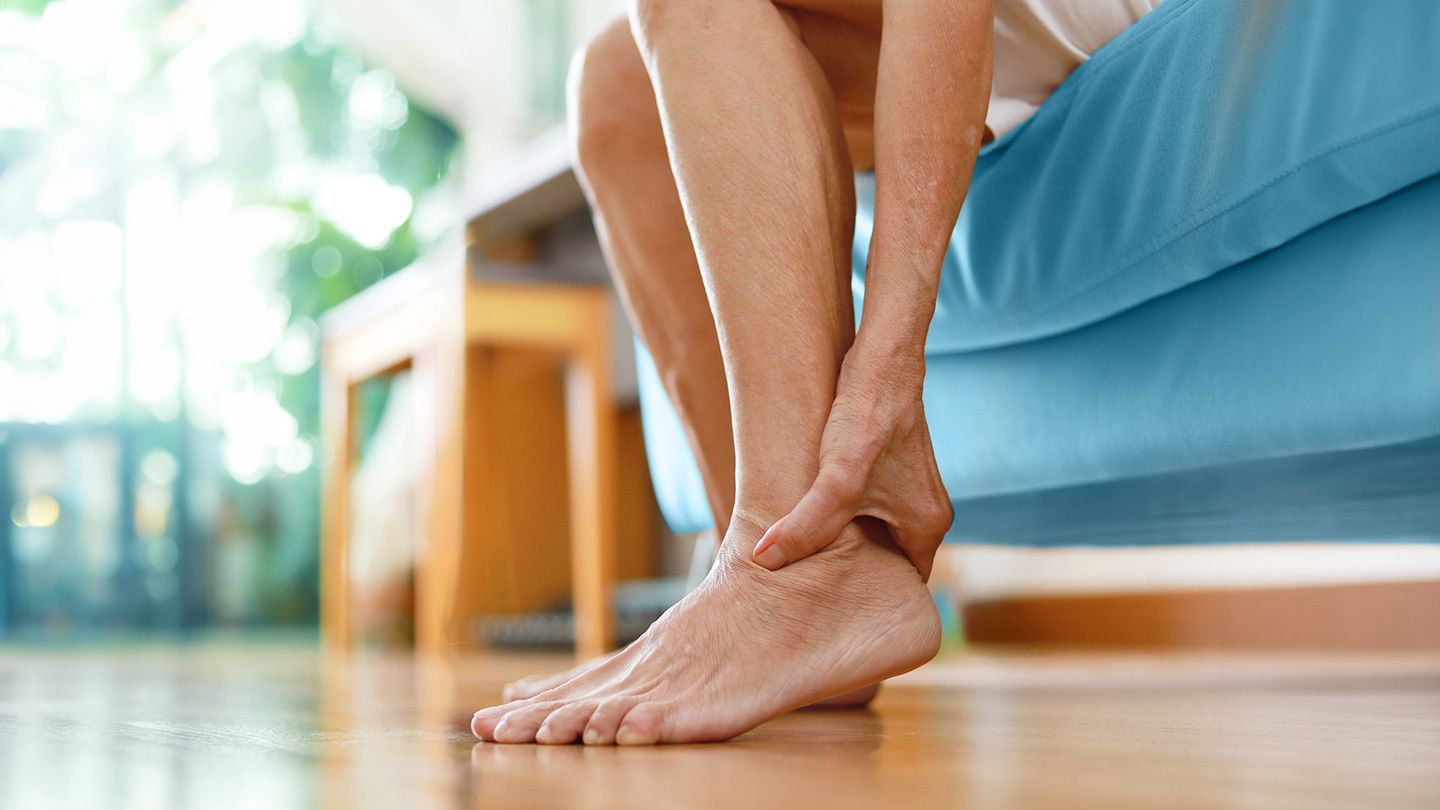
There are many factors affecting foot health with age. Many occur naturally, such as the flattening of the feet, reduced cushioning, and skin changes. But there are also some chronic conditions and lifestyle habits that may contribute to age-related foot problems, such as wearing shoes without support, like high heels and flip-flops.
Here are six ways feet change with age:
1. Feet Flatten and Stretch
It’s common for shoes to feel tighter as you age, even if your shoes once fit comfortably. Your feet can increase a half-size (or more) as you get older. This happens because the arch of your foot (the curved portion on the underside of each foot) tends to flatten as the ligaments and tendons in the foot lose strength, which ends up lengthening the rest of the foot and toes.
It can also be the result of carrying extra weight, says Hylton Menz, PhD, a professor of podiatry at La Trobe University in Melbourne, Australia, who has conducted research on aging feet.
2. Fat on the Soles Deteriorates
The fatty pads on the soles of the feet thin as part of the aging process. In fact, about half of the fatty padding may be gone by age 50. This is known as heel fat pad syndrome, fat pad atrophy, fat pad syndrome, or heel fat pad atrophy.
Fat pads typically cushion your heel, and the loss of the cushion can make it painful to run, walk, or jump.
3. Skin Becomes Drier and Thinner
The skin on the feet tends to thin and become dry with age. This happens when the deepest layer of skin loses fat and the oil glands become less productive over the years.
There’s also a reduction in collagen (a protein that provides strength), elastin (a protein that provides elasticity), skin-cell turnover (the process of shedding dead skin cells and replacing them with new ones), and blood supply, Dr. Menz says. “The end result is that our skin becomes drier and more likely to develop calluses, takes longer to heal, and is more likely to develop infection,” he says.
4. Joints in the Foot Stiffen
It’s common for the joints in your feet to become stiff with age, mainly due to the cartilage (a connective tissue) that protects joints and bones wearing down and the decrease in the synovial fluid that lubricates the joints, says Michael Lacey, doctor of podiatric medicine, a board-certified foot and ankle surgeon with Northern Illinois Foot & Ankle Specialists in Hoffman Estates, Illinois.
Ultimately, stiffer joints can lead to a reduced range of motion, pain while walking, an altered gait or balance, and an increased fall risk, Dr. Lacey says.
5. Muscles Weaken
It’s natural for the muscles in the foot to weaken over time. One study found that the thickness and area of the foot muscles were reduced by up to 45 percent in people ages 60 or older compared with those ages 18 to 50.
The reduction in muscle could change how weight is distributed to the foot, leading to changes with the way the foot moves, a decrease in arch stability, changes in bone structure, and an increased risk of falls.
6. Nerves Lose Sensation
The nerves in the legs and feet become less sensitive over time. As you age, the nerve cells gradually shrink and stop working properly, which makes the feet less able to detect pressure and vibration, Menz says. This loss of nerve sensation tends to happen around age 60, and you might experience it as numbness or tingling in the feet, Lacey says.