


WHEN IT COMES to staying on top of your heart health, keeping track of your cholesterol numbers should be on the top of the list. So what’s the best way to do it? Many people get this question wrong.
Turns out, the standard LDL cholesterol blood test millions get at the doctor’s office may not be enough. New research published in JAMA found that an alternative and cost-effective way to suss out high cholesterol is to use an ApoB test.
The good news is that the test isn’t new. It’s cheap and already available, meaning you won’t need to wait another 10 years for clinical trials and the FDA to clear it for use. Read on to learn more.
Why the ApoB Test Helps With Cholesterol Testing
THE TYPICAL BLOOD panel doctors usually order uses a calculation to get a rough estimate of your LDL levels. While LDL is a strong predictor of heart disease, it isn’t perfect, says UNC Health cardiologist and MH advisor Chris Kelly, MD. Certain issues, like diabetes, metabolic syndrome, and high triglycerides can skew LDL levels.
Plus, LDL isn’t the only particle contributing to plaque buildup in the heart. As Dr. Kelly explains, the ApoB test measures all plaque-causing particles—including LDL. And the test directly measures the number of harmful particles rather than arriving at a number through an estimate. Here’s what it does.
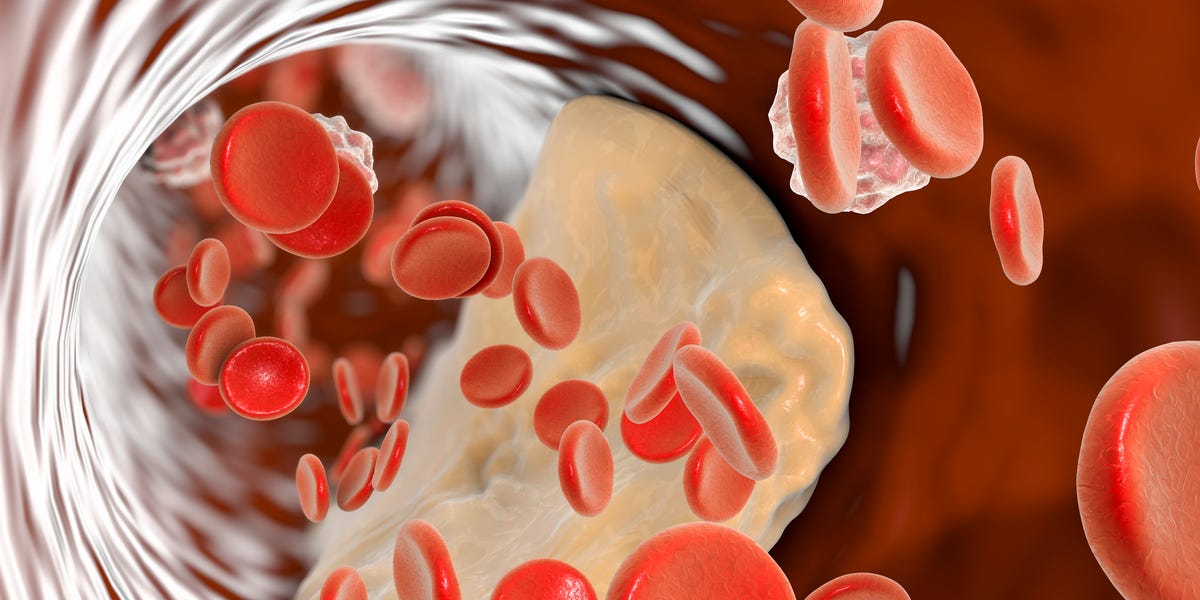
The ApoB test works by measuring a protein called apolipoprotein B (ApoB). Each plaque-causing lipid in your blood is attached to its own ApoB protein. By looking at the number of ApoB particles, you get a better read on just how much fatty lipid traffic there is in your arteries. And, of course, more stuff traveling around in your arteries means more opportunities for it to stick to the lining of them, building fatty streaks into plaques that can erupt and cause heart attack and stroke.
What Does the Research Say About ApoB Testing?
THE JAMA STUDY used a computer simulation to model 250,000 American adults potentially at risk for heart disease. They modeled what heart health outcomes would be over their lives if their doctors used one of three common tests to base treatment on: LDL cholesterol, non-HDL (“good”) cholesterol, and ApoB.
Out of all of the tests, the researchers calculated people tailoring their cholesterol-lowering treatment based on ApoB results would have fewer heart attacks, strokes, and a longer life expectancy. They also estimated people would save more on future healthcare costs when following guidance from ApoB testing.
“These health benefits were achieved at a cost that represents good value for U.S. healthcare payers,” says Ciaran Kohli-Lynch, PhD, assistant professor of preventive medicine at Northwestern University Feinberg School of Medicine and lead study author.
The Benefits Behind ApoB Testing
Cost
APOB TESTS ARE accessible but not always covered by health insurance, notes Samuel Kim, MD, preventive cardiologist specializing in lipidology at NewYork-Presbyterian and Weill Cornell Medicine. With that said, coverage is slowly getting better.
A big move toward ApoB testing is the updated guidelines from the American Heart Association and American College of Cardiology recommending more people get ApoB tests. “I do think we will shift more to use of ApoB in the future,” says Dr. Kim.
Frequency
Technically, you can have an ApoB test any time. But the best time to take it is when you have inconsistent LDL and non-HDL cholesterol level results. “It’s most helpful when patients have elevated triglycerides or metabolic syndrome—diabetes, obesity,” explains Dr. Kim.
Optimizing treatment
If you want to be doubly sure, you can still have a standard lipid panel and tack on an ApoB test. “The other testing that would be helpful as a one-time screening would be lipoprotein(a),” says Dr. Kim. This is strongly linked with plaque buildup in your arteries.
ApoB helps to optimize treatment in patients who are already on cholesterol-lowering drugs, adds Catherine Weinberg, MD, cardiologist and director of congenital heart disease at Northwell’s Lenox Hill Hospital. “Even if your LDL looks good, a high ApoB means you might need a stronger dose or additional medication to fully protect your heart.”
So the next time you head to the doctor, don’t miss a beat in asking about ApoB testing. At the very least, it’s worth a discussion to know all your options.

Korin Miller is a freelance writer specializing in general wellness, sexual health and relationships, and lifestyle trends, with work appearing in Men’s Health, Women’s Health, Self, Glamour, and more. She has a master’s degree from American University, lives by the beach, and hopes to own a teacup pig and taco truck one day.

Jocelyn Solis-Moreira, MS is the associate health & fitness for Men’s Health and has previously written for CNN, Scientific American, Popular Science, and National Geographic before joining the brand. When she’s not working, she’s doing circus arts or working towards the perfect pull-up.
Read the full article here