


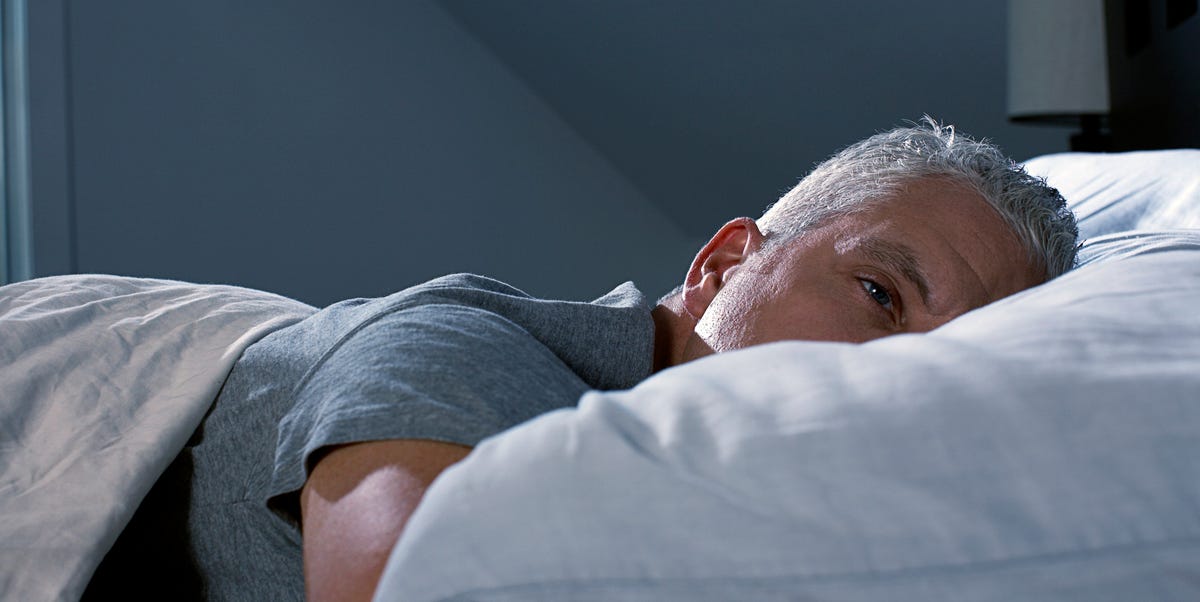
SOME NIGHTS, YOU may fall asleep as soon as your head hits the pillow. Other nights, you toss and turn, and it seems like you’ll never drift off. Lying there and peacefully resting has some restorative benefits, but it’s hard not to toss and turn, wishing sleep would come and frustrated that it’s not. Fortunately, there are some techniques that you can learn to help you fall asleep more quickly:
1. Give your phone a break.
We know you know that looking at screens right before bed isn’t the best Rx for falling asleep. “Screens activate our minds and make it hard to slow down for sleep,” says Alex Dimitriu, M.D., a psychiatrist and sleep medicine physician and founder of Menlo Park Psychiatry & Sleep Medicine. “The brain can’t go from being on all day to suddenly off and asleep,” he explains.
Even all-day screen time can mess with your ability to drift off. Spending a lot of time on your phone during the day often leaves little time for you to think, Dr. Dimitriu adds. “Our phones have filled in all the time gaps in our days. Your brain needs to think about stuff, and now, the only time that can happen is when you turn the lights off.” Give yourself some phone-free moments so a whole day’s worth of stuff that needs to be processed doesn’t start up in full force when you get to bed.
How much does the blue light from your screens matter? It was once thought to disrupt sleep quality and duration and suppress melatonin, the hormone that controls your sleep-wake cycle. Recently, there have been suggestions that the amount of time it keeps you awake isn’t terribly large. If you must use a device, Dr. Dimitriu suggests an e-reader set to dark mode. But no matter what the effects of blue light end up being, what you’re seeing—stressful news articles or annoying social media posts—could ignite your brain and keep you up.
2. Try the military sleep method.
THIS TECHNIQUE HAS been used by people in the service for years and claims to help people fall asleep within two minutes, according to the Cleveland Clinic. While the technique hasn’t been extensively researched, it’s worth a try.
The technique involves lying on your back and intentionally thinking about relaxing each part of your body, from your forehead to your toes. As you relax, practice slow, deep breaths. Imagine yourself in a calming environment, and use all of your senses to ground yourself there.
“With its focus on breathing, progressive relaxation of muscles, and clearing the mind, it may help some people move closer to sleep,” Dr. Dimitriu says.
3. Practice breathing exercises.
AS YOU LIE in bed, focus on your breathing. Dr. Dimitriu suggests slow, deep breaths with gentle transitions between inhaling and exhaling and exhaling and inhaling.
“You want your breathing deep but also smooth and effortless,” he adds. This will bring a sense of calm and focus so that you can drift off to sleep.
“It also helps to briefly hold a full breath before exhaling, and exhaling slowly,” Dr. Dimitriu says. “Slow exhalation increases parasympathetic nervous tone, which can slow heart rate and induce relaxation.”
4. Stick to a sleep schedule.
WHEN YOU SLEEP may be as important as how long you sleep. The National Sleep Foundation recommends going to bed and waking up at the same time every day, even on weekends. This helps keep your body’s internal clock regular, which makes it easier to fall—and stay—asleep.
5. Turn your bedroom into a sleep zone.
A CALMING SPACE is part of what sleep docs call “sleep hygiene”—simple steps that help you fall asleep more quickly and get restful slumber. These steps include comfy bedding and an ideal temperature: Set the thermostat to 60 to 68 degrees Fahrenheit, which research suggests is optimal for sleep. Lowering your body’s temperature triggers a process that initiates sleep. Another option is bed-cooling products. “Try a product like a ChiliPad on your bed for sleep,” says Men’s Health sleep advisor W. Christopher Winter, M.D., author of The Sleep Solution: Why Your Sleep Is Broken and How To Fix It.
Also, if WFH turned into work-from-bed, you’re going to want to find a new office. Working from there or using it as command central for doing your Instagram posts or anything other than sleeping can make you suffer from what researchers call “conditioned arousal.” Basically, it’s caused by doing things in bed that have trained your brain to keep you awake rather than fall asleep. “It’s amazing how many people tell me that they go to bed around 9 p.m. every night, and it takes them two hours to fall asleep,” says Dr. Winter.
6. Try guided imagery.
THIS IS A relaxation technique where you visualize a relaxing setting, like a beach or forest, or a peaceful memory. Then, focus on specific sounds, sights, or smells connected to it. This will bring a sense of calm and focus your mind away from stressors or rehashing things that happened during the day.
7, Practice meditation.
YOU’VE HEARD IT hundreds of times, but there’s a good reason. Meditation has been shown to reduce cortisol levels, helping you feel less anxious and more relaxed—and thus, more likely to fall asleep. An older study in JAMA that’s still relevant found that mindfulness meditation helped improve sleep quality in older adults by reducing “worry, rumination, and mood disturbances.”
8. Stop using your sleep tracker.
MANY AMERICANS REGULARLY wear a fitness or sleep tracker, which can allow them to find out what exactly is going on when they’re zonked out. That should be good for your sleep, right? Well, not exactly.
According to a study published in the Journal of Clinical Sleep Medicine, those who tracked their sleep went to bed feeling pressure to attain an adequate amount of sleep—and reported increased levels of self-induced anxiety. As a result, they may have been making their inability to fall asleep even worse.
The researchers dubbed this “orthosomnia,” or the preoccupation or concern with perfecting or improving their sleep data.
9. Choose pre-bedtime foods and drinks carefully.
CERTAIN FOODS, LIKE lasagna, spicy tacos, or chocolate ice cream, can trigger acid reflux and keep you awake. You can lower your chances of acid reflux by sleeping in an elevated position, which prevents acid from traveling up the esophagus, according to David Poppers, M.D., a gastroenterologist at NYU Langone Medical Center.
Of course, you don’t want to be starving, either, because snoozing can be impossible when you’re thinking about food. Generally, experts advise waiting two hours after a meal to sleep.
Caffeine and alcohol can also keep you wide awake. Everyone is different, so there is no prescribed dosage or time to stop drinking the beverages. However, one study found that drinking caffeine within six hours of bedtime may deduct an hour from how much you sleep.
10. Drink milk.
“MILK CONTAINS THE protein α-lactalbumin. This protein contains high amounts of the amino acid tryptophan, which produces melatonin, the hormone that induces sleep,” says Dr. Winter.
Studies show that diets rich in tryptophan (including egg whites and pumpkin seeds) help improve sleep. And an added bonus: “Milk’s calcium also benefits tryptophan’s absorption into the brain,” says Dr. Winter.
11. Shower at night.
BATHING AT THE end of a day may help you sleep better, if you time it right. Showering immediately before bed is actually not a good thing because the hot water raises your body temperature. Allowing your body to cool down before tucking yourself in for the night is the best way to do it.
12. Consider CBD.
CANNABIDIOL (CBD) MAY BE able to cut some of your tossing and turning. CBD can be hard to study since there are so many formulations of it, but there have been hints it’s useful in helping manage anxiety in some people and foster a sense of calm. The potential calming effects are how it may benefit sleep—it’s not a sedative. Essentially, it can help you fall asleep without making you drowsy.
13. Learn how to really rest.
IF YOU’RE UNABLE to sleep, don’t panic—as long as you’re relatively relaxed, you’ll be reaping many of the same benefits. “The benefits of resting rival those of sleep, and in some cases are cognitively indistinguishable,” says Dr. Winter.
A 2008 study funded by the National Institute of Mental Health on the effects of lying in bed with your eyes closed found that when resting, some of your brain’s neurons turn off, mimicking what happens in sleep.
Still, resting isn’t going to give you the full benefits of real sleep, including cognitive restoration, increased memory abilities, and hormone regulation. Sleep is the best option for true restoration of the mind and body, but if it remains elusive, you can calm your panicking mind by telling yourself that even just resting is giving your brain a break.

Emily Shiffer has worked as a writer for over 10 years, covering everything from health and wellness to entertainment and celebrities. She previously was on staff at SUCCESS, Men’s Health, and Prevention magazines. Her freelance writing has been featured in Women’s Health, Runner’s World, PEOPLE, and more. Emily is a graduate of Northwestern University, where she majored in magazine journalism at the Medill School of Journalism and minored in musicology. Currently residing in Charleston, South Carolina, Emily enjoys instructing barre, surfing, and long walks on the beach with her miniature Dachshund, Gertrude.

Melissa Matthews is the Health Writer at Men’s Health, covering the latest in food, nutrition, and health.

Erica Sweeney is a writer who mostly covers health, wellness and careers. She has written for The New York Times, HuffPost, Teen Vogue, Parade, Money, Business Insider and many more.
Read the full article here