


CONTINUOUS GLUCOSE MONITORS are an important tool for people with diabetes. But if you recently bought a Dexcom continuous glucose monitor, you might want to double-check the label. You may be wearing stolen and defective goods.
Dexcom and the FDA have announced a safety recall for people who bought two types of Dexcom G7 sensors from a third-party vendor. Two batches had failed inspection and were going to be scrapped. During the destruction process, however, they were swiped and they’re now actually for sale on the market.
There’s a safety reason why these sensors were scrapped. Here’s the backstory, plus what to do if you have either sensor on your arm.
The Two Dexcom G7 Sensors to Avoid
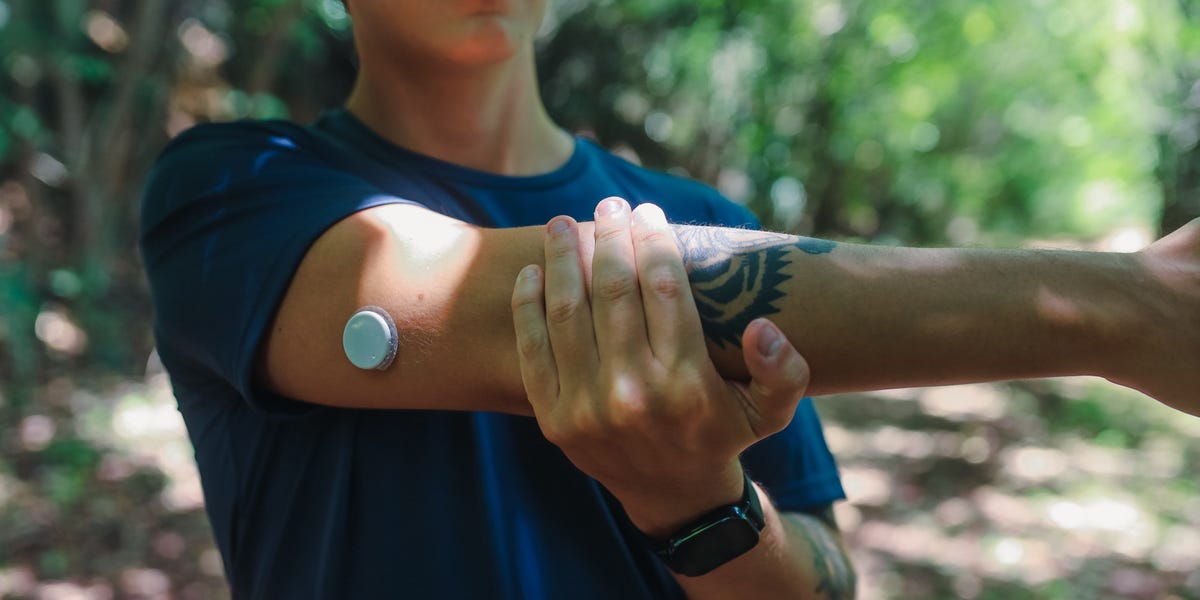
THE G7 SENSOR is attached to the back of your upper arm or upper buttocks and tracks glucose levels in real time. As of now, the FDA has identified two different lots that were scrapped, stolen, and sold. The sensors impacted are:
- Lot 1725204004
- Lot 1725069002
The details on how they were stolen are a little vague. Sensors that don’t meet Dexcom’s standards are scrapped as part of the company’s quality control process. If sensors don’t make the cut, they’re sent to a third-party vendor for destruction and recycling. At some point in that process, the sensors that were flagged to be destroyed were stolen and then sold.
Right now, the FDA doesn’t have a list of websites to cross-reference where these monitors were sold. Instead, the agency says that Dexcom traced sales of the stolen goods back to Pharmsource, LLC, which stocks some independent companies and durable medical equipment (DME) supplies in the US.
“Pharmacies that purchased product from Pharmsource should take extra care to review their inventory,” the FDA’s notice reads.
Are There Health Risks to Using These Two Glucose Sensors?
YES, IN TWO different ways. Lot 1725204004 sensors were not properly sterilized and have an increased risk of causing a skin infection, per the FDA. Pouya Shafipour, MD, family and obesity medicine physician at Providence Saint John’s Health Center, told MH he’s concerned about the danger of people contracting MRSA from the lack of sterilization.
The sensors in Lot 1725069002 have an “elevated internal testing failure rate” and a higher risk of having no sensor readings available. That means it can miss high blood sugar readings or prompt a user to make a treatment decision based on inaccurate data, Dexcom says on its website.
“The concern is more for people with diabetes who are on insulin. Their diabetes is more advanced,” warns Dr. Shafipour. “People are making decisions about insulin and how much they’re giving themselves. If the readings are inaccurate and too high or too low, you’re putting the patient at risk.”
If you have one of these stolen sensors at home, don’t use it. The FDA recommends calling Dexcom Customer Support at 1-844-478-1600 to request a replacement.
“Manufacturers all now have online portals where you can order these. You can purchase them there or go through regular, reputable pharmacies that buy directly from the manufacturer,” adds Dr. Shafipour. “I don’t recommend that anyone gets CGMs from websites that have discount coupons because of the unreliability.”
If you’re not sure if your sensor is a stolen good, Dexcom has set up an online theft check where you can enter in the information on your sensor’s label to learn more.
Korin Miller is a freelance writer specializing in general wellness, sexual health and relationships, and lifestyle trends, with work appearing in Men’s Health, Women’s Health, Self, Glamour, and more. She has a master’s degree from American University, lives by the beach, and hopes to own a teacup pig and taco truck one day.
Read the full article here