


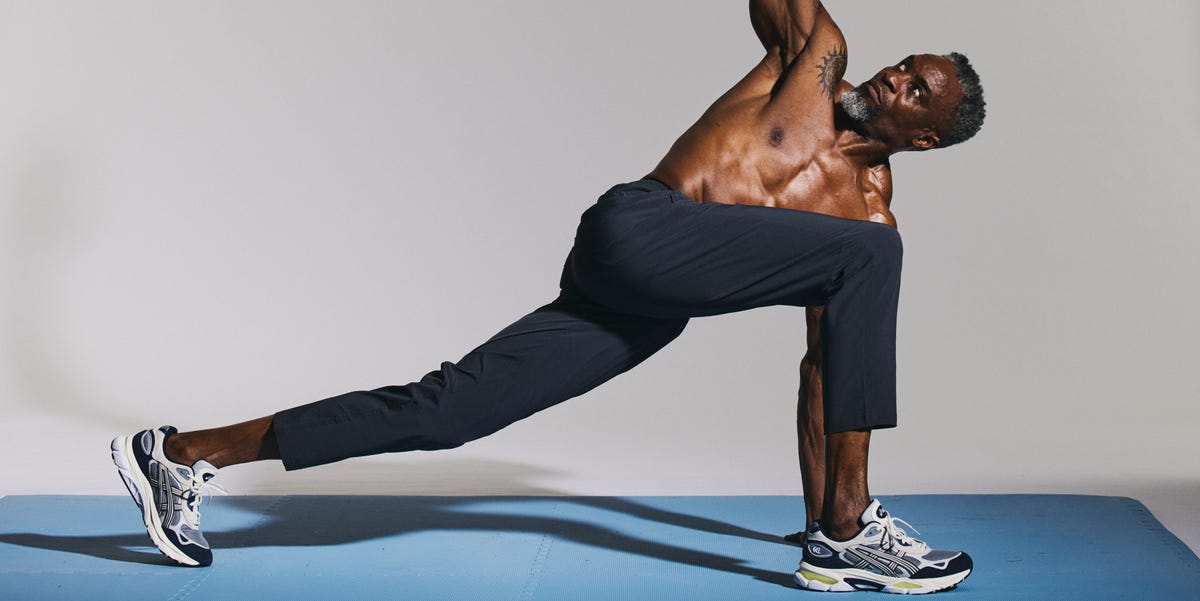
SORE MUSCLES ARE sometimes considered to be a badge of honor. Struggle moving for a few days, though, and that feeling of earned valor gets old, fast.
“The significant muscle soreness that typically occurs 24 to 48 hours after activity is referred to as delayed onset muscle soreness, or DOMS,” says Christopher Hogrefe, M.D., sports medicine and emergency medicine specialist at Northwestern Memorial Hospital. “This condition appears to be the result of small tears in muscle fiber that combine with an inflammatory process to result in pain.”
That happens whenever you’re moving in a way you’re not used to—when you’re lifting heavier then normal, or even walking more then you normally do.
If you’re feeling like you have a heavy onset of DOMS, you’re probably struggling with a handful of symptoms. Not only are your muscles aching, you’re probably feeling weak, and feeling stiff in your joints. Here’s how to alleviate those symptoms, fast.
How Long Does Muscle Recovery Take?
PAIN SHOULD HIT its peak around 24 to 48 hours after activity, but it can linger for up to 3 to 5 days, according to the American College of Sports Medicine. The length of time muscle recovery takes will depend on several factors—how conditioned you are, how hydrated you are, how hard you trained, and how much you prioritize recovery. There are several tips and tricks below to help you prioritize and get back to normal, quicker. Here are a few.
How to Handle Muscle Soreness
Do an Active Cooldown
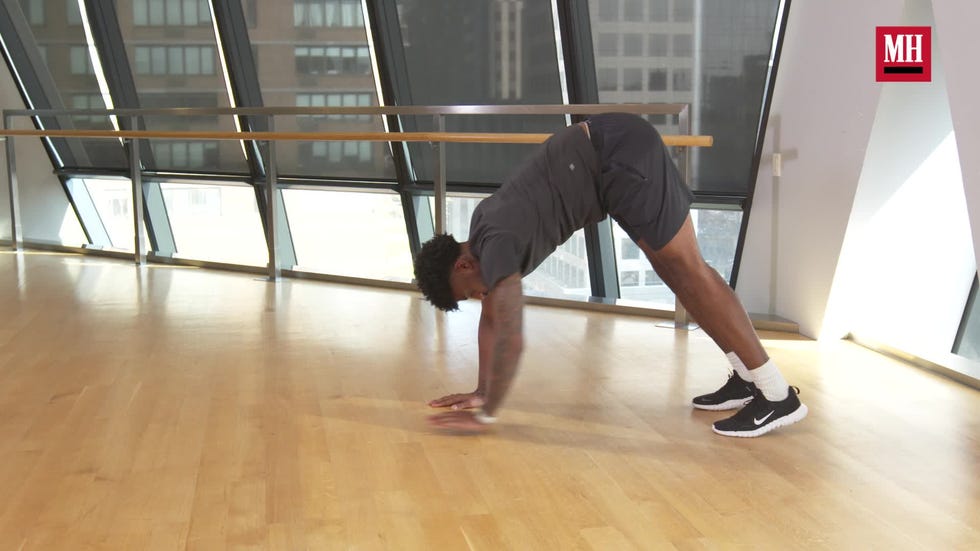
Spending some time cooling down makes your muscles recovery-ready. A 2018 study on active recovery found that runners who spent time at a 50 percent decrease in activity at the end of their workout (instead of resting completely) were able to go three times longer the second time they ran. The researchers believe it had to do with better blood flow, which reduced blood lactate (the metabolic byproduct that makes your muscles sore).
“So many products that are sold touting the ability to flush from the blood or remove waste products from the muscles, but the way you actually do that is through circulation, or your blood moving,” says Christie Aschwanden, author of GOOD TO GO: What the Athlete in All of Us Can Learn from the Strange Science of Recovery and co-host of the Emerging Form podcast.
Drink Some Tart Cherry Juice
Tart cherry juice is loaded with antioxidants and anti-inflammatory compounds. A 2020 study found that long distance runners who drank tart cherry juice for eight days reported decreased muscle pain.
“The anti-inflammatory properties in cherries may be beneficial in decreasing muscle soreness. However, particularly in the case of tart cherry extract, one should be aware of the significant sugar content that could be present,” says Hogrefe.
Get a Massage
It may seem obvious, but massages can help get rid of sore muscles. There’s a little research—a 2012 study found that a post-exercise massage significantly reduces pain by reducing the release of cytokines, compounds that cause inflammation in the body. At the same time, massage stimulated mitochondria in cells, promoting cell function and repair.
Yet, there’s not a huge volume of additional research. “If there’s one recovery technique that is most popular among athletes, it’s massage,” Aschwanden says. “The scientific evidence for whether it works or is doing something meaningful from a physiological perspective is pretty slim. But what makes massage really helpful is that it feels good and is a way of setting aside some time to relax and check in with your body and how you’re feeling during a little downtime.”
Use a Heating Pad
You may have long heard that an ice bath is the best way to recover from a long run, but experts say to skip cold therapy and opt for something warm and comforting.”The idea behind heating pads is that they increase blood flow because it is a vasodilator (opens up your blood vessels), and is thought that it could help flush some of the byproducts or inflammation related to muscle soreness out of the muscles,” says Katie Lawton, an exercise physiologist in Rehabilitation and Sports Therapy at the Cleveland Clinic.
“Heating pads can feel good, which can be helpful for recovery, because oftentimes what you need for recovery is just time to relax,” Aschwanden adds. “Heat also increases circulation, so that can be helpful to reach those areas where you do have waste products [to flush out].”
Use a Foam Roller
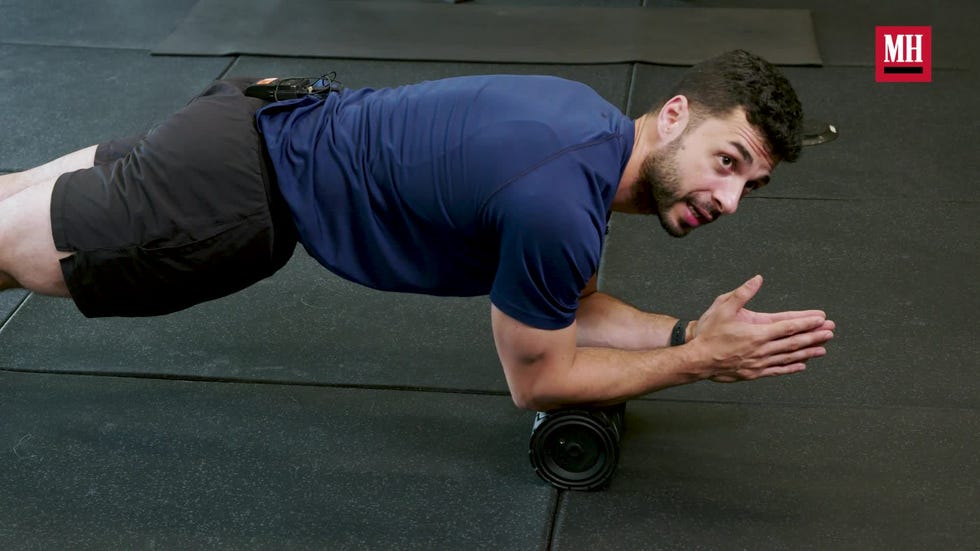
Foam rolling on sore muscles can make grown men cry, but it seriously helps repair your muscles. “It has been suggested that foam rolling may decrease edema [swelling in the muscles] and enhance tissue healing,” says Hogrefe.
A 2021 study found that 20 minutes of foam rolling on a high-density foam roller immediately following exercise and 24 hours after may reduce muscle tenderness and decrease the impact on one’s dynamic movements. Don’t have one? Check out our best foam roller picks.
Sleep
It sounds simple, but hitting the sack can often be exactly what your sore muscles need. The direct scientific link between sleep and post-exercise recovery remains somewhat fuzzy, although it could be strongly argued that that’s because sleep involves a multitude of physiological functions that aren’t always easy to clearly define and separate. We do know, however, that a lack of sleep can contribute to higher levels of inflammation. Inflammation may not be a factor in DOMS in particular, but it does contribute to some muscle soreness—and getting serious rest can help alleviate that.
“Sleep is the most effective way to improve recovery – a lot of pro athletes are big nappers,” Aschwanden says. “It’s really important to prioritize sleep because sleep is really when your body does the hard work of recovery. If you’re spending a lot of money on things like a massage gun and tart cherry juice but are only getting six hours of sleep a night, you’re really shooting yourself in the foot.”
Eat Antioxidants and Protein Frequently Over 24 Hours
Your post-lift protein shake does more than just refuel your muscles. A 2017 study found that protein aided in the recovery of muscle function in the 24 hours following a workout filled with eccentric contractions (which generally happen in most strength-based workouts). And adding antioxidants to that meal improved the recovery from those workouts even more. So aim to load up on protein (think chicken or fish) and antioxidant-rich foods (think pomegranates and kale) in the hours after a tough workout, and watch your recovery times drop.
Use a Massage Gun
Massage guns are one of the hottest products on the recovery tool market right now. For good reason, too—if you don’t have the funds to get a full on massage every week, having this handy will allow you to save money and still reap the benefits.
Need some suggestions on what’s worth your money and what’s not? We’ve got you.
Keep Moving
It sounds counterintuitive, we know.
But one of the best ways to alleviate DOMS is by continuing to move. Studies have proven it— movement helps bring blood flow, and thus vital nutrients to the muscles to promote recovery.
We’re not saying hop right back into maxing out your squats, or play in a tackle football game. Simply going for a walk may be just enough to give your body what it needs to loosen up some of that stiffness and pain. As they say, motion is lotion.
Stay Hydrated
We know—you’ve been lectured on getting enough water a million times, but that’s because it does so much. Water supports pretty much every bodily function we have. Dehydration may slow down muscle recovery.
So, make sure you’re intaking enough both before and after your workouts. The American Council on Exercise recommends drinking 17- to 20 ounces of water two- to three hours before exercise, then another eight ounces of water 20- to 30 minutes before the workout.

Cori Ritchey, C.S.C.S., is the fitness editor at Women’s Health, as well as a certified strength and condition coach and group fitness instructor. She’s reported on topics regarding health, nutrition, mental health, fitness, sex, and relationships for several years. You can find more of her work in Men’s Health, HealthCentral, Livestrong, Self, and others.

Emilia Benton is a Houston-based freelance writer and editor. In addition to Runner’s World, she has contributed health, fitness and wellness content to Women’s Health, SELF, Prevention, Healthline, and the Houston Chronicle, among other publications. She is also an 11-time marathoner, a USATF Level 1-certified running coach, and an avid traveler.
Read the full article here