


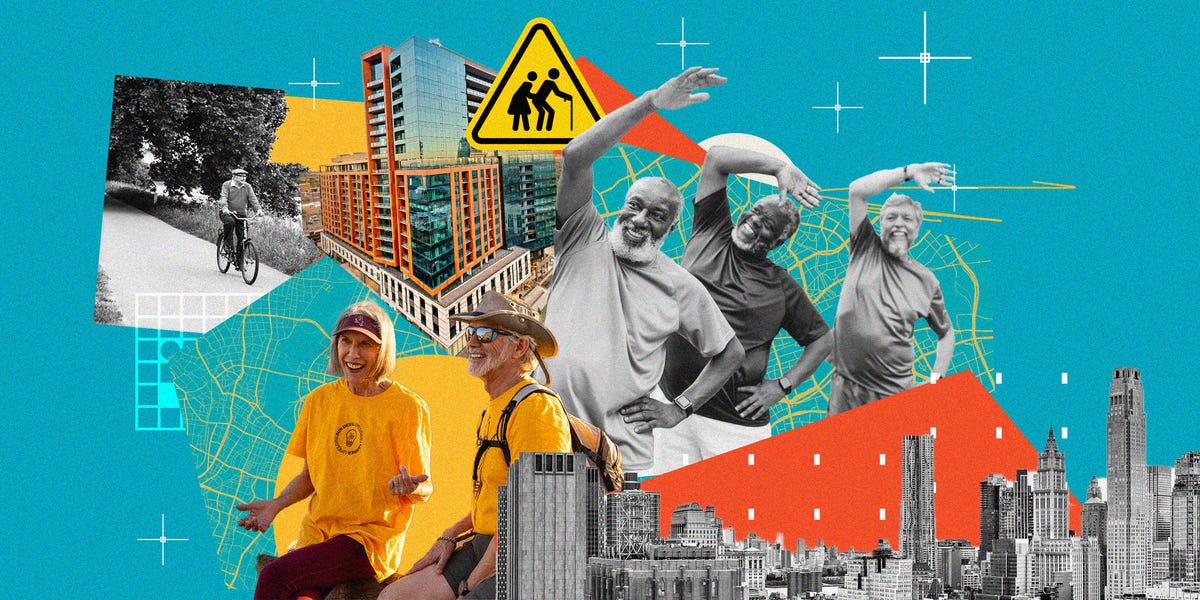
AS LIFE EXPECTANCIES continue to grow and the 100-year life becomes more attainable, the question is how and where will we live to ensure that we stay engaged, healthy and fit as we age in the era of the New Longevity? In America, there are 62 million people who are 65 years old or older. That will grow to 80 million by 2040 due to advances in medicine, better lifestyles, lifelong fitness regimens and more of a preventative approach to health. Around the world, the UN estimates that there will be 1.2 billion people at 65 or older by 2040.
Whether you are 25, 35 or 45, the odds are that if you have a personal commitment to health and fitness, you will join the ranks of being a dynamic and active older person. As a result, you will be looking for cities and communities that will be right for you. It’s never too early to think about it.
Most people say that they want to age at home as opposed to going to some type of nursing home or assisted living facility. With new diagnostics, technologies and treatments, there will be more and more capabilities that will allow current and future generations do just that. But it will take commitment from government, private public partnerships and nonprofits to make these innovations available to everyone, not just the wealthy.
Around the world, there are places that have already made strides in becoming an “age friendly” city or environment for its people. Singapore is one of the best examples. Age Well SG has been launched as a program to support living longer at home while ensuring social isolation is not a part of that experience. Intergenerational contact is an important part of the project. By working with partner government organizations and businesses, they have planned and designed inclusive, connected and accessible spaces that support active lifestyles in local neighborhoods.
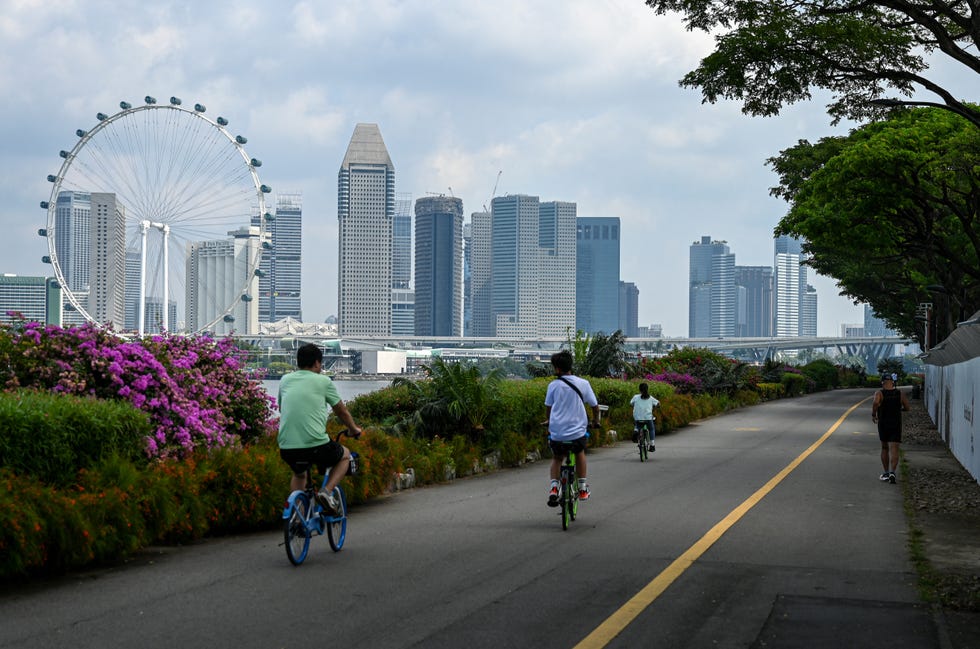
Cyclists in Singapore.
Examples include large colorful signage for directions, walkways and paths that incorporate physical and mental exercises, and therapeutic gardens that stimulate the senses. All of this is in the context of using universal design elements in public housing that includes a national target to have parks within a 10-minute walk of every apartment. In addition, Singapore has a national fitness program for individuals 60 and over. The national policy focused on healthy longevity includes subsidized exercise classes in community sports centers, neighborhood destinations that provide strength and balance classes and the National Steps Challenge, a wearable-based walking initiative.
Complete neighborhood redesigns like Queenstown, the first satellite housing town is being piloted as the city’s first “Health District”, creating age-friendly infrastructure and programs. The Community for Successful Aging (ComSA) is a program that was initiated by the Tsao Foundation in 2015. According to Paul Ong, Deputy CEO and Chief Strategy Officer, the idea is to have housing and communities that integrate social services, healthcare and well-being elements into everyday living. “Singapore has reframed the issue from “aging” to “longevity”. The goal is that everything is predicated on a healthy life, which is physical, psychological and environmental,” he said.
On a broader scale, the World Health Organization created WHO’s Global Network for Age-Friendly Cities and Communities, a digital platform of shared best practices, ideas and insights to help rethink urban planning and more. John Beard, currently the director of the International Longevity Center USA, at Columbia University played a key role in building out the network when he was at WHO. “Today, over three hundred million people are a part of the communities that are engaged in the work,” he said, adding that “Getting a city ready for older populations also has a benefit for younger populations, especially as they age.”
Another innovative example is the UK’s first Health Innovation Neighborhood, being developed by Newcastle University. The effort aims to integrate housing, healthcare and research facilities to create a model for holistic community well-being.
Japan, a country with the oldest population is retrofitting cities like Fujisawa to support aging in place with tech-enabled homes, eco-conscious living and robotic assistance. The Shonan Robo Care Center for example is focused on robotic devices to help improve mobility. Since Japan has the largest number of people aged 100 or older (an estimate of nearly 100,000), many of their initiatives will be instructive for other countries. It’s especially relevant since the UN projects that there will be nearly 25 million people in the world over 100 by the year 2100.
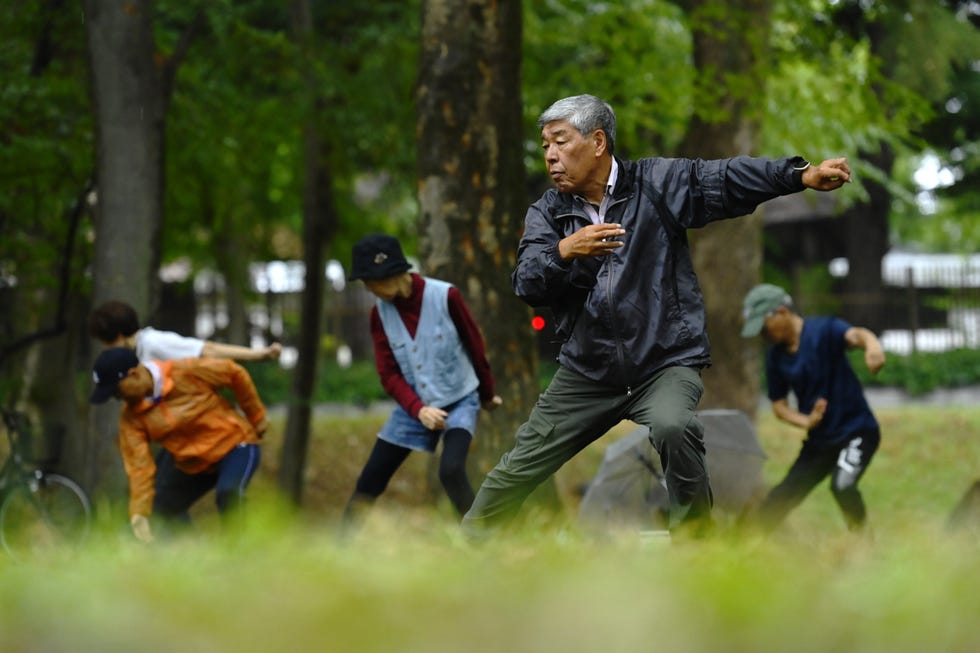
People exercise as part of International Day of Older Persons in a park in Tokyo, Japan.
The Japanese government has also introduced universal access to home-based care for citizens 65 and older, allowing more people to stay in their homes, as they live longer. The health ministry there supports fitness programs in parks, temples and local centers.
U.S. policies are lagging in how to keep people healthier longer through organized fitness and health initiatives for an aging population. In cities like New York, Miami, Albuquerque and San Francisco, populations age 60 and older already make up 20-26 percent of the citizenry and will continue to grow. The need is apparent. Something as simple as organized community-sponsored fitness-oriented programs can be meaningful.
“We are learning that the benefits of movement and exercise on longevity is far more profound and extensive than simply maintaining physical fitness and muscle mass. For example, movement effects the brain and staves off dementia. It also reduces the risk of depression and quells anxiety, said Mark Lachs, M.D., from Weill Cornell Medicine in New York. In the U.S., we have no federal master plan like South Korea’s “2020 Aging Society Master Plan”. There are only a handful of state and city governments that are focused on the issue. More of the action is in the private sector.
The Blue Zones Project, an outgrowth of Dan Buettner’s Blue Zones concept is focused on keeping people healthier, longer. The program is now in seventy-five US cities. When I asked Buettner what one of his dream visions would be for the project, he responded that he hoped the government would fund and support better health efforts for everyone.
Silver Sneakers is another positive U.S. based effort. Created in 1992, the goal is to promote active aging by making fitness accessible to older adults. It also provides them through Medicare eligibility access to gyms, fitness classes and other exercise programs. Smart real estate developers are also beginning to focus on the rapidly growing fitness and health consciousness of older adults, a trend that some call “wellness and longevity housing.”
Urbaneer, founded by Bruce Thompson is one example. With a health-focused building design approach, the Michigan-based company is focused on embedding health and longevity elements into its housing concepts. It includes smart-home and health monitoring technologies, better lighting and air filtration systems, as well as ergonomic design features that enable a better living environment.
The co-housing trend is also gaining momentum. In this approach, friends get together to have private homes but share spaces like kitchens, gardens and fitness areas. The Cohousing Association of the United States is a nonprofit that supports, connects and shares information on how to make it work. The best solutions will be those that include people of all ages as a part of these emerging communities. In urban centers like New York where there is a predominance of apartments, there is already a naturally occurring phenomena where people of all ages live in the same building and watch out for each other.
Other examples include high-end residences like Coterie Hudson Yards and Inspir Carnegie Hill in New York City that not only have medical facilities on premise, but modern gyms with trainers, nutrition guidance, all tracked with various technologies. While they tend to attract older residents, the multigenerational city of New York is at their doorstep.
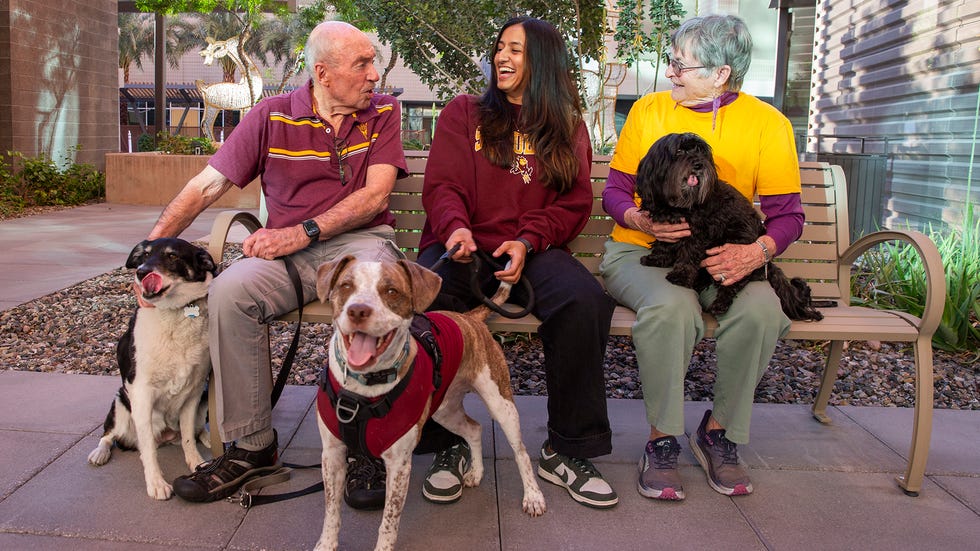
Mirabella at Arizona State University has various spaces designed for inter-generational socializing.
One of the more innovative longevity housing models is on the Arizona State University campus. Mirabella, a new type of living facility for those over 50 allows the residents to receive a university ID and have complete access to audit classes, use the fitness facilities, attend events and have organic integration into intergenerational engagement, an important formula for healthier living. It’s a modern approach to avoid the isolation and homogeneity that often comes with the “over 50” communities that segregate people from younger generations.
Lindsey Beagley, the senior director of Lifelong University Engagement for Mirabella just launched a nationwide summit to explore how Universities can meet the moment of changing demographics in new initiatives. Regardless of what models emerge, all of them will be enabled by new technologies. Whether it is tele-medicine, sensor systems or digital and virtual tools like Team Vivo, an evidence-based strength training and exercise program, the home of the future will enable better health and fitness to insure a better aging in place environment.
We are only at the beginning of what will be a massive shift in where and how we will live as we pursue the goal to healthier aging at home. But to achieve it, a lifetime commitment to exercise, fitness, nutrition and preventative health is what will enable all of us to live in ways that previous generations could not have dreamed would be possible.

Read the full article here