


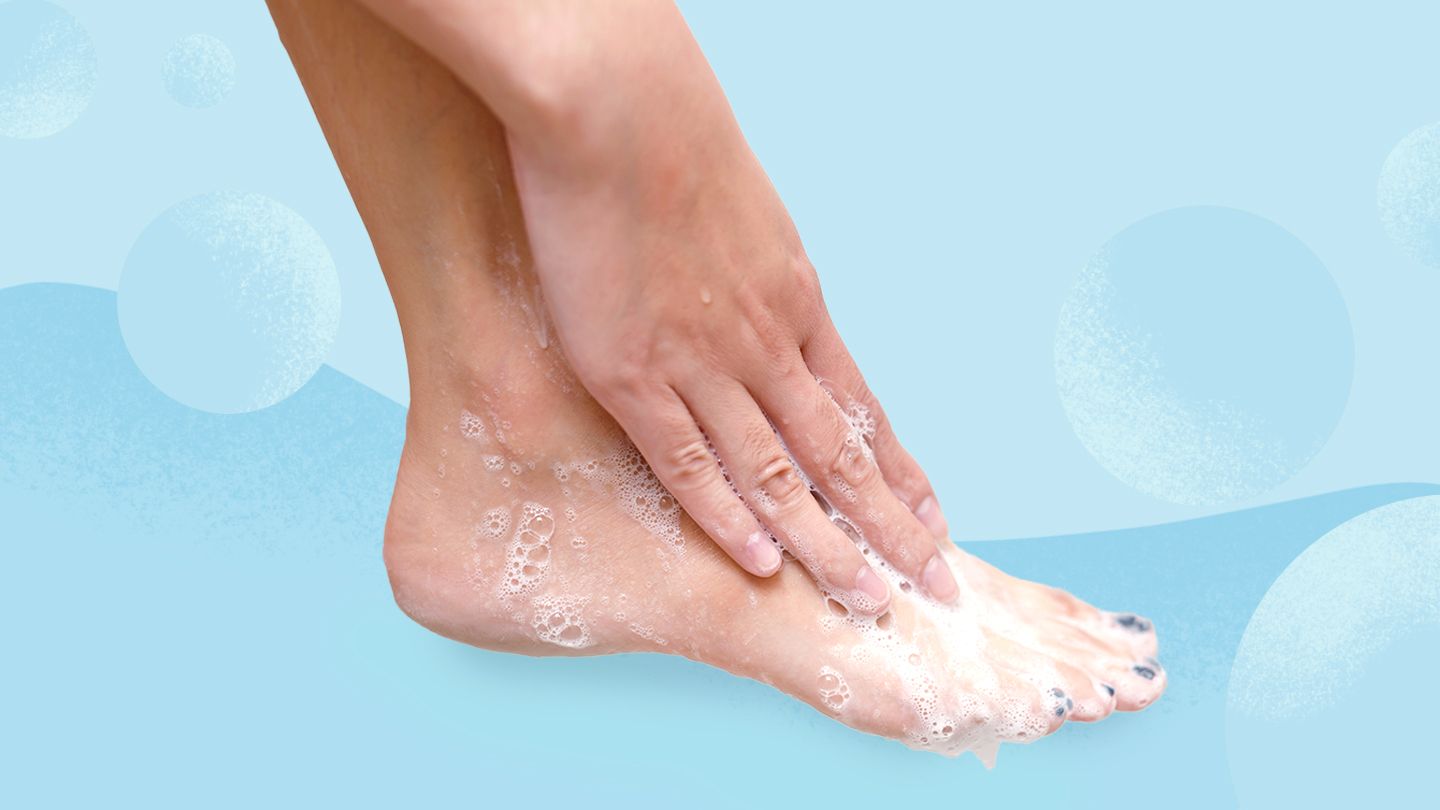
1. Do Wash Regularly
Letting moisture and microorganisms (the bacteria and fungi that like to grow in sweaty environments like feet) build up increases your risk of fungal infections, irritation, and skin breakdown, adds Monique Chheda, MD, a board-certified dermatologist at District Dermatology in McLean, Virginia.
2. Don’t Rely on Runoff Water
Sure, soap and water automatically fall down your legs and ankles in the shower while you’re cleaning the rest of your body, but your feet still need intentional washing, Fuchs says. “Soapy runoff doesn’t remove sweat, oils, dead skin, or microorganisms that adhere to the skin,” she says. It takes some light friction from your hands or a soft cloth to actually remove all the debris and microbes.
3. Do Clean Between the Toes and Around the Nails
4. Don’t Use Excessively Hot Water
It’s particularly important for people with diabetes, neuropathy, and other circulation issues to pay attention to the temperature, Chheda adds, since reduced sensation in the feet can make it harder to notice when the water is so hot that it’s burning the skin.
5. Do Use a Mild, Fragrance-Free Soap
“In most cases, the same gentle body cleanser you use on the rest of your body works perfectly well for the feet,” Chheda says. That said, if you have dry or sensitive skin, she suggests a formula designed to minimize irritation.
6. Don’t Scrub Too Much
While gently exfoliating a callus can reduce thickened skin and relieve pressure, aggressively scrubbing could damage healthy skin and create small cuts that could get infected, Chheda says.
For people with diabetes, circulation problems, or reduced sensation, it’s best to have a podiatrist treat any painfully thickened skin to avoid unintentionally taking off too much, Fuchs adds.
It’s also worth keeping in mind that calluses usually develop for a reason. “They are often the skin’s protective response to repeated pressure or friction, sometimes from uneven weight distribution across the foot or from footwear that puts pressure on certain areas,” Chheda says.
If a callus is bothering you, she recommends identifying the underlying cause rather than just treating the callus itself.
7. Do Check Your Feet
8. Don’t Let Your Feet Air-Dry
9. Do Moisturize
If your heels or soles are prone to dryness or cracking, moisturizing can help protect the skin barrier, Chheda says. “Creams and ointments containing ingredients like urea, glycerin, and ceramides can be helpful,” she says. Choose a fragrance-free option to avoid irritation, adds Fuchs.
When moisturizing, stick to the tops and bottoms of your feet. Applying it between your toes can trap moisture and create conditions that promote fungal growth, Fuchs says.
Read the full article here