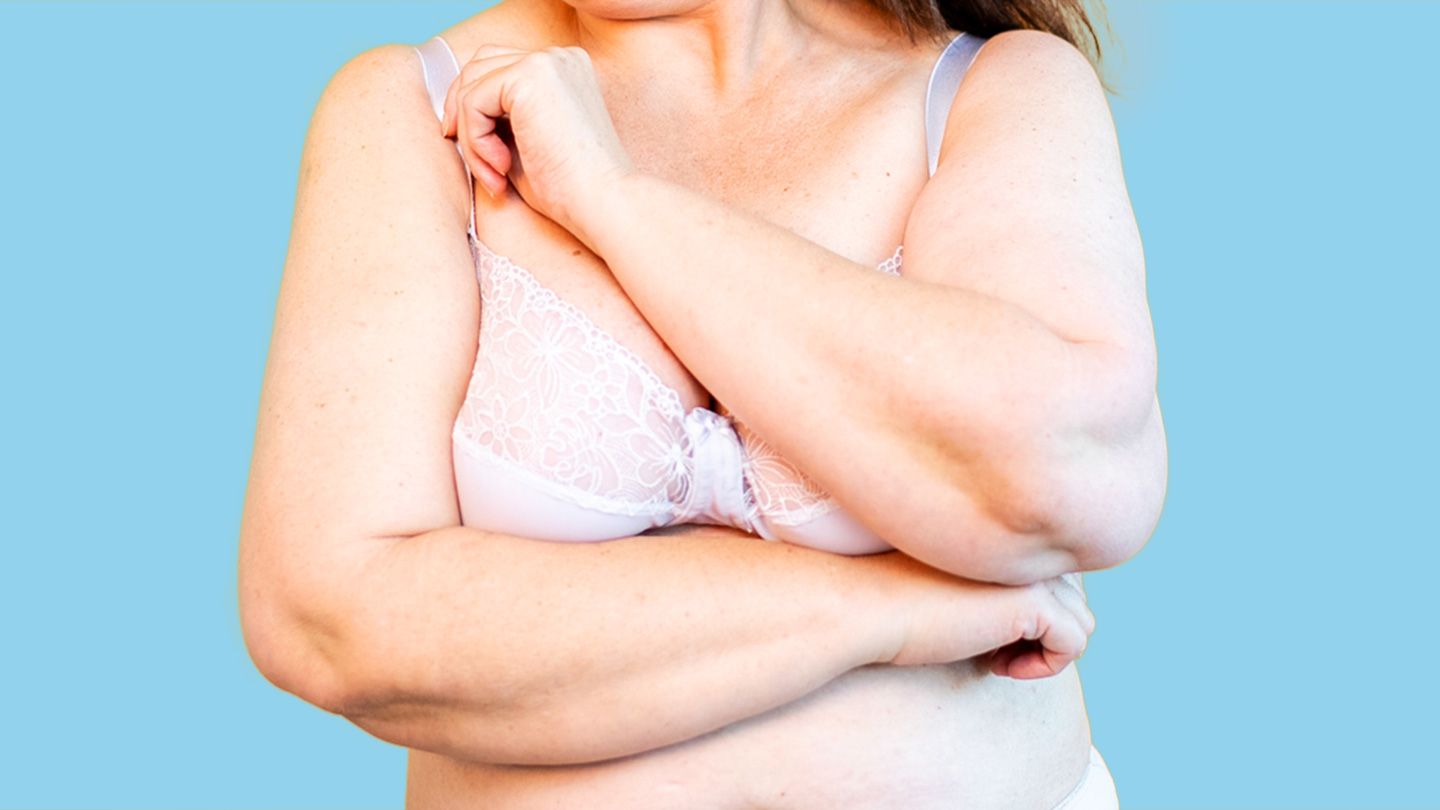
There are certain age-related milestones in life that can affect your breasts. These can range from having a baby during childbearing years or developing cancer after menopause.
Breast Ptosis
Hormone levels change when a woman goes through menopause (usually in her late forties and early fifties) which is why some may experience breast sagging at this time. For example, estrogen dramatically decreases, causing the breast’s connective tissue to become dehydrated and less elastic. As a result, the tissue shrinks and loses its shape, which can lead to drooping.
This laxity extends to the breast ducts and supporting ligaments. The medical term for breast sagging is breast ptosis.
“During menopause, the decrease in estrogen causes fibrous tissue to decrease and the fat contribution increases, causing less dense and even softer tissue,” says Angela Wilson, MD, an obstetrician-gynecologist at Montefiore Einstein Advanced Care in New York City. In other words, the percentage of your breasts made of fat increases over time, decreasing their firmness.
Poor posture can also contribute to a loss of chest muscle flexibility, causing sagging. Meanwhile, wearing the wrong bra size may damage the breast ligaments, resulting in drooping and breast pain over time.
Pregnancy
There are several breast changes during pregnancy you can expect as your body prepares to produce milk for a baby. Pregnancy causes the breasts’ ductal system to expand in preparation for lactation, which causes the breasts to enlarge and become fuller, Dr. Wilson says.
Additionally, your breasts will likely grow by one or two cup sizes, and may get itchy as the skin stretches out.
“Because of the rapid growth during this time, it is not uncommon to develop stretch marks on the skin,” Wilson says. “The nipples may become larger, and the areola may darken as well during pregnancy.” After breastfeeding, the ducts decrease in size and the tissue may begin to sag, Wilson adds.
Breast Cysts
Breast cysts are fluid-filled sacs that are usually noncancerous. Although they can appear at any age, they’re particularly common in women ages 35 to 50. Experts don’t know yet exactly what causes breast cysts, but potential causes may include natural hormonal fluctuations or the shrinking of milk-producing tissue (which can trap fluid).
Your cysts may become more noticeable or tender before your period and decrease or go away after menopause. Cysts usually don’t hurt, but your doctor may treat a painful cyst by using a needle to drain the fluid. They may send the tissue for analysis, or recommend other treatments such as hormonal therapy or surgery.
Breast Cancer
Breast cancer risk increases with age: At 30, the chance of being diagnosed with breast cancer in the next 10 years is one in 204. By 50, that increases to one in 42 — and by 70, one in 24.
The median age of breast cancer diagnosis for women in the United States is 63.
Other breast cancer risk factors include genetics, race, having dense breasts, drinking alcohol, being overweight or obese after menopause, taking hormonal medications, and not staying physically active. Maintaining a healthy weight, exercising regularly, consuming alcohol in moderation, and breastfeeding your children may help decrease your risk. Research suggests breast cancer risk decreases by 4.3 percent for every 12 months of breastfeeding.
Women ages 40 and older at average risk for breast cancer have the option to start mammogram screening every year. Various medical bodies have different recommendations. Those ages 45 to 54 should get mammograms annually, according to the American Cancer Society. But some organizations, like the United States Preventive Services Task Force (USPSTF), recommend annual or biennial mammograms beginning at age 40. It’s important to talk to your doctor for personalized recommendations based on your specific risk factors.
Mammograms generally aren’t recommended for women under age 40 with average breast cancer risk, though people with above-average risk should speak with their doctor about starting screening earlier.
If you’re concerned, it’s always an option to ask your primary care provider for a breast exam at any age or appointment. “I do breast exams for most of my patients at their yearly visits, and it provides an opportunity to discuss any changes patients may have noticed,” Wilson says.