








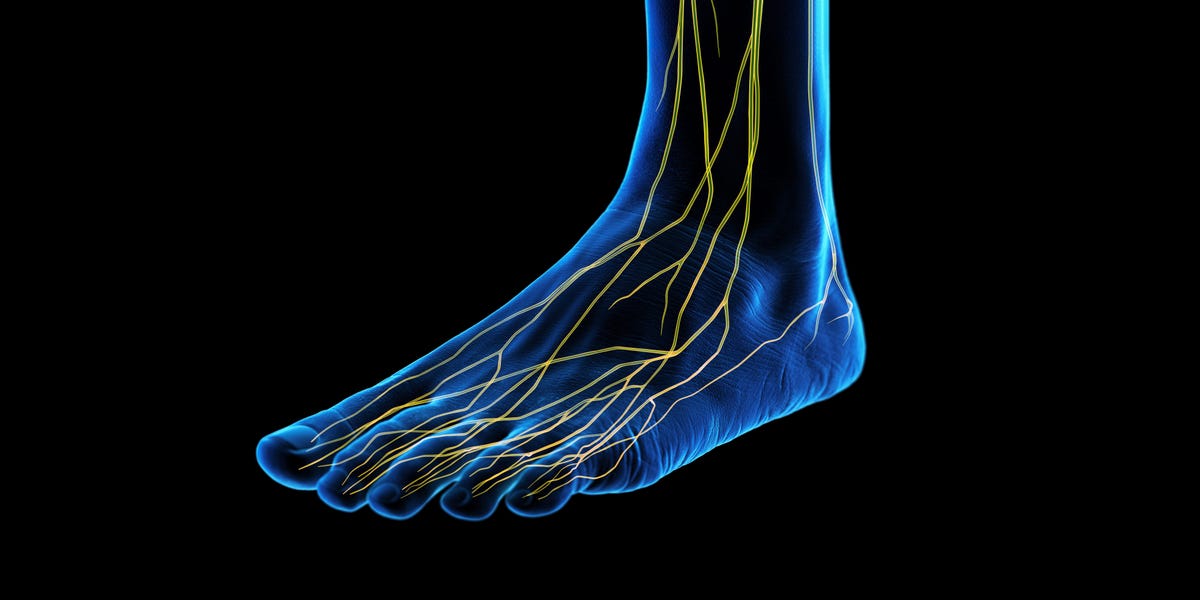
ONE OF THE biggest collections of bones in the body is the 26 between the bottom of the ankle and the tips of the toes. Around and between them sit joints and more than 100 muscles, tendons, and ligaments. All this stuff allows the foot to switch from being soft and pliable (for balance) to rigid and propulsive (for movement)—if you do the work to keep your feet operating at their best. “The main thing that goes wrong with feet is that they’re not optimized to do what they want to do for you, which is absorb force and move you forward,” says Jay Dicharry, PT, a professor in Oregon State University’s physical therapy program. But with some training, you can get them there. In other words, to run faster, lift more, jump higher, and stay pain-free, start at the ground and work your way up.
What Goes Wrong with Your Feet
Overdoing It
Especially as you age: “Guys who aren’t as active and think that they’re still 18—they go out and play soccer with their kid or something,” says Des Moines University Clinic podiatrist Allen Kempf, DPM. “They’ll pop their Achilles,” which attaches to the back of the heel. Injuries often happen in desk jockeys who let their feet and the muscles that support them get tight from inactivity, then overload them with weekend warrior exercise. And that’s often made worse by…
Poor Foot Control
“Your brain sends signals down to the muscles in your feet to control the forces of whatever sport or activity you’re doing,” says Dicharry. That can go wrong in two ways: Your brain isn’t trained up enough to manage the activity, or your tissues aren’t strong enough to carry out its orders. When either of those things happen, force is directed to the wrong places, leading to classic foot injuries like stress fractures and plantar fasciitis. Luckily, training can solve both issues. But you’ve got to keep exercising before you wind up with…
Underuse
If you neglect to keep your feet on their toes, you’ll
hit trouble when faced with a challenge. The most common problem is instability. On uneven ground, the adaptability of your feet and ankles is your first line of defense in staying upright. If they’re unprepared, your body has to shift at the hips to counter the imbalance. Once you’ve started compensating with your hips, Dicharry says, “if you’re not a stronger older adult, that big lateral shift can knock you over.”
3 Moves for Stronger Feet
SPEND 8 TO 12 minutes on foot exercises three or four days a week. You’ll see results quickly, says Dicharry: maybe a few months for strength gains, and less than a week for skill improvements.
Bottle Back-and-Forth
Prop up one end of a board on a book, so it’s slanted at about a 10- or 15-degree angle. Stand on it sideways so the outer edge of one foot is higher on the board. Lift your other foot off the floor. Pass a water bottle from hand to hand for 3 minutes. This builds up the muscles in your arch, which forms a foundation for everything else.
Tippy Twist
Balance on your right leg, hands on hips. Bend forward and lift your left leg behind you as high as you can. Point your hips to the floor, then twist them so they point to the left, keeping your weight toward the middle of your foot. Then point them back toward the floor. Do 5 sets of twists on each leg. This forces the foot muscles to create stability as you move.
Creeper Walks
Holding two dumbbells or a hex bar, stand up straight, then lift your heels until they’re about a centimeter off the floor. Now walk very slowly, keeping your heels off the floor. Do 3 or 4 sets of about 30 seconds each. This also helps you build stability. Note: Don’t do this if you have active plantar fasciitis.
How Much Do Shoes Matter?
AS FAR AS your feet are concerned, you’re going to want to follow some rules. Wear the right shoe for your sport, and make sure it fits. “A shoe that is not good for your foot shape can exacerbate underlying issues,” says orthopedic surgeon Meghan Kelly, MD, PhD. Another rule: Most shoes should be replaced after 400 miles or one year. What about going barefoot or wearing super shoes for workouts? The jury is still out on both. They may have positive effects, but they also change the stresses placed on your foot, so transition slowly.
Who Should You See for Troubled Feet?
- See a podiatrist for any smaller foot or ankle issues, such as ingrown toenails or bunions.
- See an orthopedic surgeon for issues that require more significant intervention, like foot or ankle surgery, or for custom orthotics if OTC options aren’t helpful.
- See a physical therapist to solve concerns like an abnormal gait causing repetitive stress injuries beyond your foot, or for exercises that help alleviate foot problems by strengthening the whole chain up your leg.


Kevin is a writer and editor living in Brooklyn. In past lives he’s been an economist, computer salesman, mathematician, barista, and college football equipment manager.
Read the full article here


