







LANDON STRUGGLED TO figure out what his problem was—and then he had to grapple with finding a solution that didn’t drive him crazy. The 39-year-old hair stylist from Chicago was always tired in the morning and thought he had recurring trouble with allergies. “I would wake up with a sinusy pressure headache all the time,” he says, noting that he tried nasal strips and all sorts of allergy pills.
His father, who was overweight and had a big “dad gut,” had been diagnosed with sleep apnea and used a CPAP (continuous positive airway pressure) machine, but as a slim, fit young guy, Landon didn’t think apnea could be the explanation for his congestion and headaches. And he sure as hell didn’t want to wear a CPAP every night.
But after talking to a client whose 7-year-old son was using a CPAP device to deal with similar symptoms, Landon decided to do an at-home sleep study. And that’s when he learned he didn’t have allergies. Just like his dad, he had sleep apnea.
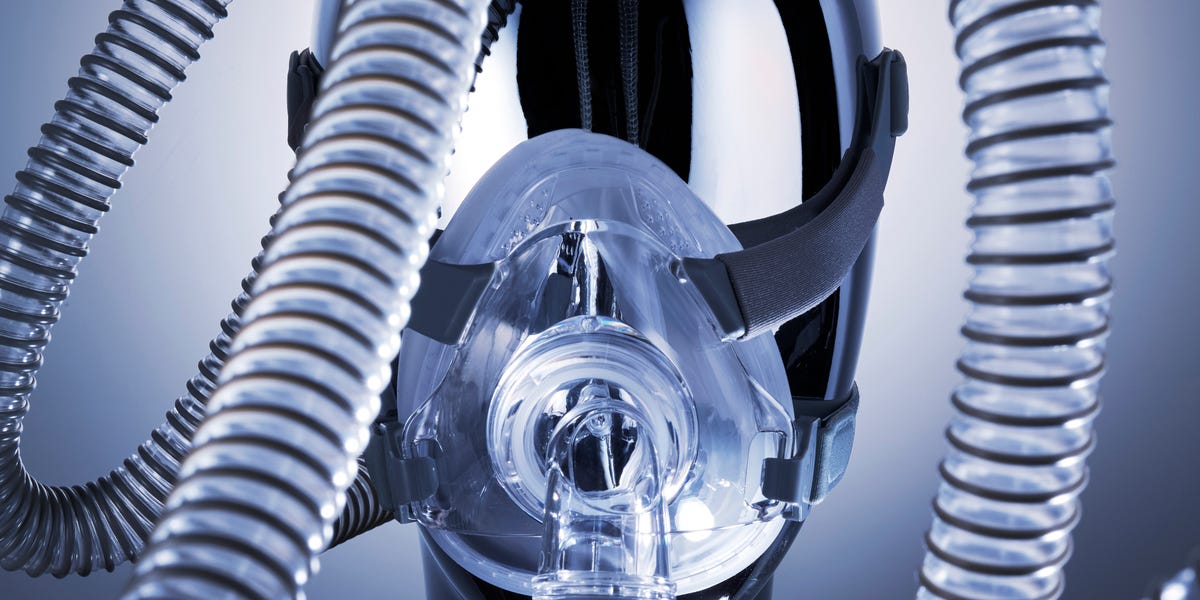
“Adjusting to my CPAP was awful,” Landon says. The CPAP machine’s mask, latched on to his face, didn’t feel right. The tubing was unwieldy, which made changing positions during sleep nearly impossible. “At first, I felt like I was being suffocated, like an octopus was wrapping its tentacles around my head while I was sleeping.”
For months, his nights were agony, and he had thoughts of abandoning the device altogether. The stress of using his machine got so bad, he says, he “actually asked my doctor to give me anti-anxiety medication to help me adjust to it.”
Landon stuck with it, he says, because he knew from his dad about the dangers of trying to live with untreated apnea. Without a CPAP, he’d be at greater risk for heart problems, cognitive issues, and the general feeling of being zonked out for the rest of his semi-waking life.
By weathering those first rough months, and with additional help from follow-up adjustments over the next few years, Landon says he eventually found a way to make peace with his CPAP. He now considers the device a lifesaver he wouldn’t sleep without. But many patients never reach that hard-earned inflection point—the physical and emotional discomfort is just too much.

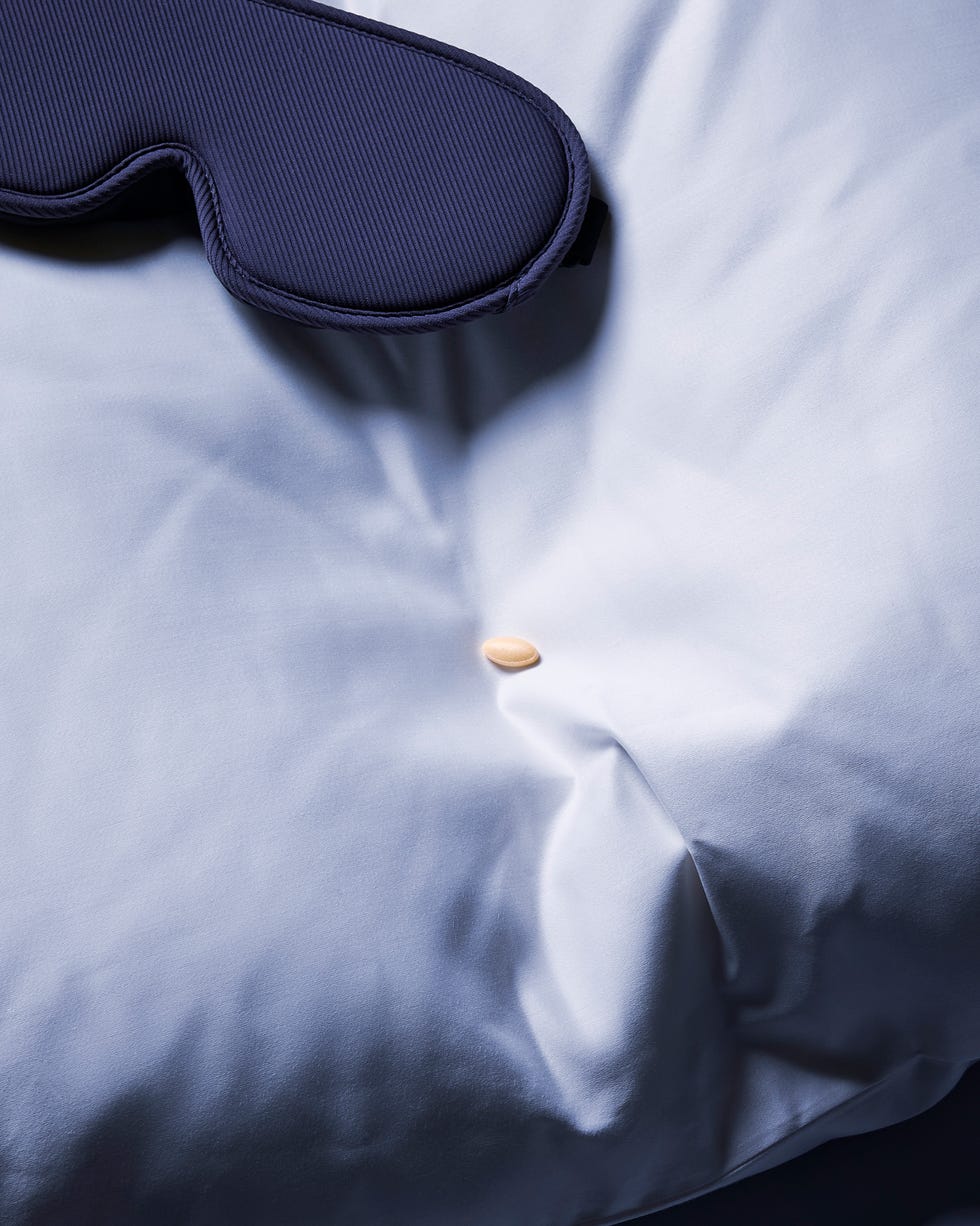
There’s a chance that a sleep apnea pill, which would fix the biological reasons behind airway collapse, could help people sleep easier. The drug is currently in clinical trials.
Which is a legitimate crisis when you consider scale. Experts estimate that nearly 84 million adults in the U.S. have obstructive sleep apnea—and that a staggering 80 percent of those cases remain undiagnosed. One study found that more than one in three men met the diagnostic criteria for sleep apnea, twice the rate for women.
Apart from living life in a zombie-like state, the lasting effects of untreated sleep apnea really are brutal. “There’s a slew of long-term chronic health issues that can occur if you have untreated sleep apnea,” says Ruchir P. Patel, MD, founder of the Insomnia and Sleep Institute of Arizona. Heart attacks. Mood disorders. Early death. (To name just a few.)
As it was for Landon, struggling to land on a diagnosis of sleep apnea can feel like a nightmare. But then there’s the ordeal of actually finding the right treatment. Most patients are directed to CPAP devices, which are considered the gold standard for apnea management. While they’re a dream for some, others see them as medieval, restrictive, claustrophobia-inducing, intimacy-killing machines.

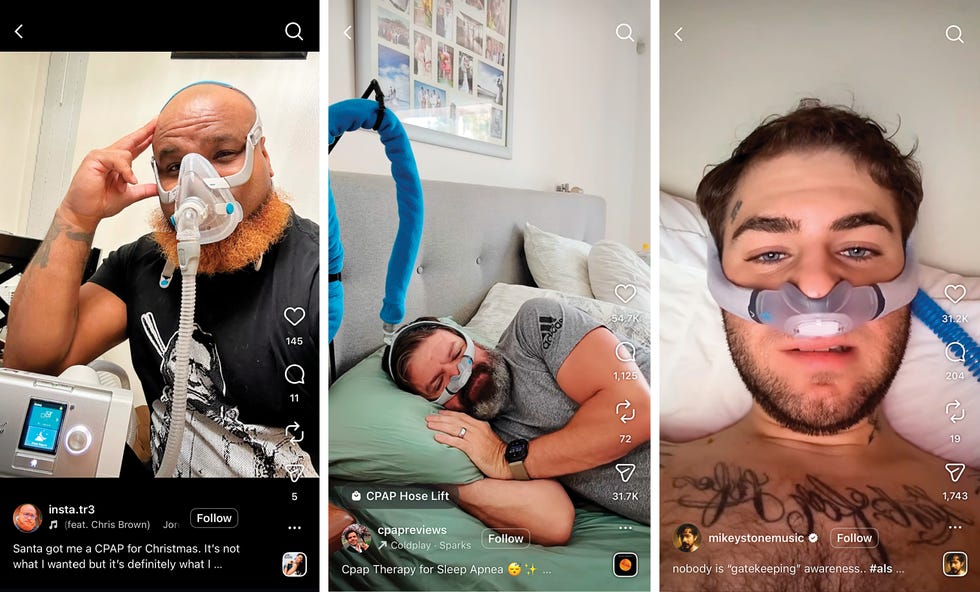
Online, CPAP users share their frustrations and struggles with the device—but also how the treatment has dramatically improved their lives. “It’s not what I wanted, but it’s definitely what I needed,” reads one post.
The therapy may be effective, but many apnea sufferers find it so uncomfortable that they’re compelled to explore other life-altering options: various operations, surgically implanted devices, pricey custom mouth guards paid for out of pocket. None of these options are simple either.
Fortunately, sleep specialists and researchers feel like they’re finally zeroing in on better, less frustrating ways to help patients. The big question is whether men will wake up to the fact that they have sleep apnea—and stick with the treatment.


What “Apnea” Even Means
IF YOU’RE UNFAMILIAR with the terrifying condition, obstructive sleep apnea (OSA) is when you literally stop breathing while you sleep. That pause in life-sustaining oxygen can last 10, 20, or even longer than 30 seconds. It can happen once a night, once an hour, or even more—much more.
Snoring isn’t OSA, but it’s a pretty damn good indicator. Snoring happens when your tongue and other soft tissue in the back of your mouth collapse backward and partially block your airway. Lots of people snore sometimes—especially men—and many different factors, including alcohol consumption, certain medications, sleep position, and allergies, can cause snoring or make it worse. But when the soft tissue routinely blocks your airway and causes breathing to stop, that’s likely OSA.
“When you have sleep apnea and your upper airway gets closed off, that prevents air from moving in and out of your lungs in a normal way,” says James A. Rowley, MD, a professor of internal medicine at Rush University. That disruption, he says, causes a momentary reduction in your oxygen saturation and forces your brain to keep waking you up so you can actually breathe. So not only is OSA a serious medical condition, it’s also extremely annoying.
How dangerous and annoying is quantifiable. Doctors have developed a scale called the apnea-hypopnea index (AHI) to classify the severity of a patient’s sleep apnea. An AHI score of 5 to 15—meaning that, on average, you momentarily stop breathing between 5 and less than 15 times per hour when you sleep—is considered mild OSA. Someone who has between 15 and less than 30 sleep disruptions per hour has moderate OSA, while an AHI of 30 or above is regarded as severe. But get this: It’s possible for people to have an AHI over 60, meaning their sleep and breathing is disrupted more than once a minute.
By now it’s probably obvious why suffering from OSA at night can absolutely crush your days. “Imagine getting only four hours of sleep every night, and doing that over and over again,” says W. Christopher Winter, MD, a Men’s Health advisor and sleep specialist based in Charlottesville, Virginia. “You’d soon see how it impacts your concentration at work, your focus, your ability to put sentences together. That whole cognitive, emotional, and attentional side of sleep apnea can be dramatic.”
It’s not uncommon for people with depression or ADHD to find that those problems diminish or even go away if they are diagnosed with and treated for OSA, Dr. Winter says.
And then there’s all the other stuff that can come with chronic apnea-ridden sleep: cardiac problems, Alzheimer’s, dementia, blood sugar abnormalities, renal issues, mood disturbances, and way more. “It complicates all kinds of things,” Dr. Winter says. “I don’t know what medical risk factor wouldn’t be associated with sleep.”
Given all the health implications, it’s fair to ask why an estimated 66 million adults in the U.S. have undiagnosed sleep apnea. Part of the problem, experts say, is that general practitioners are overworked and undereducated when it comes to sleep disorders.
“Most doctors don’t get the education about sleep disorders that is needed during medical school and residency training,” says Fariha Abbasi-Feinberg, MD, medical director of sleep medicine at Millennium Physician Group. “If we’re lucky, some of us got two hours of sleep education during medical school.”
Think about it: When was the last time your primary care physician asked you how you were sleeping? “We need to stop taking temperatures as a vital sign,” says Dr. Winter. “We should just get rid of temperature and ask people, ‘Do you snore and are you tired during the day?’ That would profoundly change the face of health care.”
So if you know you snore, you have trouble sleeping, and you’re tired all the time—or if, in true 2026 fashion, your smartwatch is sending you alerts that your nighttime sleep disturbances might indicate OSA—it’s kind of on you to bring up sleep apnea with your physician. But after an actual OSA diagnosis, the next step, arguably even trickier, is treatment.

The Dream Machine?
EVEN IF YOU’VE slept like a baby your entire life, you know about CPAP machines. Since the 1990s, these devices have been the go-to treatment for people with sleep apnea. Maybe your own dad even wore a CPAP. (Experts speculate that genetics may account for as much as 50 percent of the risk of developing OSA.) Today the device is still the most-prescribed form of sleep apnea treatment, even though it’s basically a fancy air compressor.
A CPAP works by way of a motor that forces air into a tube, a filter that purifies the air, and a mask of some sort that fits over your nose and/or mouth. “You know how a balloon expands when you blow in it?” Dr. Abbasi-Feinberg says. “That’s what the pressure from the CPAP does. If your airway is collapsing, it [delivers] enough pressure to expand the airway and splint it open from the inside to allow oxygen to go in.”
CPAP devices (and their less common cousins, auto-adjusting positive airway pressure, or APAP, machines, which automatically regulate air pressure during the night) are different things to different people—beloved lifesavers or oppressive contraptions that you want to throw against the bedroom wall.

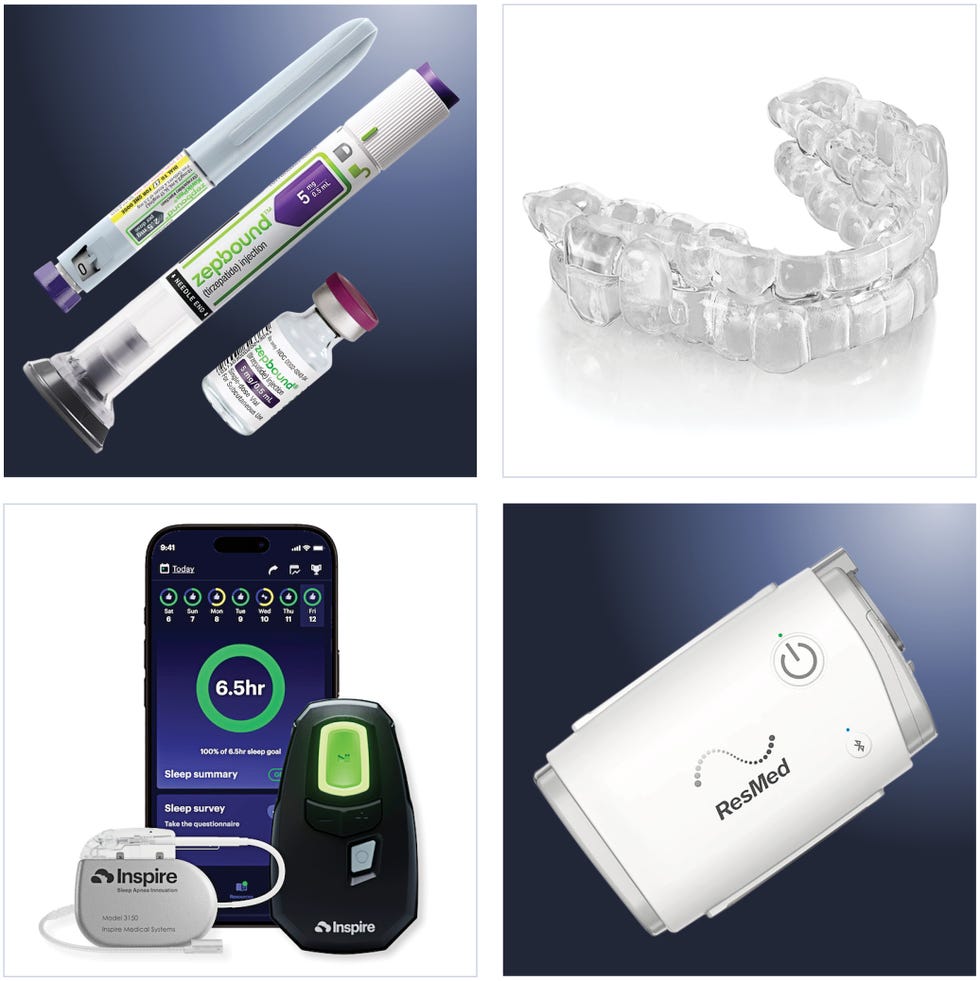
Treatments for sleep apnea include the prescription drug Zepbound (top left), custom-fit “oral appliances” (top right), surgically implanted devices like Inspire (bottom left), and more traditional CPAP machines (bottom right).
But they work. Over what is now nearly five decades of research, CPAP therapy has been shown to decrease the severity of obstructive sleep apnea, improve sleep quality, reduce snoring, lower the risk of chronic health problems, and generally enhance quality of life—for patients who can actually stand wearing the device. In addition to all the research that has been done on the benefits of CPAP, scientists have done reams of in-depth studies on device compliance.
Many patients are convinced that CPAP is a massive, untenable pain in the ass. Some people say the masks induce claustrophobia, restrict sleeping positions, require demanding cleaning and parts replacement, and are totally unsexy unless your partner has a thing for fighter pilots.
In one 2025 study that tracked 1,907 CPAP users over a two-year span, only 45 percent of them achieved “high adherence” (defined as at least four hours of use nightly on at least 70 percent of nights—typically the minimum for continued insurance coverage in the U.S.). By comparison, 39 percent were classified as “non-adherent,” using their CPAP less than 24 minutes per night and/or less than 10 percent of the time.
A separate 2025 study produced even worse figures, concluding that only 38 percent of CPAP users adhered to the minimum standard after three months of treatment. Nearly all the CPAP users I talked to for this story have a love-hate relationship with their machine, and way more than a few have a hate-hate relationship.
One coauthor of that second 2025 study—S. Amanda Sathyapala, MD, PhD, an associate professor at the National Heart and Lung Institute at Imperial College London—researches why people do or don’t stick with their CPAP therapy.
“Becoming adherent to CPAP requires a behavior change. Patients need to understand that [using CPAP] will work,” Dr. Sathyapala says. “It can be awkward and uncomfortable to start, and many patients don’t really understand why they need such invasive treatment for what they think are minor and common issues of snoring and tiredness. So ultimately, they don’t think the benefits of CPAP will outweigh their concerns about it.”
Add to all this the messy recall in 2021 of CPAP machines manufactured by Philips Respironics. The Dutch multinational company initiated a voluntary recall of 15 million devices containing a polyester foam that had been intended to dampen noise but could break down and (yikes) be inhaled by users while they slept. Beyond the obvious issue of having foam particles circulating in your airway, there was also concern that the particles could cause cancer.
The FDA ultimately received tens of thousands of reports that linked these CPAP machines to a range of respiratory problems and potentially hundreds of deaths. Class-action suits followed, as did a shortage of CPAP machines after one of the two big manufacturers left the U.S. market.
Even though the recall wasn’t great press for CPAP, experts see the setback as similar to a recall of a specific car model or one brand’s romaine lettuce, which doesn’t really change the public’s driving habits or salad preferences. CPAP therapy is safe, experts insist.
Of course, patients who were directly affected by the recall have a different point of view. David, a former information systems and cybersecurity expert from Florida, says he felt stuck with a Philips CPAP machine that the U.S. Department of Veterans Affairs would not replace even after the recall was public. In the end, David—who says he’s “completely dependent” on his CPAP after requiring years of sleeping pills to get used to it—had to use secondary insurance to obtain a new machine. But he has not yet suffered any direct health problems.
Kevin Ladow, 59, was less fortunate. The former mortgage underwriter from St. Petersburg, Florida, says he’s convinced his Philips CPAP machine gave him lung cancer. “I would wake up some mornings and I would take my mask off, and it would be black. Like, what the fuck?” he says.
Five years after surgery and a brief round of chemo, Ladow is still in remission, now using a CPAP device made by Resmed. “In many ways, I hate this machine,” he says, adding that using a CPAP has helped him go from 25 breathing disturbances an hour to around one. “That hopefully will save my life.” But as someone who has spent years dealing with lawyers and is still waiting for a payout, he certainly has more than a little ambivalence about CPAP machines. But he’s committed to using one.

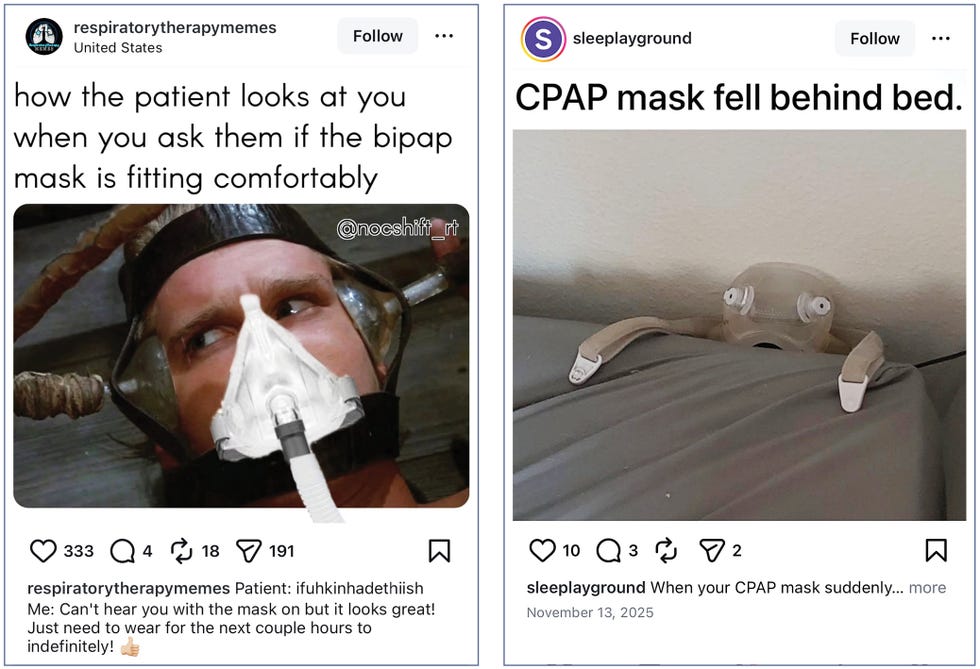
Just two of the many (many) CPAP memes you’ll find on social media that make fun of the pain points and inconveniences of the devices.
That “level of adherence,” as researchers might say, isn’t the norm—for CPAP or really for most health treatments. As Dr. Sathyapala, the CPAP adherence scientist, points out, compliance is an issue with every conceivable medical intervention, whether it’s popping a daily pill or getting 30 minutes of moderate exercise. A 50 percent adherence rate is typical for medication.
If you can get past the frustrations and annoyances of CPAP and have the perseverance to make it a health habit, the benefits are real. But if that’s not you, well, welcome to the wild world of CPAP alternatives.

The Other Fixes
WHILE CPAP ADVOCATES trumpet advancements in device technology—from lullaby-quiet motors to masks that don’t cover your mouth—alternatives cater to people who either have tried CPAP and can’t tolerate it or would never. These treatments include jawline reconstruction, nasal surgery, and any number of increasingly ridiculous-looking over-the-counter devices.
One popular non-CPAP choice is a small, surgically implanted device that sends electrical signals to open your airway while you’re sleeping. The dominant player in this category is called Inspire.
First approved by the FDA in 2014, the procedure, which can be done in an outpatient setting and requires two small incisions, has been completed more than 100,000 times worldwide, with most of those in the past five years. “The implant stimulates two muscles that pull the tongue forward and lift the soft palate, almost like a garage door lifting open,” says Dr. Patel, of the Insomnia and Sleep Institute of Arizona, who is also vice president and senior medical director at Inspire.
Research shows that if you medically qualify for Inspire, the procedure is effective. One 2020 review found that Inspire lowered patients’ AHI by an average of 17.5 after 12 months. But “the big issue with the implants is that you have to pick the right people to see if they’re good candidates,” says Dr. Abbasi-Feinberg. “It doesn’t work for everybody.” In other words, you have to be the right kind of screwed up.
Dr. Winter, the Charlottesville-based sleep specialist, says that surgical implants shouldn’t be considered as a first course of action. “With these surgeries, you don’t have a mask on your face, but you’ve got hardware in your neck and your chest,” he says. “I like to test people out with CPAP because it’s reversible and you haven’t cut into anyone’s neck.” (Not to mention that Inspire went through its own FDA recall of certain devices back in 2024.)
Which brings sleep apnea sufferers into the realm of treatments that may be out-of-pocket, experimental, and just on the horizon.
Mandible Advancement Devices
In many cases, there is a link between sleep apnea and how your jaw is aligned. Custom-made mandibular advancement devices (MADs) are much more effective at treating sleep apnea than anything you’d buy on Amazon. While most research has focused on patients with mild to moderate OSA, a 2025 study concluded that people with severe sleep apnea who used a MAD lowered the incidence of breathing disruptions by an average of 73 percent. But they typically cost a couple grand and aren’t always covered by insurance because the treatment is provided by dentists rather than physicians.
Pros: It’s effective and it doesn’t require surgery or a mask.
Cons: It is not cheap, might not be covered by insurance, and can cause jaw pain and bite-alignment issues.
A GLP-1 for Sleep Apnea
In December 2024, the FDA approved Zepbound as the first prescription drug to treat overweight people with moderate to severe OSA. Unlike Ozempic and other popular weight-loss drugs that target only GLP-1 receptors, Zepbound is the first injectable medication that acts on both GLP-1 receptors and a hormone called GIP, helping to reduce fat and inflammation in the neck and tongue area. “Just to be clear, this drug is not fundamentally treating sleep apnea,” says Dr. Winter. Much as with MAD devices, the likelihood of getting insurance coverage for Zepbound varies.
Pros: It can help overweight patients minimize or even eliminate sleep apnea symptoms.
Cons: It’s costly, it doesn’t help thinner patients, and symptoms could return.
A Pill
There are a few in the works, but the furthest along in development comes from a Boston-area start-up called Apnimed. Its once-daily pill is a neuromuscular modulator—meaning that rather than trying to mechanically open a person’s airway or reduce fatty tissue around the tongue and throat, it addresses the biological cause of airway collapse. In recent results from phase 3 trials of the drug (known in studies as AD109), recipients had a 56 percent reduction in the average number of breathing disruptions after six and a half months of treatment. The company reportedly plans to submit a formal new-drug application to the FDA in 2026.
Pros: If it works, it could be an easy way to treat sleep apnea.
Cons: Research hasn’t yet confirmed whether it works.

DESPITE ALL THE obstacles facing people who suffer from sleep apnea, experts seem to agree on one thing: The health rewards are worth all the hassle. “At the end of the day, the goal should be to get patients treated,” Dr. Patel says. “I don’t care whether it’s CPAP, an oral appliance, Inspire, Zepbound, or any other FDA-approved treatment that comes to the market.”
Fixing apnea requires considerable time, effort, and patience—which, yes, seems like a huge ask when you’re chronically sleep-deprived. Sometimes the fix is easy. Sometimes beating sleep apnea takes a combination of approaches—weight loss, surgery, and device therapy—and years of work.
Martin, a 40-year-old sales manager, once turned down a promotion because it would have required managing people in faraway time zones, and he often struggled to say awake past 8:30 p.m., even with a couple of daily naps. He didn’t want to deal with a CPAP, looked seriously at Inspire but didn’t qualify, and eventually landed on a custom mouth guard.
“I’m back to normal again, sleeping really well,” Martin says, noting that he’s often refreshed by a five-hour block of sleep and then back at it in his garage gym, trying to complete the 1,000 Pound Club challenge. “The mandible device has made a huge difference. I mean, I’ve got the energy to exercise.”
And when you consider the very real risks of waking up every night and sleepwalking through your days, maybe it’s time to find your way out of the nightmare.


Read the full article here


