


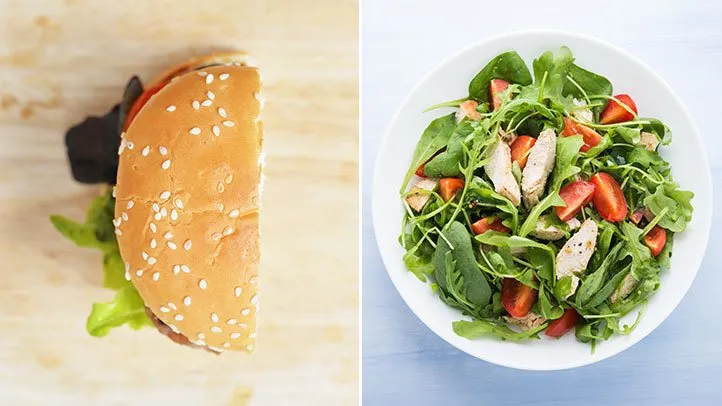
Volumetrics places the emphasis on eating rather than deprivation. “The focus is 100 percent about fullness,” says Chicago-based Dawn Jackson Blatner, RD, author of The Flexitarian Diet and The Superfood Swap. “This diet is trying to get you full because, when given a choice, people will choose to eat more.”
According to Volumetrics, foods that contain more water, such as fruits and vegetables, are healthier because they have lower energy density, or number of calories in a specific amount of food, than other options that have comparable satiety. Foods that have high energy density include sugary and fatty foods, such as potato chips and cookies. “[Rolls] is saying that you can naturally turn off your desire for these foods,” says Blatner.
Essentially, the claim that advocates of Volumetrics make is you can lose weight by eating fewer calories yet still feel full.
“Volumetrics is one of my favorite diets because it’s more about eating than dieting,” says Andrea Giancoli, MPH, RD, a nutrition communications consultant based in Hermosa Beach, California. “People like to eat, and research has shown that when you eat high-water-content foods, such as a green salad with a lot of vegetables or soup, you eat less [calories].”
Best of all, Rolls argues in Volumetrics: Feel Full on Fewer Calories that you won’t have to give up foods you love while on the diet: “You won’t have to cut out all the fat from your diet, live on rabbit food, subsist on foods on a ‘free’ list, or avoid any food,” she writes in the book. Instead, the diet helps you understand how to enjoy certain foods — whether it’s raisins, pretzels, chocolate, cheese, or the like — without overeating, Rolls explains in the book.
Volumetrics also gives tools to calculate the energy density of foods, and recommends using a food journal and getting enough physical activity. “Research shows that keeping a food journal is one of the tactics that work for successful weight loss,” says Giancoli.
Read the full article here