


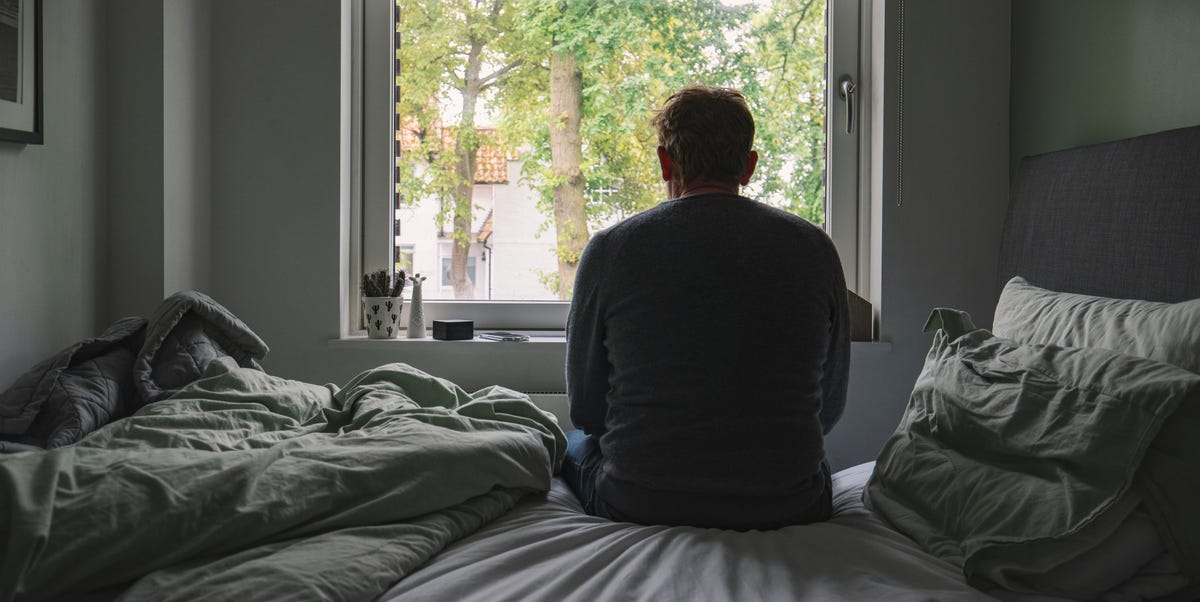
ONE IN 10 men experience depression or anxiety but only about half ever receive treatment. Why? Despite the milestones made to address men’s mental health, the stigma of openly talking about mental health still exists.
“We’ve all been trained to believe that we have to be strong and that depression is not part of our experience,” says Dan Iosifescu, MD, psychiatrist at NYU Langone Health. “That if we had been tough, this is not something we would experience.”
But that doesn’t mean men feel depression or stress any less deeply than women. In fact, while men and women have similar depressive symptoms (think: fatigue and loss of enjoyment in favorite activities), there are certain behaviors men tend to exhibit more.
So MH asked seven therapists about the most telltale symptom of depression in men, and they all had the same answer.
Male Depression Is a Paradox
MEN WITH DEPRESSION often don’t look sad. Despite still having internalizing symptoms—sadness and low energy—guys are more likely to show externalizing symptoms.
Depression often gets acted out, says Peter Vernig, PhD, clinical psychologist and vice president of mental health services at Recovery Centers of America. This can look like bouts of anger, increased irritability, increased alcohol consumption, or engaging in high-adrenaline behaviors. This loss of temper can feel more explosive than necessary, regardless of whether it’s directed toward loved ones or strangers, says clinical social worker Whitney Willborn, LCSW.
Then there are some behaviors that may not look so problematic at first. Therapists have a term to sum up these covert behaviors: escapism.
“Men experiencing depression may engage in behaviors that are entirely harmless in moderation—such as playing video games, watching sports, spending time with hobbies—to an excessive degree that can interfere with their daily lives,” says Willborn. “Rather than being enjoyed in themselves, these behaviors become ways for men to avoid confronting their emotional pain.”
Guys tend to present with a high level of masking because of the stigma of feeling sad and outwardly expressing emotions, says Matthew Strobel, PsyD, founder and director of Navesink Psychological Services.
Traditionally, society tends to think of depression as giving up on preferred activities, but Strobel says men are more likely to double down on activities they think will make them feel better. At the very least, the activity helps in temporarily avoiding their feelings.
Even productivity, like working long hours in the office or gym, can function as a hiding place. “Escape behaviors are real, but I see less ‘escaping feelings’ and more ‘staying busy enough not to notice them,’” says clinical social worker Lynn Zakeri, LCSW.
Why Men Are Diagnosed at Lower Rates
GUYS ARE DIAGNOSED with depression at half the rate of women. It boils down to several reasons.
Stigma and internal view of masculinity
Showing vulnerability—crying and talking about feelings—is considered more feminine behavior. The more culturally acceptable option for guys is being self-sufficient and responding in ways that are considered masculine, says Allen Masry, MD, addiction psychiatrist and medical director of All in Solutions.
Limited screening tools and misdiagnosis
It can also take a while to see a therapist. Men’s symptoms often clash with the stereotypical image of depression, leading others to mistake cries for help as individual failures. Dr. Masry says many screening tools are less likely to identify depression in men, especially if they present with less sadness and more irritability or escapism behavior.
The DSM-5—considered the ‘bible’ of psychiatry—puts a lot of emphasis on sadness and anhedonia as criteria for depression. As a result, Dr. Masry sees guys willing to look for help more likely to check into a substance use treatment center than a mental health clinic.
Resistance to going
Zakeri says most of the guys (who are later diagnosed with depression) she sees in her practice are not self-referred. They’ve usually been given ultimatums in their marriages or have a work issue and mandated to seek counseling. Sometimes they are secretly grateful for the push they can’t give themselves.
“Men don’t come in saying ‘I’m depressed.’ They say ‘I’m exhausted,’ ‘I have no patience,’ ‘I don’t enjoy anything anymore.’ They want to be fixed at the onset, but find later they want to be understood,” says Zakeri.
Therapist-Approved Ways Men Can Open Up About Depression
IF YOU’RE CONCERNED about a friend or loved one, directness without confrontation is the best approach. So rather than naming a diagnosis, use a mix of observation and objective data. This can look like:
- “You don’t seem like yourself lately”
- “I’ve really seen you withdrawn and not sleeping lately.”
- “Are you really doing OK? What are you thinking about?”
- “I noticed you stopped going to your Sunday golf game.”
- “You didn’t join the group for our fantasy league, you good?”
Open a door but don’t put him on trial, says Zakeri. Avoid using language that includes feelings or guilt or shame, which can add to his ‘I suck’ narrative.
Small actions that foster the lines of communication are also critical. “To seek help or support can be uncomfortable, especially when they see themselves as the problem solver, the caretaker, provider of others,” says Courtney Cantrell, PhD, clinical psychologist at Harbor Counseling & Consulting. “How does the person who sees themselves as strong and helping others accept or request help?”
Willborn says going for a walk or doing a side-by-side activity when approaching these conversations can help men feel more comfortable opening up rather than an intervention-style sit-down. Helping them find community, especially with other men, can make it easier to discuss any emotional struggles.
If a loved one is open to attending therapy, Dr. Masry says helping them find a therapist, accompanying them to appointments, or simply checking in afterward can make a tremendous difference.
For guys that may feel hesitant, Cantrell likes to use this analogy to remind them that mental health is just as important as physical health. “If someone breaks their arm, people generally don’t talk themselves out of going to the doctor by saying ‘Oh it’s not a big deal, it will go away, or others have it worse.’ Why would depression be any different?”

Jocelyn Solis-Moreira, MS is the associate health & fitness for Men’s Health and has previously written for CNN, Scientific American, Popular Science, and National Geographic before joining the brand. When she’s not working, she’s doing circus arts or working towards the perfect pull-up.

Erica Sweeney is a writer who mostly covers health, wellness and careers. She has written for The New York Times, HuffPost, Teen Vogue, Parade, Money, Business Insider and many more.
Read the full article here