


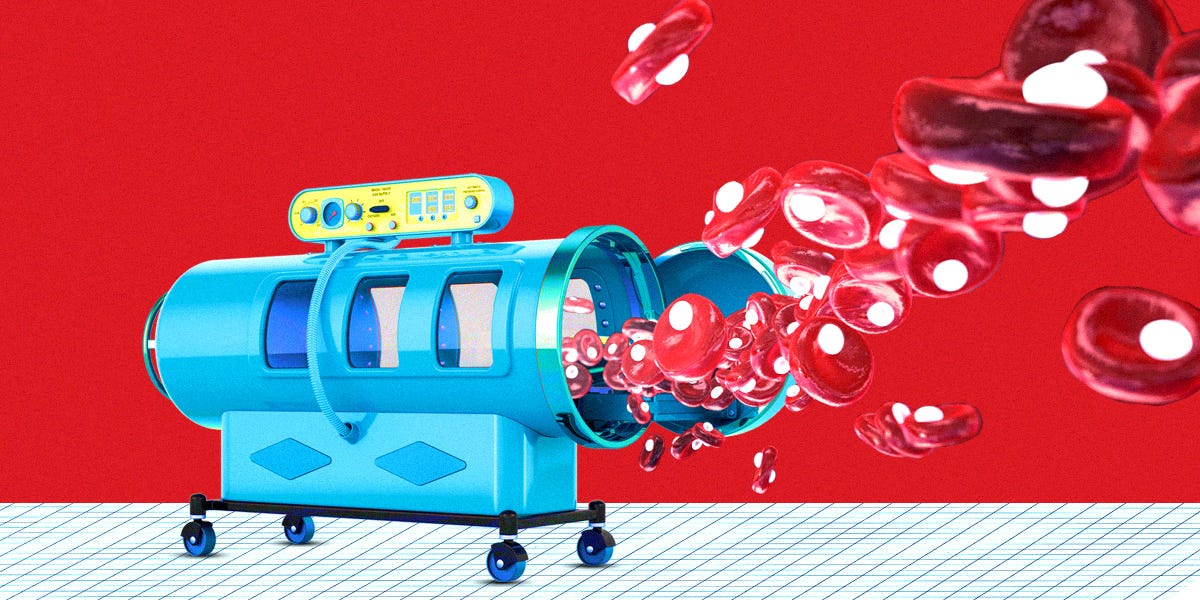
The Optimized Man is a biweekly email column from our editorial director as he tries out the latest, greatest, and weirdest health and wellness innovations so you don’t have to. Sign up here to get the next one.
SO THERE I was, lying flat inside a dimly lit, tightly sealed, highly pressurized hyperbaric oxygen therapy chamber, my skin damp from the thick, humid air and my bladder somehow full even though I swear I’d just gone, when I realized that maybe HBOT wasn’t for me.
The first 20-ish minutes in the chamber were pretty uneventful. They’d sealed me inside the glass-topped tube and set the pressure—1.35 ATA (atmospheres absolute), which is as high as the chambers in this particular med spa go but is pretty mild by HBOT standards—and as my body acclimated, my ears popped and some light tension developed in my temple, but it all quickly subsided. I scrolled on my phone and tapped out some emails, stared at my feet, and wondered when I would start feeling the mental clarity that so many HBOT-obsessed friends had told me about.
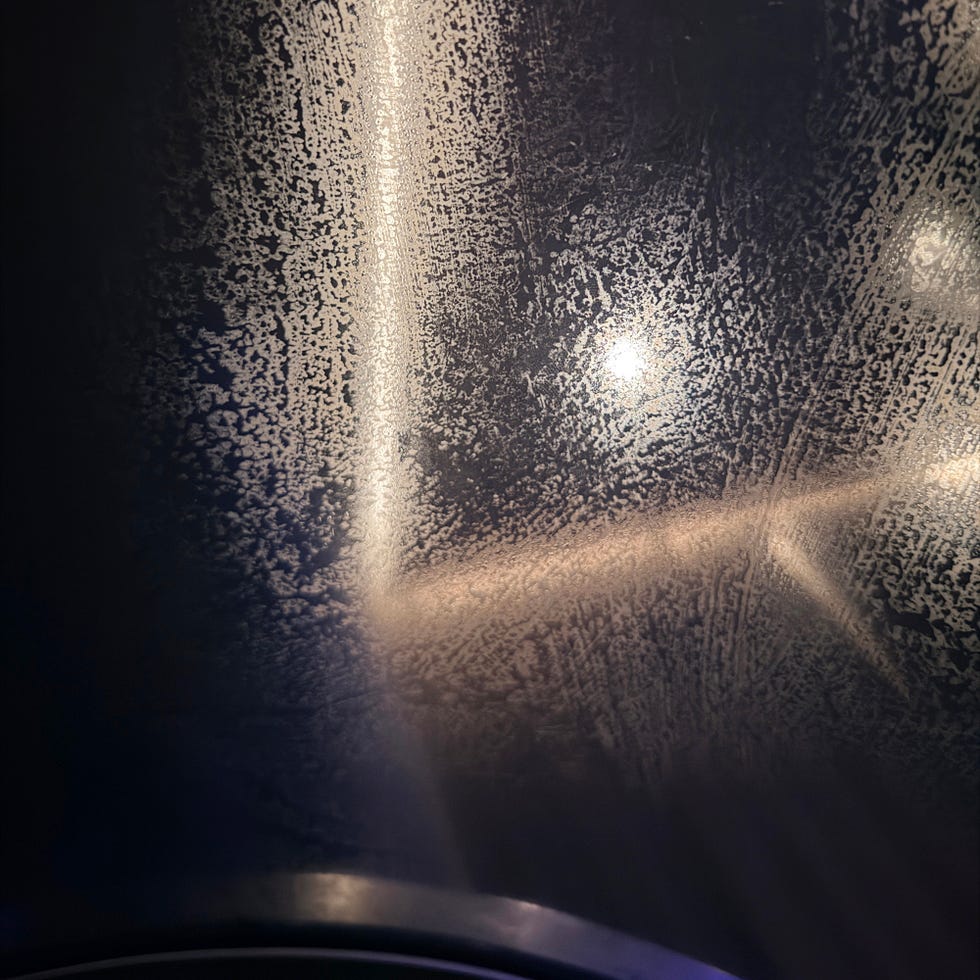
Then I realized I had to pee. Maybe I could hold it ’til the end, right? I could definitely hold it. Minutes passed before I realized—daaaamn it—I could not hold it. I pushed the call button so the guy at the spa’s front desk could let me out so I could skitter to the bathroom, and…no one came. I waited a minute and pushed it again. Nothing. This went on long enough for the glass top to start fogging up like a rainy-day windshield, and it suddenly seemed kind of hard to breathe. There was a DIY emergency escape hatch, but they’d warned me not to use it unless absolutely necessary (sudden loss of air pressure, etc.). I was stuck. At first, I’d thought the chamber looked like one of those sleek pods where long-haul astronauts take ageless naps in sci-fi movies. Now it felt more like a gently humidified coffin.
After about 10 minutes of call-button activism, the front desk guy finally appeared, apologizing through condensation-covered glass, and began the two-minute (!!) process of depressurizing the chamber. I emerged, sweaty and stressed, and ran to the bathroom thinking: This is supposed to feel good?
Lots of people think so.
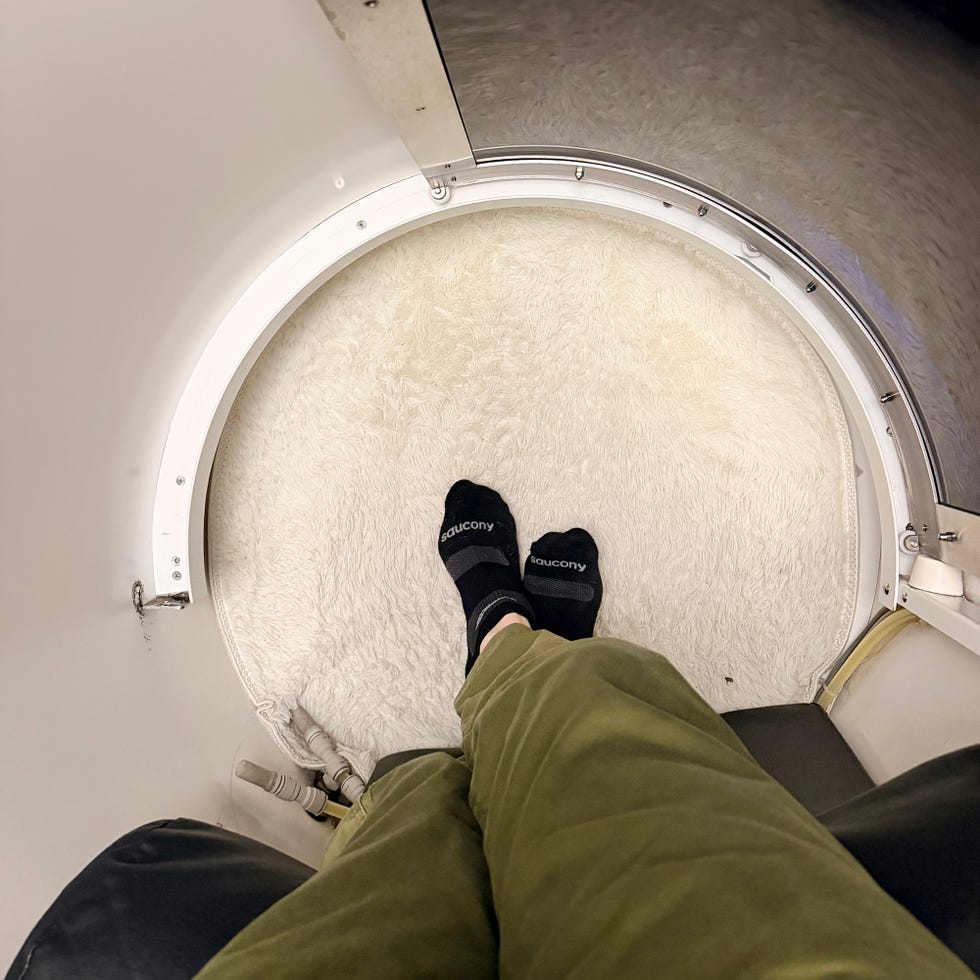
My two views from inside the chamber-slash-coffin: my feet and the sweaty, condensation covered glass top.
HBOT has been around for a while. In medical settings, patients breathe nearly 100 percent oxygen inside chambers pressurized to higher-than-normal levels, and that pressure allows more oxygen to dissolve into the bloodstream and reach tissues that might otherwise be oxygen-starved. People suffering from decompression sickness (the bends), carbon monoxide poisoning, wounds that won’t heal: They’re receiving HBOT under a physician’s care with clear therapeutic goals.
Over the past decade, though, the chamber has migrated from hospital basements to luxury gyms and longevity clinics, with lower-pressure chambers marketed for recovery and antiaging. Bryan Johnson uses one. (Obviously.) LeBron uses one, as does fellow non-ager Novak Djokovic. The vibe has shifted from “treatment” to “upgrade,” and the goals now range from post-workout recovery to clearing your head or even clearing up your skin. The pitch rests on plausible biology. Higher oxygen levels under pressure can reduce certain kinds of inflammation and stimulate what’s known as angiogenesis—the growth of new blood vessels. It’s not crazy to think that increasing oxygen delivery might help with recovery or inflammation.
The science starts to wobble in the jump from “may support healing” to “reverses aging.” Beyond the approved medical uses, the evidence that HBOT meaningfully extends lifespan or supercharges cognition in otherwise healthy people is pretty thin. That’s not to say there aren’t more immediate benefits in the realm of head clearing and postgame recovery. For some people, it may feel restorative—a reset after travel, an adjunct to training, a structured hour of forced stillness. But the best science we have doesn’t go much further than that.
Meanwhile, inside the chamber, it smells faintly like an airplane cabin. It’s warm. Your ears pop. You are encouraged to relax while being sealed inside what is essentially a transparent tube. But I could live with all of that. The thing that broke me was the feeling of being stuck. When I turned 30, I made a rule that I would never again go to a party I couldn’t leave, and apparently I need to extend this policy to my wellness regimen. If I can’t tap out, if I can’t excuse myself, or if I can’t stop whatever is happening to my body long enough to use the bathroom, I’m not optimizing—I’m trapped. But that’s just me. HBOT has real medical uses, plausible mechanisms, and a growing fan base of would-be Bryan Johnsons. If you’ve tried it and loved it, I want to hear about it—especially if you skipped the bathroom scare.

Richard Dorment is the editorial director of Men’s Health.
Read the full article here