








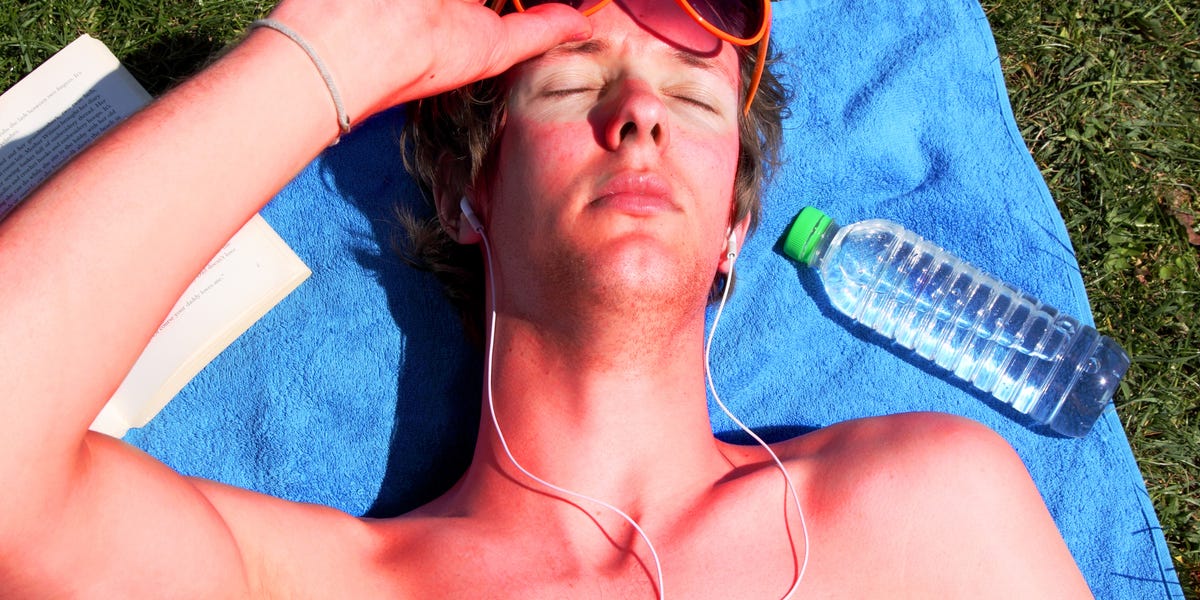
TO CAPTURE THE bronze glow, people online aren’t heading to the beach or the tanning booth. It’s a sunless tan summer, thanks to the widespread chatter about the synthetic peptide melanotan II. Reddit threads and TikTok have been flooded with guys using these “tan jabs” as a shortcut to achieving a sun-kissed look.
Melanotan II has also captured the attention of the FDA. The administration does not currently approve the peptide for human use (Technically, no one is allowed to market it for consumer use, though that hasn’t stopped people from purchasing research-grade peptides meant only for laboratory use on the gray market).
When a panel convening July 23 and July 24, 2026, weighs in on whether the FDA should loosen restrictions on seven peptides, melanotan II won’t be on the list. The peptide is expected to stay on the Category 2 list because of a lack of clinical evidence and significant safety concerns.
Because in pursuit of the perfect sunless tan, guys are reporting some dangerous side effects. Some go beyond the skin.
Melanotan II is a synthetic peptide mimicking the alpha-melanocyte stimulating hormone. By tricking pigment cells that normally switch on in response to UV into multiplying, it stimulates melanin production and darkens the skin. Decades ago, scientists at the University of Arizona made Melanotan II (and another synthetic analog melanotan I) to be a sunless tanning agent. They also found it helped with sexual dysfunction in men.
While melanotan I went on to become a medication to prevent phototoxicity, clinical trials of melanotan II took a turn for the worse. Early data showed a number of issues ranging from facial redness, nausea, and spontaneous erections. The drug trials were halted because of the growing number of side effects.
The FDA notes the most severe adverse events include melanoma, posterior reversible encephalopathy syndrome, sympathomimetic toxidrome, and prolonged and painful boners. One 55-year-old wound up in the ER with a 30-hour erection after injecting 2 milligrams into his abdomen.
Given the lack of research efforts on this front, most of what we know now from melanotan II has been from the experiences of individuals self-injecting themselves with the peptide. Beyond the FDA’s list, one case report linked melanotan II to rapid breakdown of muscle tissue. Another tied the peptide to a lack of blood flow to the kidneys. One teenage boy quickly developed nearly 40 moles on his back after using the peptide. While non-cancerous, his dermatologist said he is at a greater risk of melanoma. Online anecdotal accounts of guys self-injecting melanotan II for decades describe possible mole development if exposed to UV-bearing activities too soon.
Whether melanotan II can cause skin cancer is one of the most concerning (and controversial) takes.
A review from over a decade ago looked at 14 clinical studies and found no evidence tying the peptide to melanoma. However, these studies did not have data on long-term risk and eight did mention people developing new lesions following use. In 2020, a study using tumor-bearing found the peptide suppressed the development of melanoma. Though there have been a number of case reports about melanoma emerging from moles that came during or after peptide use.
One challenge with defining the link between melanotan II and skin cancer is that the people developing cancer also have a history of high UV radiation exposure such as being regular tanning bed users. Despite the ongoing discussion of cancer risks, that hasn’t stopped social media from spreading misinformation about the peptide. One study found one in three social media posts claiming melanotan II protects against skin cancer. When researchers interviewed people about the safety risks of the drug, most were unconcerned and believed it prevents sunburn. For reference, it does not provide natural protection against UV exposure.
Regardless of where you stand on the melanoma argument, the other side effects—like painful boners for hours—should be enough to give pause.
Find more information and the latest peptide news at MH’s peptide hub.


Jocelyn Solis-Moreira, MS is the associate health & fitness for Men’s Health and has previously written for CNN, Scientific American, Popular Science, and National Geographic before joining the brand. When she’s not working, she’s doing circus arts or working towards the perfect pull-up.
Read the full article here


