


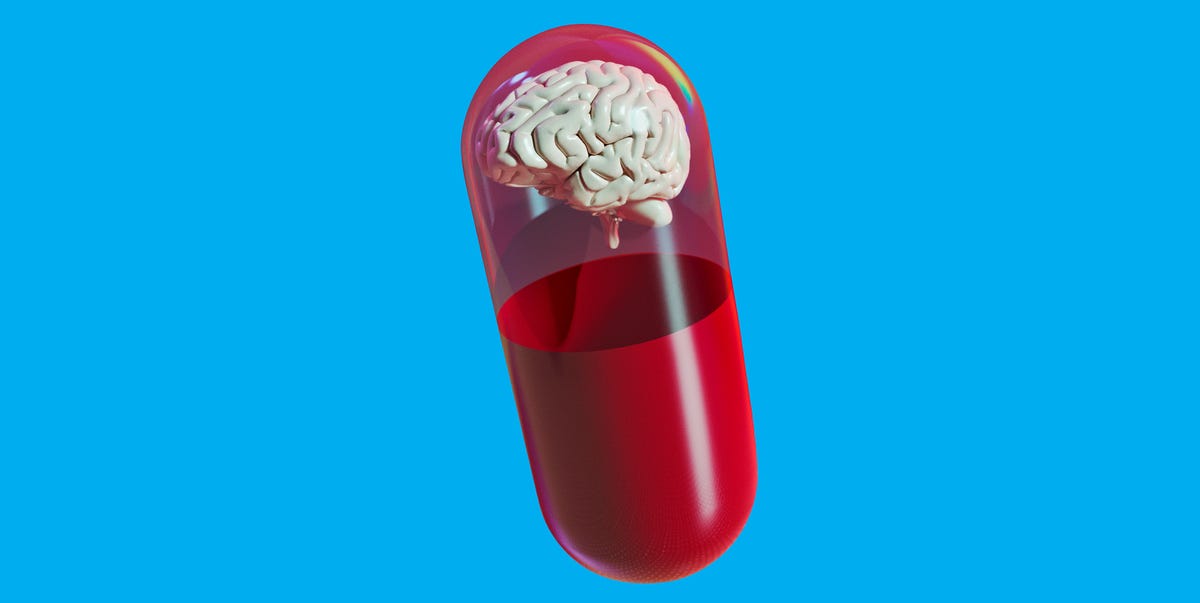
- Some brain supplements, also known as nootropics, do work in improving cognition. The key is examining a supplement’s active ingredient.
- According to several research studies, the most promising brain-boosting supplements are Omega-3s, curcumin, phosphatidylserine, creatine, and L-theanine.
- People have reported increased focus when taking the amino acid taurine (found in energy drinks). However, its alleged effects may be due to other ingredients such as caffeine.
AMERICANS ARE INVESTING alot on brain supplements that promise increased memory and focus. With names like Magic Mind, Brain Guard+, and Alpha Brain, it’s easy to get swept up in the hype.
The good news is that a few of these nootropics kind of work. The bad news is that most of them don’t.
The key to telling them apart is knowing the science behind each supplement’s active ingredient, says psychiatrist Gary Small, MD, behavioral health physician-in-chief at Hackensack Meridian Health. Here are the ones with the most—and least—potential.
Promising
Omega-3 fatty acids
The omega-3s found in fatty fish—DHA and EPA—may help protect your brain from inflammation as you age, says Dr. Small. Getting them in food form is best, but omega-3 supplements can be helpful if your diet is deficient in them. In some studies, large doses of DHA and EPA helped improve attention, memory, and learning in people who’d been diagnosed with minor cognitive impairment.
Curcumin
This molecule, found in the spice turmeric, substantially improved working memory and moderately improved brain processing speed, according to one study review. The scientists suspected a two-way effect: Curcumin might help tamp down inflammation, and its antioxidant properties could help your brain’s neurons function better.
Phosphatidylserine
In the membranes that surround and protect your brain cells, you have a fat known as phosphatidylserine, and it helps to strengthen communication with other cells in your body. A study in the Journal of Affective Disorders found that adults with mild cognitive impairment who took a phosphatidylserine supplement improved their short-term memory more than those who took a placebo.
L-theanine
Focus! Sleep! Anxiety! This amino acid—from tea leaves—helps your brain in more than one way. One study found that sleep-deprived people ages 20 to 25 who took the supplement did better at a driving video game than people who drank water instead. Plus, it can maximize the benefits of sleep. The amino acid has been linked to falling asleep faster, sleeping better, and feeling less groggy during the day. Good sleep health is a cornerstone to maintaining a healthy brain (and reducing your risk of future dementia).
But wait—there’s more. There is some (limited) evidence of L-theanine helping to relieve symptoms of anxiety and ADHD when used alongside medication, possibly by boosting neurotransmitters that reduce stress.
Creatine
Famous for building muscle, this compound is earning a reputation for strengthening your mind too. A meta-analysis showed that creatine improved memory, likely by increasing levels of phosphocreatine, which supplies energy to brain cells. Other research suggests that creatine supplements boost thinking abilities and processing speed after sleep deprivation, in part by reducing stress-induced cellular damage. Still, we need more studies to fully buy in.
Debatable
Magnesium
So far, tests in rats with Alzheimer’s disease suggest magnesium might reduce brain inflammation to help them think better. There’s not a lot of other research into its effect on the brain. But multiple studies suggest that magnesium supplements can improve sleep and quell anxiety, which certainly can help you feel smarter.
Taurine
You’ll find this amino acid in meat and seafood—and yes, okay, energy drinks. Dr. Small says that it can help boost focus. People who popped an energy shot with caffeine, taurine, ginseng, and vitamins improved their scores on short math tests more than those who took a placebo, according to a recent study in Frontiers in Nutrition. But here’s the thing: Because taurine is often paired with focus-boosting caffeine, it’s hard to tell how much work the taurine alone is actually doing.
Citicoline
This one’s complex. Citicoline is a compound that your brain uses to build phosphatidylserine, the fat in brain cell membranes mentioned earlier. By stabilizing brain cell membranes, citicoline might protect neurons from inflammation and damage. While a study in the Journal of Alzheimer’s Disease found that citicoline supplements boosted scores on a test measuring recall, the ability to follow directions, and other basic thinking abilities in people with dementia when taken with meds. However, more research is needed to validate the above study’s results.
Ginkgo biloba
This supplement became a blockbuster in the early aughts after small studies suggested it could improve memory. Since then, larger studies have shown mixed results for recall and other cognitive functions. And the side effects are not fun: headaches, dizziness, constipation, and a racing heart.
Pass on These
Apoaequorin
This jellyfish protein, found in the popular supplement Prevagen, supposedly binds to calcium in your brain to help your neurons send and receive information. If you saw commercials saying that Prevagen improves memory, you won’t see them again. In 2024, the Federal Trade Commission ruled that the company can no longer make that claim. Clinical trials suggest it’s no better than taking a placebo.
Vitamin E
Some early research found that high doses (2,000 IU) of vitamin E could slow the damage of Alzheimer’s, but the evidence isn’t strong enough to recommend it, says Dr. Small. Plus, it’s a blood thinner, so high doses can increase the risk of bleeding and strokes in people with heart disease. Yikes.
Nicotinamide
This form of vitamin B3 has been shown to reduce cognitive impairment in aging mice. But that’s mice. It would take years of clinical trial data to see if the results translate to humans. The small human studies available so far are in people with early memory loss or Alzheimer’s. These showed no improvement after taking nicotinamide.
Lion’s mane or cordyceps
The touted benefits of these fungi come in the form of reduced depression and anxiety. More recently, there has been a study on cordyceps and its ability to reverse learning and memory deficits in mice. But again, it’s in animals, not humans. There were also other factors like fatigue and exercise. Research in humans shows mixed results with limited benefits for middle-aged and older adults.

Julie Stewart is a writer, editor and content strategist with over a decade of experience translating complex topics — health and medicine, science and engineering — into engaging, accessible stories. Her work has appeared in publications like Men’s Health, Women’s Health, AARP The Magazine, EatingWell and Prevention, and she has also led strategic communications for a top engineering college and a global oncology company.
Read the full article here