








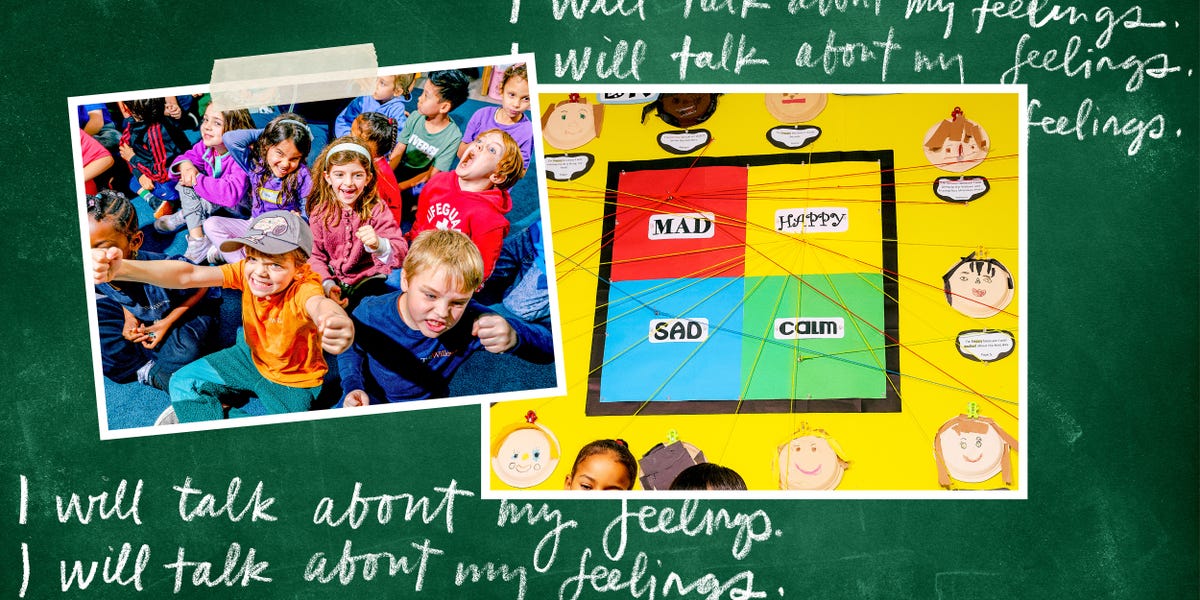
ON THE DAY I visit the Willows Community School, a K–8 private school in Los Angeles, the students are a whirlwind of emotions, feeling everything from nervous to satisfied to exhilarated to chill.
I know this because I checked their “Mood Meter,” right at the front of the room. The kids at this tidy school are at the forefront of a movement to integrate social emotional learning into the curriculum in the classroom. Students here talk about how books make them feel or what historical figures must have felt, and students in the Lower Elementary start each and every day by plotting how they’re feeling on that big mood chart. There are 100 options on the grid, from proud to glum, apprehensive to serene. Their answers are all over the map, a far cry from the responses you probably got this morning to every “How you doin’?” you handed out. Spend some time with them and you notice that these grade schoolers seem to know a hell of a lot more about managing their emotions than us grown-ups.
That’s essential since the world, I’m reminded on my visit, is an emotionally dysregulated place. Emotion dysregulation, explains Marc Brackett, PhD, the founding director of the Yale Center for Emotional Intelligence, is a fancy way of saying you have trouble managing your feelings, and it usually results in reacting disproportionately to a situation. Emotion dysregulation is screaming at another driver who swooped into your parking spot. It’s the chef or the CEO who manages with bullying and intimidation. It’s the president of the United States hopping on social media to celebrate the death of a political rival, and it’s basically every minute of every cable news panel show. The whole world, it feels like, is completely dysregulated, and it’s making our offices less productive, our relationships more cantankerous, our public discourse more toxic.

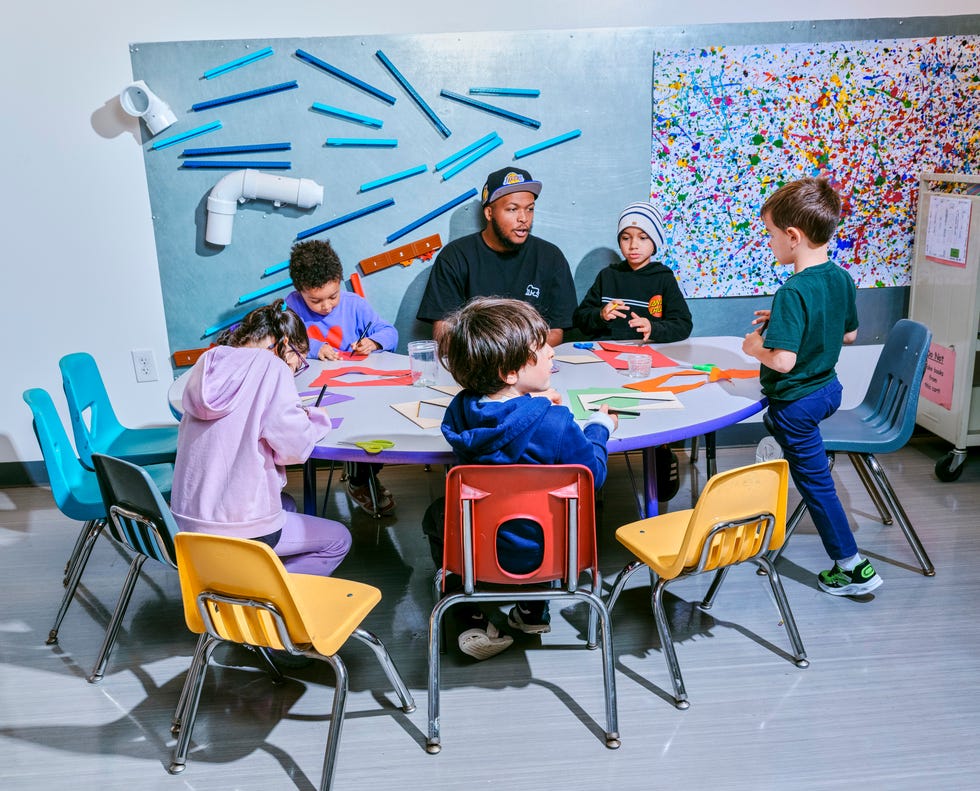
At the Willows Community School teachers integrate emotional education into the traditional curriculum.
That’s why I’m at the Willows with Brackett, probably the country’s leading expert on regulating emotions, talking to kindergartners and preteens about their feelings. Brackett, who is well dressed and compact, leads me into an orderly kindergarten classroom, where a well-behaved gaggle of 5-year-olds crisscross applesauce around him. Brackett starts talking about feelings—and they actually listen.
The Willows Community School is one of a growing number of schools across America following a protocol developed by Brackett to bake emotional intelligence into the curriculum and students’ lives. It’s a stark contrast to public schools in the ’90s, where the only option on a mood meter I would have dared tick was “fine.”
And that’s the point, Brackett says. “These kids have different brains than the school next door,” he says—different brains than I had at my public school in the ’90s. “They’re used to thinking about feelings; there’s no weirdness for them.”

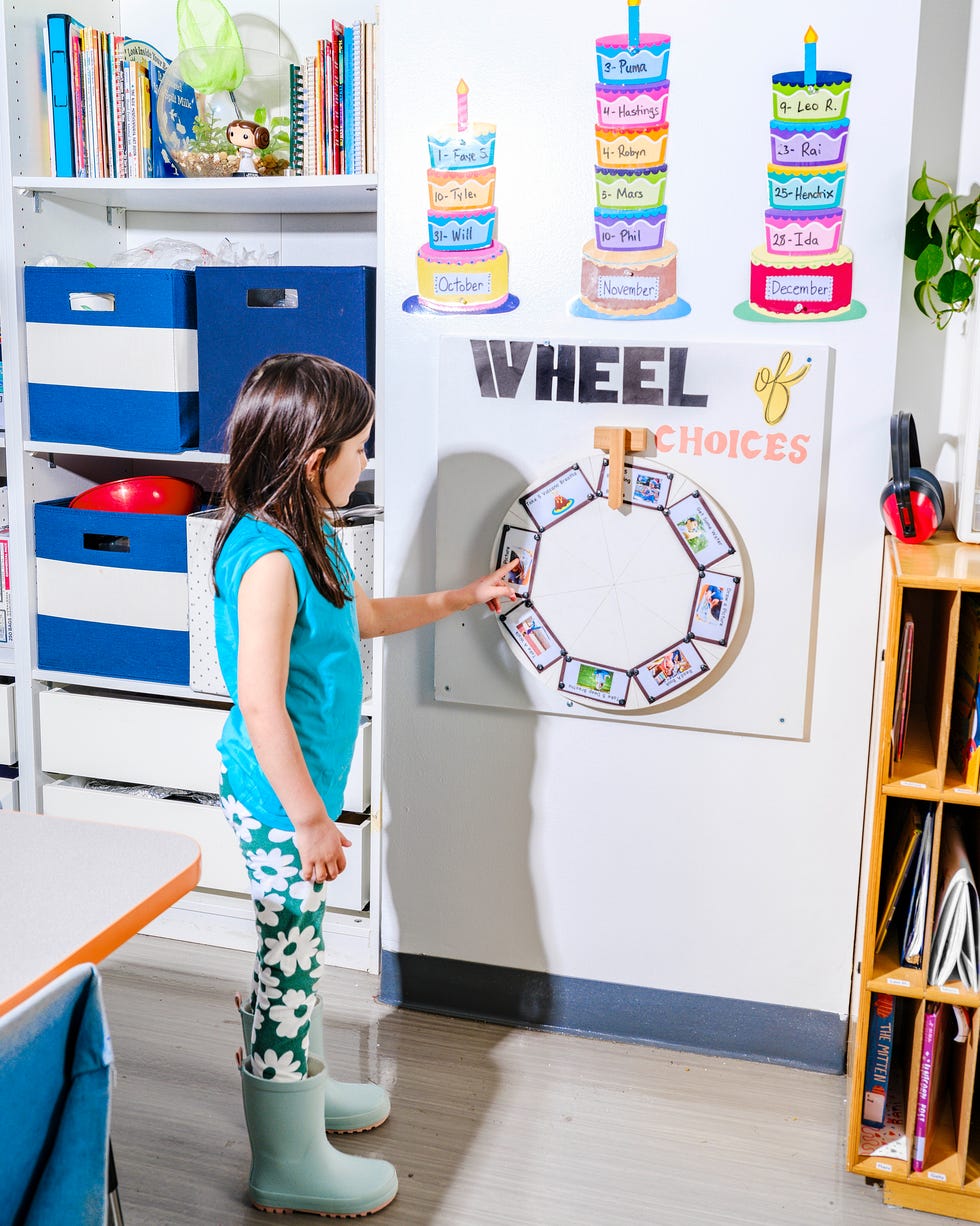
From kindergarten on, kids learn how to solve conflicts with tools like the Wheel of Choices.
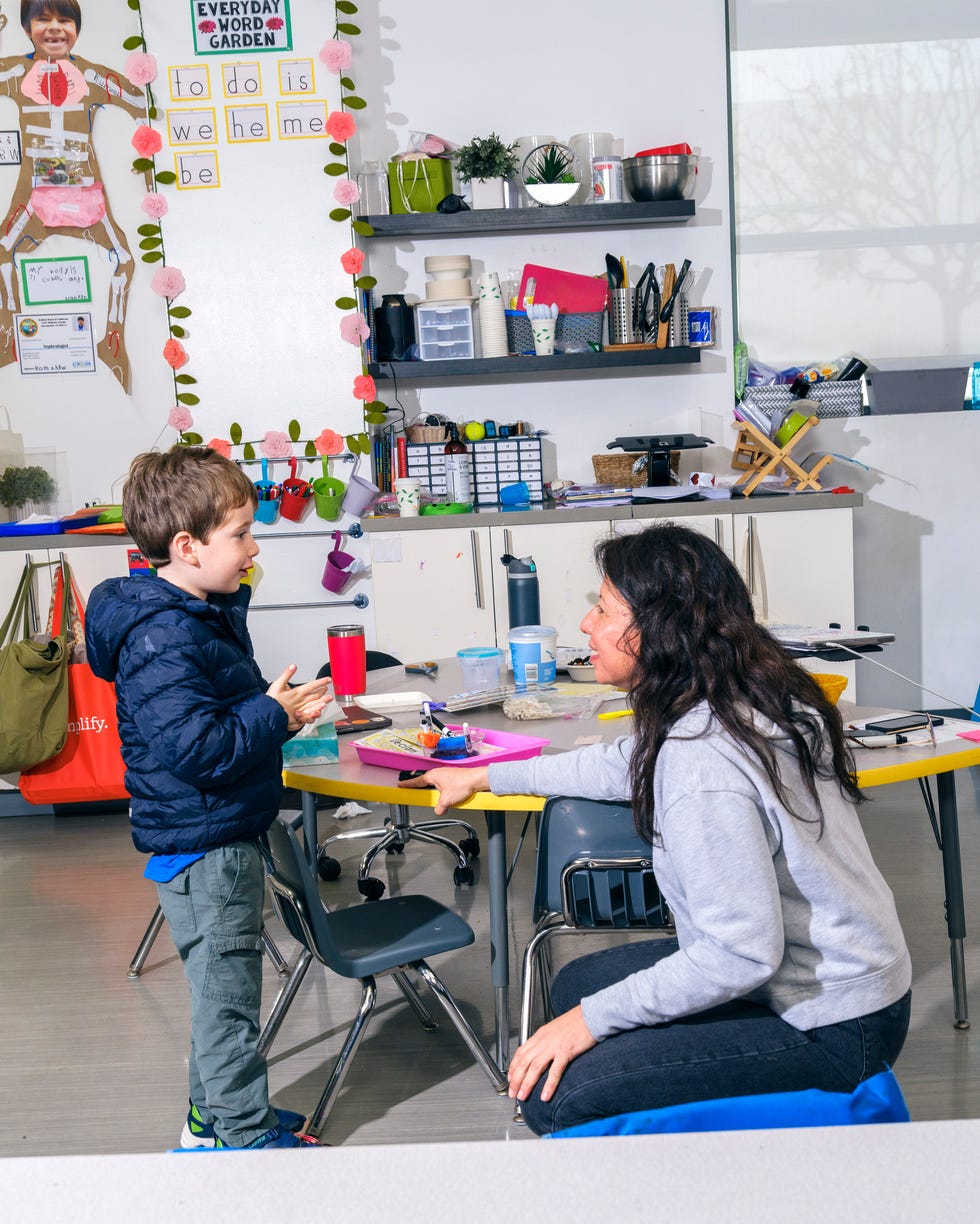
At schools that follow the RULER approach, boys are taught that feelings are healthy and natural, not off limits.
Getting kids to talk about their feelings may sound like the latest crusade from the academic elite. (Social and emotional learning programs like Brackett’s have been restricted in Florida.) And, I confess, at first sniff this all seemed a little woo-woo to me. A little West Coast. But Brackett’s agenda is straightforward. “I’m not asking them to talk about their feelings all day long. The goal isn’t to have a kid come to school and say, ‘I miss my mommy’ every day for six hours,” he explains. “It’s about how to use your emotions wisely to achieve your goals.”
And why should you add emotion regulation to your already overflowing plate of self-improvement ambitions? Call it a preventive measure against becoming a total asshole. Although Brackett is an expert in child development, he says most adults are completely unaware of their emotions at any given time. We swallow them, deny our feelings, then blow up or shut down. Even positive emotions can be dysregulated, if they’re not helpful to the situation you’re in (such as schadenfreude when empathy is needed). Brackett, who routinely consults for big companies like Amazon, says emotion dysregulation is a huge drag on workplaces. “I ask people, ‘How many of you have ever worked with someone who is dysregulated?’ And everybody raises their hands,” he says. “And I ask, ‘How many of you feel, I really want to work with that person for the rest of my life?’ And everybody puts their hands down.”
Dysregulated emotions—like losing it with a coworker over something inconsequential or dismissing valid ideas out of hand—drives teams apart and creates conflict. It’s not that the feeling is bad; it just causes issues when it’s not managed. “When people display strong, unpleasant emotions, you have to walk on eggshells and you don’t want to be in that meeting,” Brackett says.
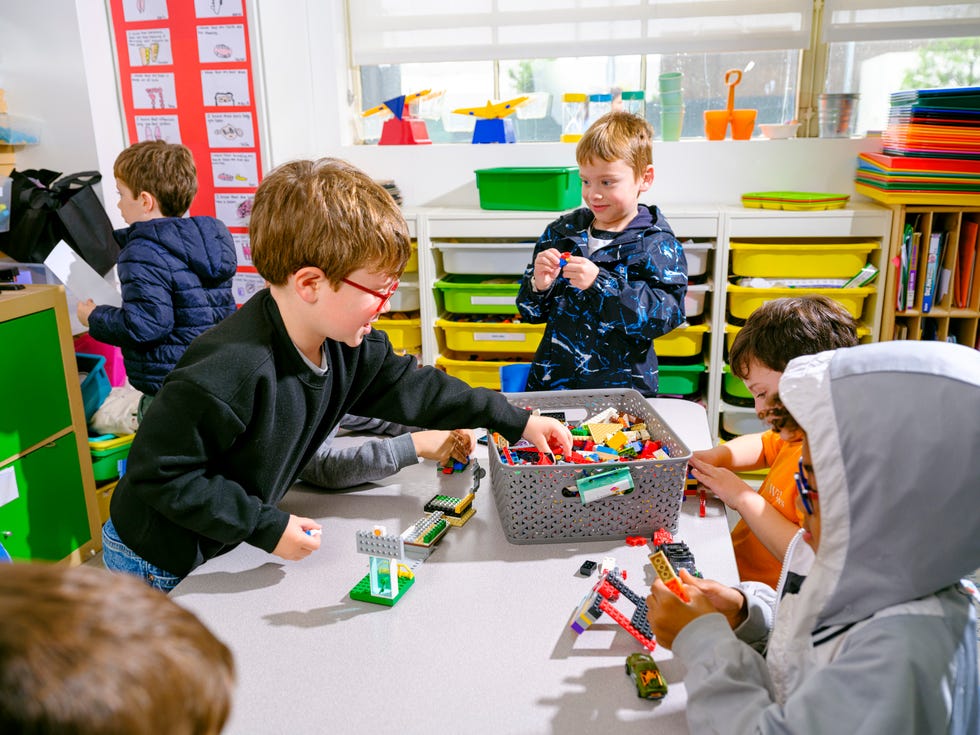
Once kids — and grown ups! — learn to understand their feelings, Dr. Marc Brackett says, they have an easier time regulating them. Teachers say the result is less conflict in classrooms.
The same thing happens in relationships. If your partner comes home and trauma-dumps on you every evening, you might tune out his or her actual experiences and emotions after a while. Dysregulated emotions, Brackett says, keep us unproductive and unconnected. Not even talking about feelings is just as unhelpful.


BACK IN THE kindergarten huddle, Brackett asks the kids a simple question: “Why do your feelings matter?” Hands shoot up. “If you’re sad, somebody can help you,” one kid says. “You have to tell people how you feel to get help,” another suggests. Brackett is pretty excited about these answers, and I’m pretty impressed too.
In between classes, I meet 14-year-old Milo. The idea of suppressing emotions is foreign to him, even silly, and he tells me that his emotional awareness has helped him stay calm and de-escalate fights with friends. At the Willows, teachers have followed Brackett’s evidence-based program for emotional intelligence, called RULER, for a decade. RULER—now taught at more than 4,000 schools—stands for “recognizing, understanding, labeling, expressing, and regulating” emotions.
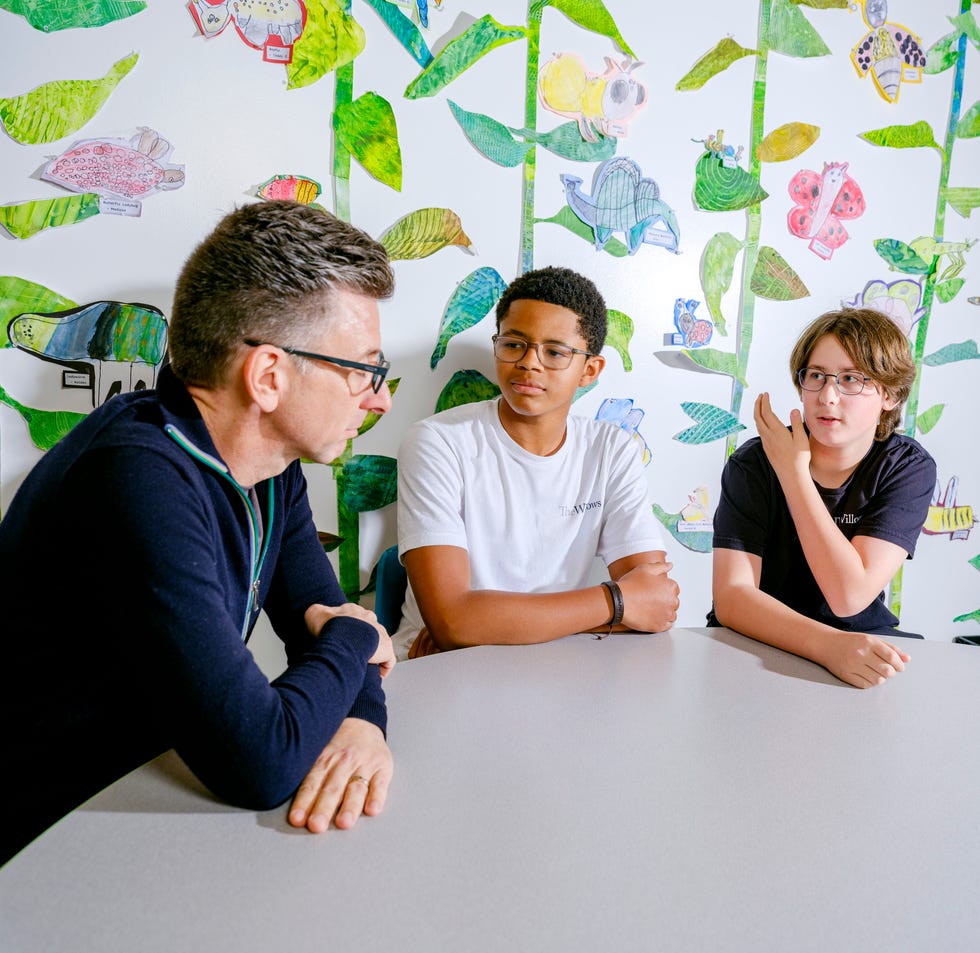
Marc Brackett talks with Jax (left) and Milo (right) about how they regulate emotions to keep friends and mitigate conflict.

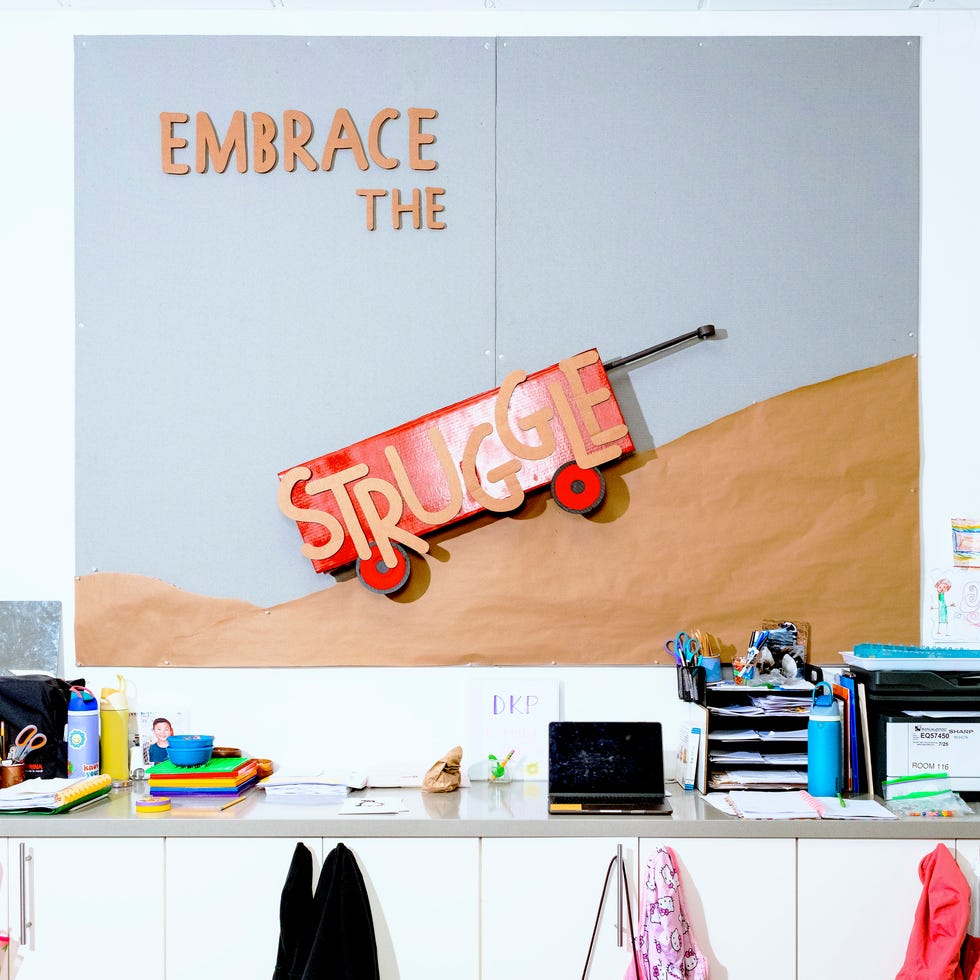
This year, the school’s theme was “struggle,” and how the best way to develop independence, courage and growth is through struggle.
The first step is recognizing and understanding your feelings—noticing how something or somebody has made you feel tense, maybe, or small. “Everyone has feelings,” Milo likes to remind himself, but it’s what we do with them that matters.
It also helps to name (label) what you’re feeling and express it, even just to yourself. That allows you to “create space”—separate your potential response (screaming a curse word) from the stimulus (someone being a jerk). This space gives you room for moves like asking yourself, “What kind of friend or colleague or spouse do I want to be?” Brackett says research has found that talking to yourself in the third person is particularly effective here: “I say—literally—‘Marc, take the high road. Marc, remember, you’re the director for the Yale Center for Emotional Intelligence. Marc, who is the director of the Yale Center for Emotional Intelligence, is not a jerk, even though the Marc who is activated and triggered right now could be.’ ”)
For Milo, the space allows him to think about what matters. “It’s okay to be angry, but it’s not okay to lash out,” he says. “I think about how I could hurt someone, how I could change someone’s life or just make their day worse.” And voilà, the final R: Emotions are regulated. Instead of screaming at his friend and causing a rift, the fight peters out. Jax, a friend of Milo’s, sums it up another way: “It’s emotional intelligence that keeps bonds and friendships together. Everyone is going through something.” RULER, the kids agree, has made them far more empathetic.
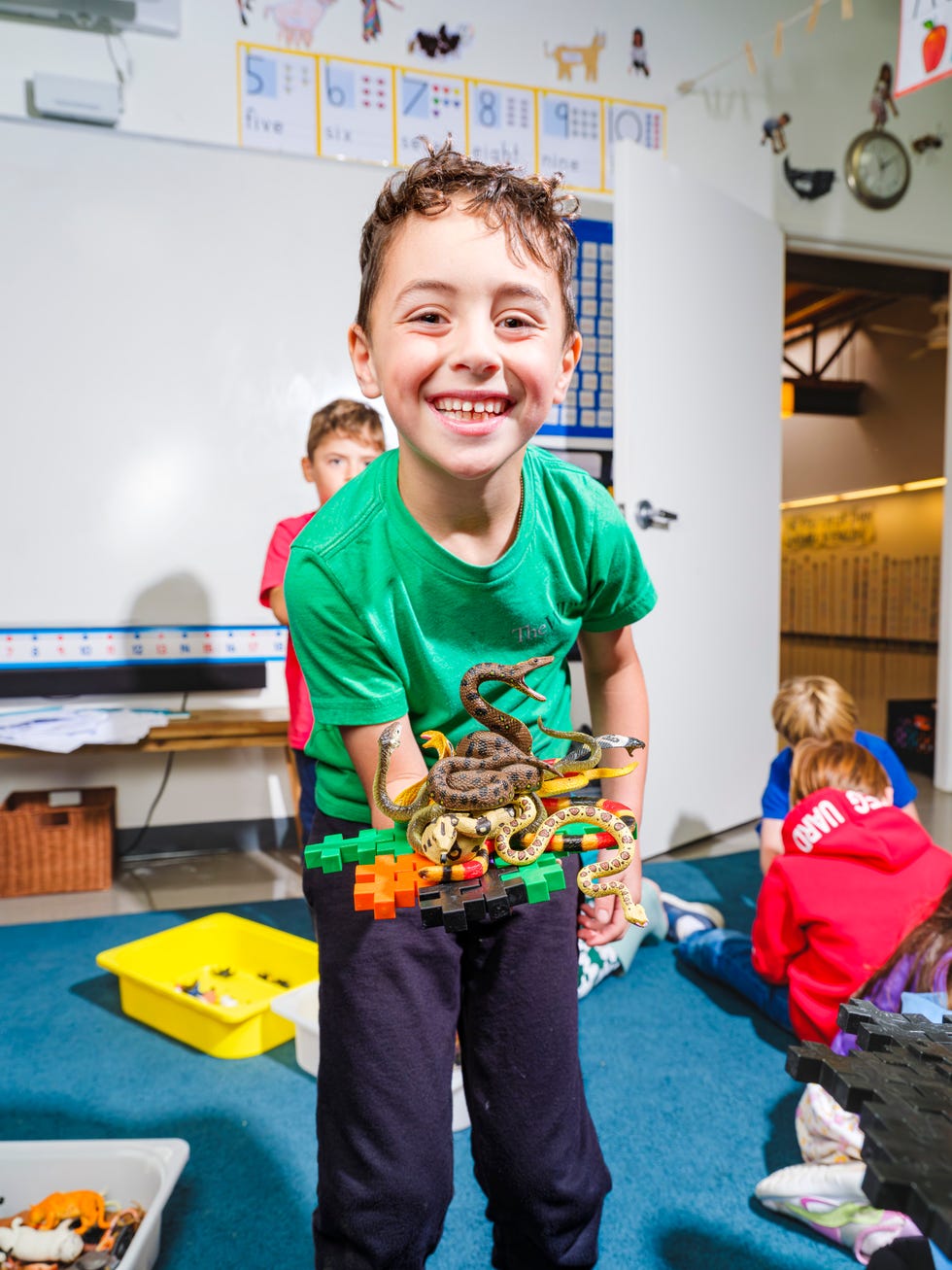
Class at a RULER school isn’t all talk therapy and endless tears. Kids still play and build and learn about the Declaration of Independence. They’re just also asked to think how the lessons make them feel.

AFTER THE KIDS leave for class, Jax’s words remind me of how I let emotions affect relationships as an adult. Late last year, when a friend became distant and unresponsive, I became surly and mirrored his distance. I later learned he wasn’t AWOL because he was being useless (though it felt like it at the time). There was a health scare at home and he didn’t feel comfortable talking about it until it was resolved. I should have had an open mind, and perhaps if I had, my buddy might have wanted to open up.
And that’s the thing about RULER: Because it’s so simple that even kindergartners can make it happen, adults shouldn’t have a problem with it either. If a little emotion training can make school a nicer place, imagine what the C-suite or Capitol Hill will look like in 30 years when these kids are in charge. In the meantime, I’ll try to check on my mood at the beginning of the day and take a breath and a beat the next time somebody takes my parking spot.
The Cheat Code to Manage Your Moods
Recognize the emotion you’re having or are seeing in someone else. You’ve got to know what you’re dealing with in order to have the emotional space to manage it and not just react without thinking.
Understand the causes and consequences of emotions. You know how tearing into someone usually goes.
Label what you’re feeling—specifically. “Frustrated,” “powerless,” and “undervalued” all help you figure out how to respond better than “pissed off.” Even 5-year-olds can do it.
Express emotions in a way that matches the social context.
Regulate emotions. Not to be mistaken for “shut up and deal.” Take a breath, reframe, get someone else’s insight. Act in line with your goal, not your impulse.


David Ferry is a reporter in Los Angeles who has written for publications including Outside, Wired, and The Atlantic.
Read the full article here


