







A TONED, TANNED man with dark, slicked-back hair, perfectly groomed scruff, and a thin chain around his neck—the kind of guy you could picture as a contestant on Love Is Blind or The Bachelorette—stands in front of a pool with a bottle of Banana Boat spray sunscreen in his hand. As he presses the button, he holds a lighter to the fine mist and sets it ablaze, like some makeshift torch you’d see on an episode of The Walking Dead. With the fervor and flair of a preacher, the man barks, “According to the National Cancer Institute, since the introduction of sunscreen in 1940, melanoma has increased by over 200 percent.”
As the dramatic scene unfolds in the background of the Instagram reel, another guy, whose bio lists him as the founder of a chain of longevity-medicine clinics, pops up on-screen and chimes in. “By the way, all sunscreen is toxic,” Tomo Marjanovic says to his 250,000 Instagram followers. “It’s literally what I believe is causing all the skin cancer.” There’s currently no evidence for this claim, but Marjanovic’s post is one in a growing body of social media content with a similar message: Use these products at your own risk.
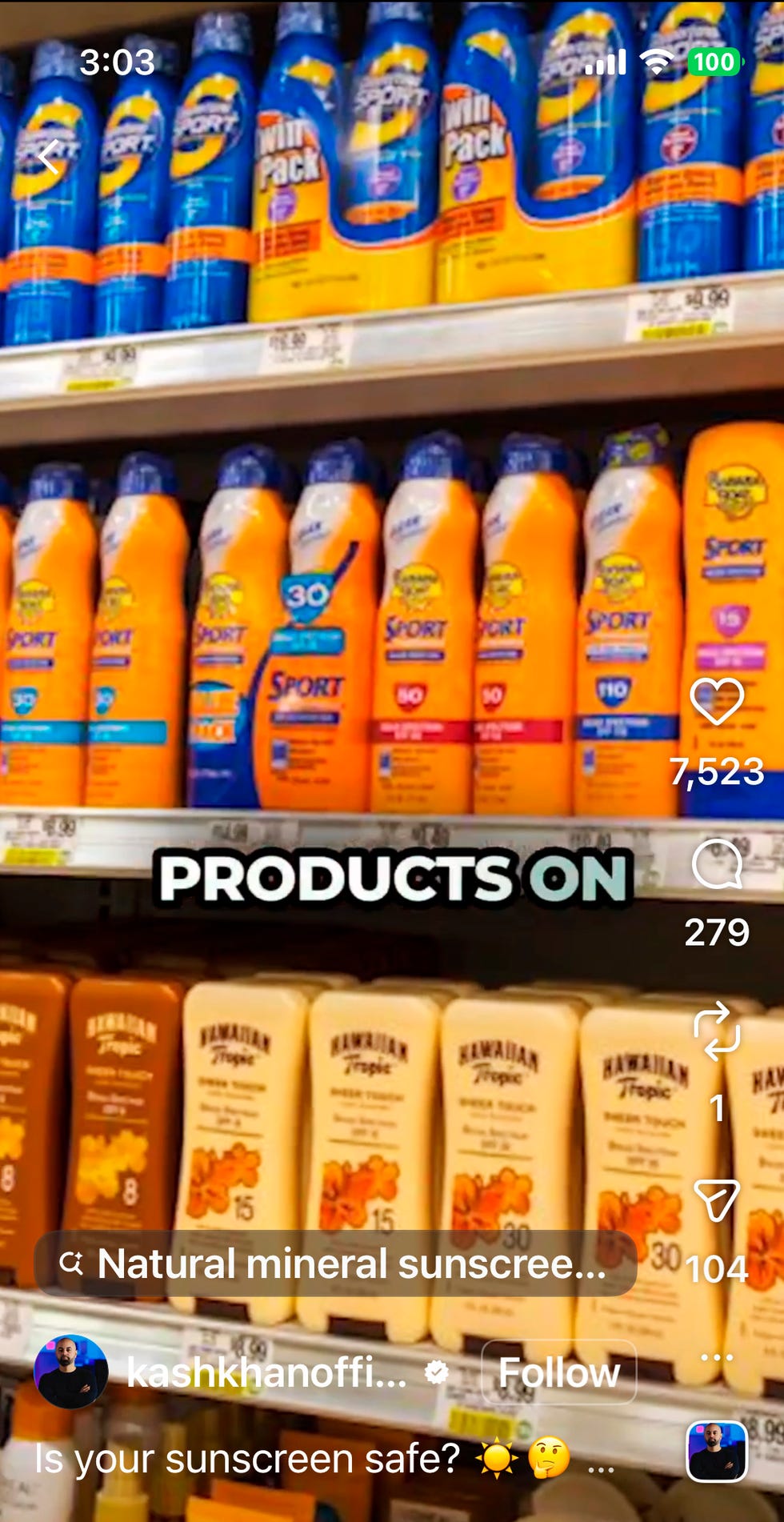
Wellness content creator Kashif Khan, who has over a million Instagram followers, echoes this sentiment. Except this time, he implies there’s a government conspiracy: “The FDA has finally acknowledged and admitted that the chemicals in your sunscreen are making you sick.” Wait…what? “I’m going to share a list with you so you know what to look out for,” Khan goes on to say, “but first know that even though they’ve acknowledged that these chemicals do this damage, they have not done a thing to stop manufacturers from using them. Every single one of these chemicals is still in these products on the shelf today, so you need to watch out.” Errr, okay.

Sunscreen, for all its cancer-preventing, antiaging power, is facing a massive PR crisis. Not since the Jersey Shore guys replaced SPF with GTL (that’s “gym, tan, laundry”) has UV protection been viewed as so wrong and sunbaked bronze as so right. Interest in tanning and sun-related content is once again spiking on Instagram (up 10 percent from 2024 to 2025) and TikTok (a 20 percent increase, also from 2024 to 2025). The #antisunscreen hashtag has clocked more than 5 million views while #nosunscreen is up to 11 million and counting. A 2024 survey conducted by the Orlando Health Cancer Institute found that one in seven adults under the age of 35 now believes that daily sunscreen use is more harmful to skin than direct sun exposure, and in the 2026 edition of the American Academy of Dermatology’s annual Practice Safe Sun Survey, 16 million adults reported reducing or stopping sunscreen use because of online claims about its safety.
It’s easy to label these creators as conspiracy theorists who cherry-pick data and misrepresent study findings for the sake of engagement. But mixed messages from the U.S. Food and Drug Administration on the safety of certain ingredients as well as recent controversies that call into question the effectiveness of these products have just added fuel to the fire—and turned many people into sunscreen skeptics. Still, in spite of the naysayers, most experts insist that the sunscreens lining American drugstore shelves today are one of the best and safest ways to prevent all forms of skin cancer. So who should you believe? And has the (skin) damage already been done?


The Origins of Sunscreen
TO EXPLAIN WHY he avoids using sunscreen “like the plague,” TikTok content creator Mike Gorman takes us back in time: “Our hunter-gatherer ancestors didn’t ever once use sunscreen lotion.”
He’s right about that part.
For centuries, people used clothing—long tunics, wide-brimmed hats—and other means, like parasols, to protect their skin from the sun. The first sunscreen, a quinine ointment, was developed by a German scientist in 1891 to prevent ultraviolet radiation from causing erythema solare (yeah, sunburn), which was considered effective at the time. Fast-forward about 50 years, and in 1946, a Swiss chemist named Franz Greiter created what many regard as the grandfather of the products on today’s shelves, a mixture of zinc oxide—already used as a protectant against the sun for generations—and petrolatum, which eventually became available in both “greasy” and “nongreasy” formulas. He called his creation Gletscher Crème (translation: Glacier Cream) and built a brand around it, Piz Buin, which he named after a mountain in the Alps he’d once climbed. To this day, you can still buy Piz Buin’s sun products on Amazon.
Zinc oxide creams became increasingly popular during Greiter’s time. Yes, they’re effective, but most are also thick and gloopy. So formulators set out to make these products suck less. Pharmacist Benjamin Green, who used red veterinary petroleum to protect his skin as an airman during World War II, discovered that pairing it with cocoa butter and coconut oil gave the concoction a better texture. Green’s creation eventually became the basis for a brand called Coppertone. Perhaps you’ve heard of it?
Yet despite the efforts of Green and Greiter, these impenetrable pastes still left something to be desired. Lightweight chemical filters like para-aminobenzoic acid (PABA, at one time the most popular active sunscreen ingredient) and benzyl salicylate (found in L’Oréal’s Ambre Solaire) were discovered in 1942 and 1935 respectively and helped make formulas less chalky. Then along came brands like Banana Boat, founded in Miami in 1976, and Hawaiian Tropic, founded in 1969, which—if you couldn’t already tell by the names—tried to make sun protection products feel more fun and less medical (coconut-scented SPF, anyone?).
The category boomed, and the FDA took notice. In 1972, the agency made its first move to regulate the growing list of active ingredients that were commonly used in sunscreens, treating them as over-the-counter drugs. That means that unlike in countries of the European Union, and in nations such as South Korea, where these products are considered cosmetics, American manufacturers are limited in terms of the active ingredients they’re able to use.
Today, the FDA permits the use of 14 organic filters (commonly referred to as “chemical”), including avobenzone, oxybenzone, octisalate, octocrylene, octinoxate, and homosalate, as well as two inorganic or “mineral” filters, zinc oxide and titanium dioxide. For those of us who fell asleep in chem class, the organic vs. inorganic nomenclature is based on chemistry—as in, the compounds the filters are made of.
“In a general sense, these ingredients reduce the amount of UV radiation that penetrates the skin,” explains cosmetic chemist Marisa Plescia, president of the Society of Cosmetic Chemists. “Because of their chemical structure, [organic filters] absorb ultraviolet radiation and emit it as some other form of harmless energy, typically fluorescence, phosphorescence, or negligible heat.” Inorganic filters work in much the same way, absorbing rays before they can cause problems, though they also reflect and refract some of that light, keeping it safely away from your skin.
To make certain claims, product formulas—from those created by independent brands working with contract manufacturers to the ones churned out in the labs of major global cosmetics companies—must be submitted to an FDA-registered third-party testing lab. There, scientists can validate everything from the sun protection factor value (SPF, essentially a measure of how much longer a product allows you to stay in the sun before burning) to broad-spectrum claims (does this formula protect from both UVB and UVA radiation?) to water resistance (the FDA permits labeling to claim resistance for 40 or 80 minutes).

Instagram and TikTok are filled with sunscreen misinformation.
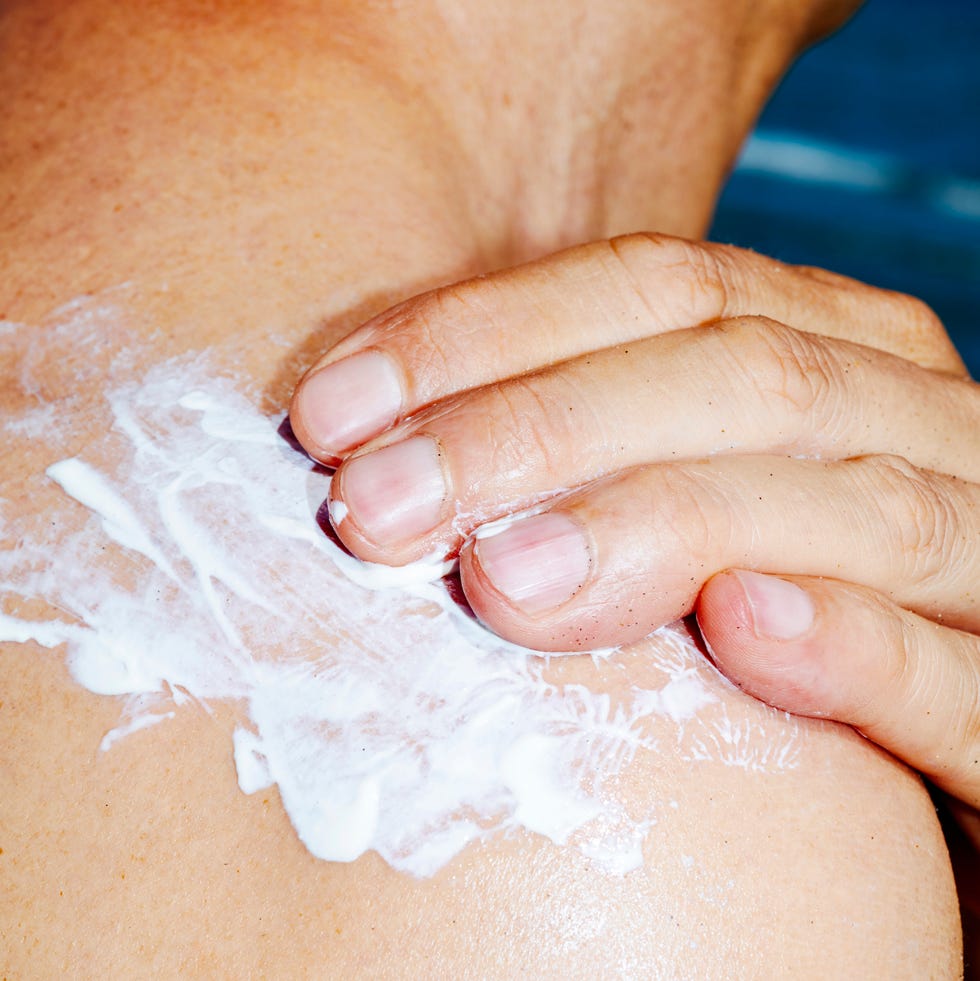
Some of the tests are surprisingly subjective. To validate a product’s SPF value, for example, the lab will recruit at least 10 people to expose one-centimeter-square sections of skin on their backs to targeted doses of UVB radiation (the type that leads to burning) under different output/energy delivery rates. (In the U.S., UVA rays, which penetrate deeper and are closely linked to skin aging, are not part of the SPF equation.) Sixteen to 24 hours later, the subjects return, and a qualified grader (usually a photobiologist or clinical technician) will assess which radiation-dosed sites have visibly reddened under the controlled laboratory conditions.
The test is then repeated on areas where a specific amount of sunscreen has been applied under controlled conditions, and depending upon which sites show erythema, or redness, an SPF number is calculated. If a 10-second dose of standardized UVB radiation caused a person’s unprotected skin to turn red, and the site with sunscreen delayed that effect until 100 seconds, you’re left with an SPF value of 10.
At the end of the day, the process is based upon naked-eye observations, which means “SPF testing data is super variable,” admits Brian Ecclefield, founder and managing director of Validated Claim Support, an FDA-registered clinical testing lab in Teaneck, New Jersey, that has evaluated sunscreens. Ecclefield says it’s generally accepted that there can be a discrepancy of up to 15 percent in SPF values from test to test, which is why an average is used for the final number.

The Rise of the Anti-Sunscreen Movement
SUNSCREEN’S INFLECTION POINT seemed to come in 2019, when FDA researchers concluded that four organic UV filters—avobenzone, oxybenzone, octocrylene, and ecamsule (a proprietary ingredient developed by L’Oréal and not widely authorized for over-the-counter sale)—were absorbed into the bloodstream at levels that exceeded the threshold the agency established to minimize the risk of toxicity, which is 0.5 nanograms per milliliter. Some of the filters studied reached as high as 209.6 ng/mL.
As a result, the agency proposed a rule dividing sunscreen ingredients into categories related to whether they were “generally regarded as safe and effective” (GRASE). The mineral filters zinc oxide and titanium dioxide would be considered category I (safe and effective), while nearly all of the widely commercially available chemical filters would be lumped into category III (non-GRASE), suggesting that more safety data on them was needed.
The singling out of these chemical filters sparked fear and confusion that spread on social media just as Americans were headed into COVID lockdown. And since then, the agency has done little to address or clarify the proposed rule, so the fear and confusion have stuck around. In fact, a review of more than 80 TikTok posts in July 2024 found that the primary reason anti-sunscreen creators were such haters was because they believed that certain formulas contained “toxic” chemicals, including the organic filters the FDA has proposed categorizing as non-GRASE.
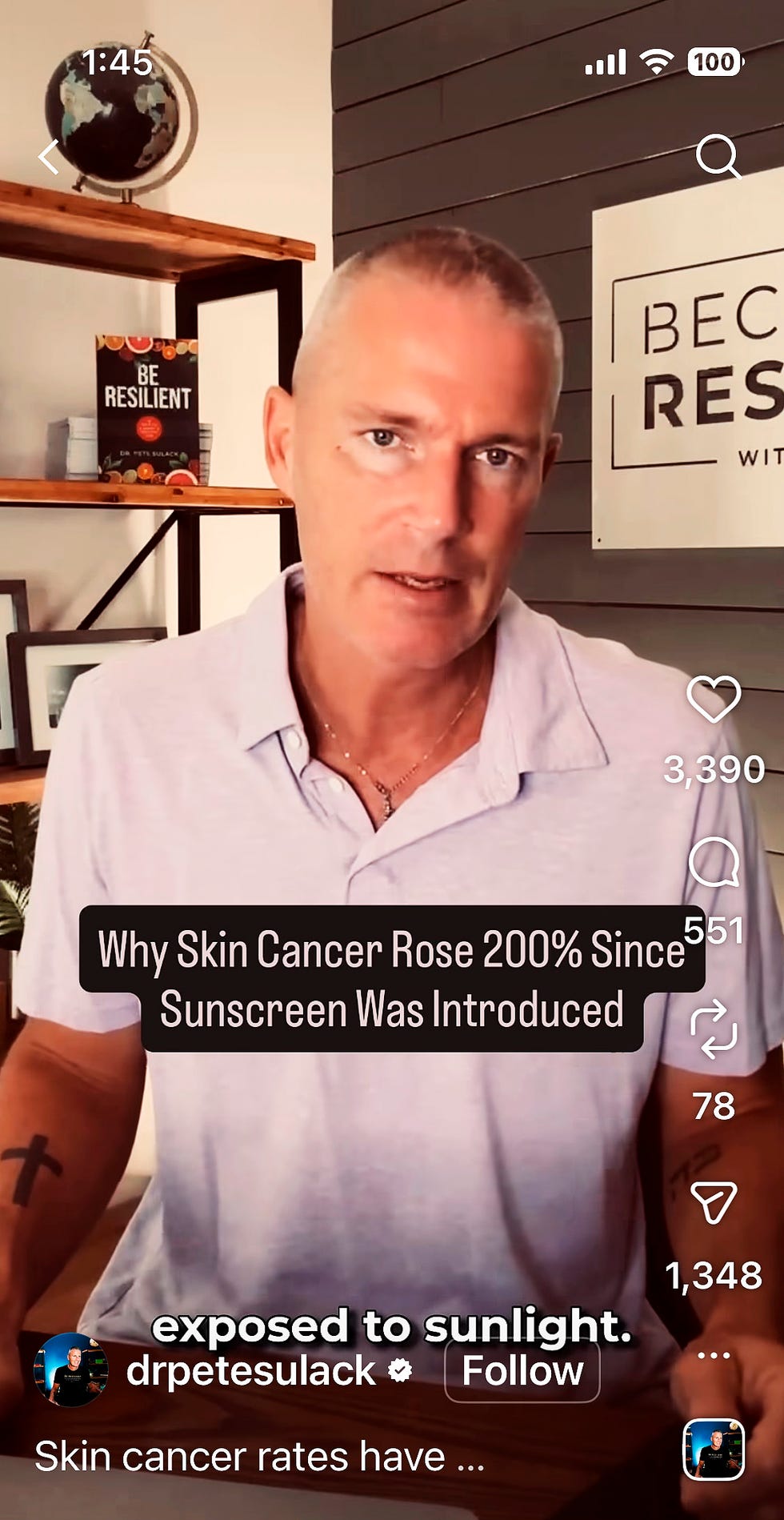
“Most commercial sunscreens contain oxybenzone or avobenzone and other harmful chemicals that are all hormone disrupters and generate free radicals when exposed to sunlight,” declares health and longevity creator Pete Sulack to his 930,000 followers on Instagram. Instead, Sulack recommends using a zinc oxide–based formula—and says readers can comment with the word protocol to receive his “entire healing blueprint” or consult to get one-on-one support.
His argument isn’t completely without merit. A 2023 review of 254 studies concluded that benzophenone-3 (a.k.a. oxybenzone, a commonly used organic filter) demonstrated endocrine-disrupting properties. This could be why the European Union decided to limit the concentration of the ingredient that can be used in formulas (the FDA currently allows a 6 percent concentration of oxybenzone in body sunscreens, exceeding the EU’s approved 2.2 percent). Similar data on endocrine disruption exists for other active ingredients such as octinoxate, avobenzone, and homosalate.
It sounds scary—until you take a closer look at the data. The vast majority of the research evaluated in the oxybenzone review was conducted on cell cultures or on rodents and fish, with just two small, inconclusive studies done on humans, says Steven Nelson, MD, an assistant professor of dermatology at the Mayo Clinic College of Medicine and Science and a member of the Skin Cancer Foundation’s Photobiology Committee. (Men’s Health independently verified this claim.) “UV filters can interact with hormone systems under experimental conditions, but there is no convincing evidence that they disrupt hormones in humans at real-world exposure levels,” he says. “Most of this evidence comes from low-relevance models.”
Could messaging from the FDA on this matter have created a breeding ground for sunscreen doubt to flourish? Yes, says Dr. Nelson. The 2019 study states plainly that “these results do not indicate that individuals should refrain from the use of sunscreen.” But without additional clarification from the agency, consumers are left in a confusing place. Dr. Nelson sees it as a troubling communications mishap but reassures, “There have been decades of safety testing [on chemical UV filters], but the FDA is slow at accumulating this data and giving their final verdict.” Either way, he stresses, “absorption doesn’t mean harm.”
Panic also ensued in 2021 when certain sunscreen manufacturers issued recalls of their products due to contamination with benzene, a known human carcinogen. The incident prompted Robert F. Kennedy Jr., now the secretary of Health and Human Services, to post on X, “Pharmaceutical testing company Valisure discovered 78 sunscreen products containing benzene, the highest levels of which were found in Neutrogena, Sun Bum, CVS Health and Fruit of the Earth products.”

The brouhaha erupted because certain propellants in spray sunscreens interacted with other chemicals in the formula to create benzene—no one believes benzene was intentionally added. “The products containing benzene were removed from store shelves, and since the recall, it’s not something I’ve been telling patients to be concerned about,” says dermatologist Heather Woolery-Lloyd, MD, director of the skin of color division of the University of Miami’s department of dermatology. Following the incident, the FDA updated protocols to address the problem, including tightening raw material screenings and phasing out certain filler ingredients that may have caused the issue.
Environmental concerns may have also shown up in your feed, with suggestions that these same filters are poisoning our oceans, giving rise to a whole category of sunscreens labeled “reef safe”—a meaningless marketing term that’s not regulated by the FDA (the same goes for products labeled “natural” or “organic”). Dr. Nelson’s point about “low-relevance models” is something to consider here too: The research demonstrating that oxybenzone, octinoxate, and other active ingredients may lead to reef bleaching was done in a lab setting where coral was exposed to levels of these chemicals significantly higher than has been found in the natural environment. It conveniently left out the fact that inorganic filters like zinc oxide (the one typically used in “reef safe” formulas) would have the same effect in similar doses.
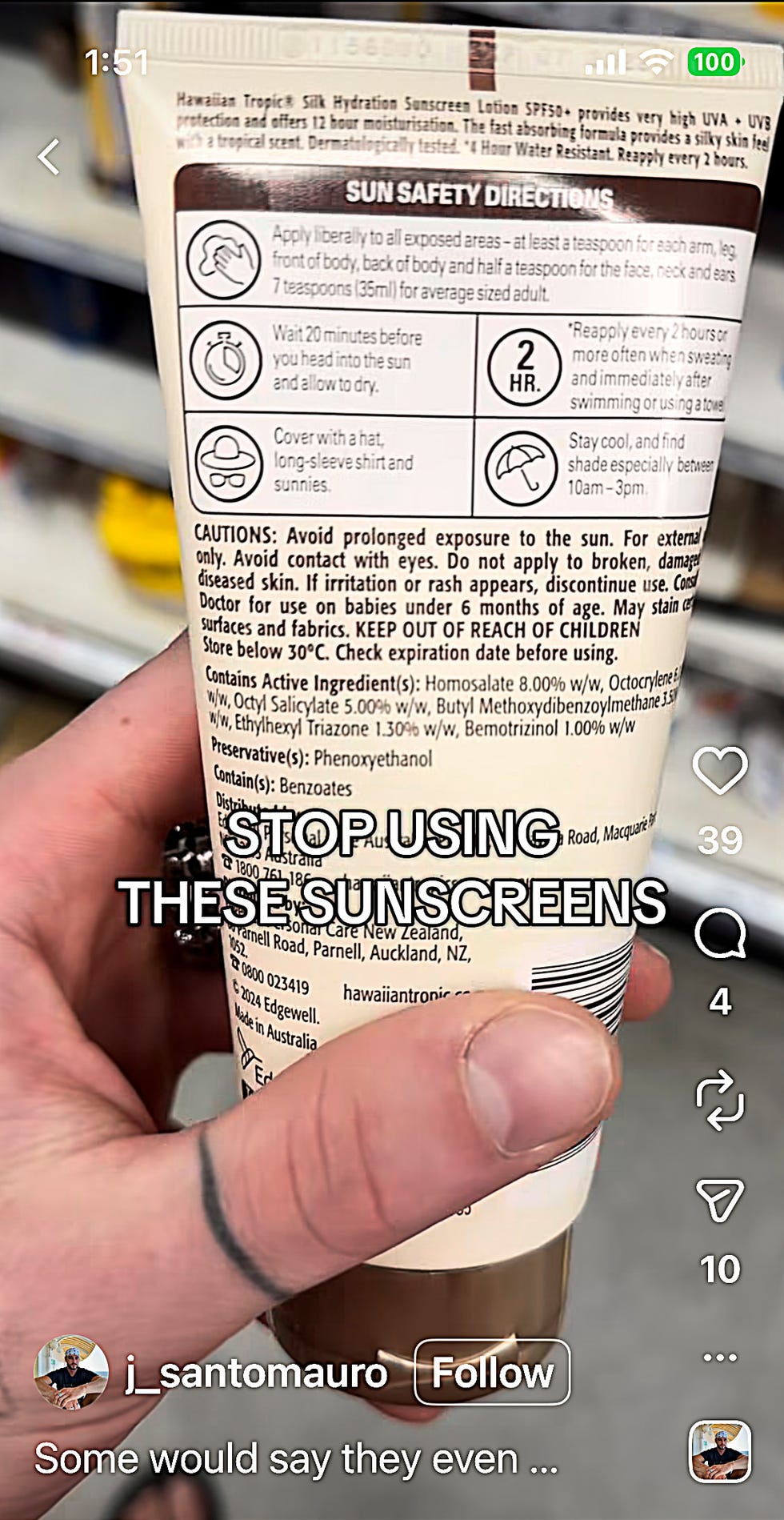
As a result of these concerns, some content creators are urging people to go rogue and play cosmetic chemist in their kitchen. “Stop using traditional sunscreens like this,” implores Warren Phillips, the @nontoxicdad, with 1.2 million followers on Instagram and 563,000 on TikTok, as he holds a bottle of Banana Boat spray. “The toxins in here are absorbing through your skin into your bloodstream. Try this at-home, toxin-free recipe instead.”
Phillips goes on to whip up his own batch with shea butter, coconut oil, jojoba oil, beeswax, and zinc oxide powder. Could his concoction work? It’s possible, but product formulation is about the right percentages of active ingredients correctly dispersed in a formula and preserved properly. Plescia says it’s best to leave drug formulation to the chemists. “It’s a complex science,” the chemist says. “By formulating your own sunscreen, the chances of an ineffective sunscreen are extremely high, and you are putting your skin at risk.”
Then there are the creators who don’t want you to use sunscreen at all. The implication is that we’re confronting an epidemic of vitamin D deficiency that puts us all at risk for cancer, heart disease, diabetes, and depression—and that sunscreen use is the culprit. It’s a tough connection to make: While it’s true that the sun is our primary natural source of vitamin D and that sunscreen use has steadily increased over the years, an extremely low number of Americans—just 13.5 percent in a national survey from 2023—report using sunscreen daily. And those who do likely aren’t applying enough or reapplying as directed, says Melissa Levoska, MD, an instructor in dermatology at Brigham and Women’s Hospital.
Still, the message is resonating with a lot of people. People who may be taking the very real science showing a positive correlation between limited UV exposure and whole-body health out of context. Writer Rowan Jacobsen knows a lot about that science—he’s been writing about it for the better part of a decade. In 2019, his article “Is Sunscreen the New Margarine?” suggested that dogmatic dermatologists and our siloed health care system have resulted in a fear-the-sun mentality that may be putting our health at risk.
“The recommendations we’re seeing in the media were getting more and more strident—it was ‘use sunscreen every day no matter what you’re doing, no matter whether you’re inside or outside, summer or winter, whatever your skin color is,’ ” Jacobsen says. “And the scientists I was talking to were like, ‘That’s nuts.’ ” For better or worse, sunscreen skeptics have lit up Reddit with threads dissecting his work and using it as validation for their views. (Jacobsen insists he doesn’t spend much time on social media and doesn’t endorse those views: “I know that there are some nuts out there, right? And you wouldn’t want those nuts having an influence and misleading people in any way.”)
Unsurprisingly, dermatologists and advocacy organizations responded harshly to Jacobsen’s work, claiming he’d misinterpreted the research and favored theoretical outcomes while downplaying the very real risks of skin cancer. They feared the article would present a real roadblock to their efforts to get their patients—especially guys, 83 percent of whom say they don’t use SPF daily—to use sunscreen of any kind.

Scientists Enter the Chat
ALARMED BY THIS rising tide of anti-sunscreen content, dermatologists, product formulators, and pro-SPF science communicators are attempting to fight back—and they’re discovering that it may be a simple ratio problem. An analysis of 500 TikTok videos using the hashtags #sunscreen, #skincancer, #sunprotection, #spf, and #skinprotection found that just 16.6 percent of them were created by board-certified dermatologists. By comparison, 38.7 percent were shot by beauty bloggers and another 33.7 percent by patients and consumers. “I’m a big believer in social media because it allows people to access information that they wouldn’t have access to before, but [that information] should be accurate,” says Dr. Woolery-Lloyd, who coauthored a study on sunscreen myths propagated on TikTok.
Dr. Woolery-Lloyd is active on TikTok (@drheathermd, with 22,000 followers) and urges other doctors and licensed professionals to be on the platform too. Their presence will likely be a net positive: Further research demonstrates that when dermatologists and scientists do post, they typically enjoy greater engagement than uncredentialed content creators. “I want to emphasize that it’s not only dermatologists who can give accurate information,” says Dr. Woolery-Lloyd.
That’s certainly true of Michelle Wong, PhD, better known to her hundreds of thousands of TikTok and Instagram followers as Lab Muffin Beauty Science. Based in Australia, a country with one of the highest rates of skin cancer in the world, Wong is well known for her direct but reassuring style. Her content spans the cosmetics world, but she’s particularly passionate about tackling topics related to sun protection—and believes that much of the misinformation that spreads globally originates in the United States, where trust in institutions has been eroded and political identity and conspiracy theories are strongly linked. “Sunscreen often gets lumped in with the whole vaccine debate and suspicion of drug companies,” she says. “There’s also a lot more research on it than most other skin care products, so there’s more to misinterpret.”
Along with her frequent collaborator Jen Novakovich, founder of the popular account The Eco Well, Wong represents a new generation of social-savvy science communicators armed for battle. She pushes back against the concept of “debunking” by itself as a strategy for combating misinformation, preferring an approach that blends storytelling with science. “For a long time, scientists assumed if you give people the facts, they’ll see reason. And that just isn’t the case,” she says. “People remember stories. Not statistics.”
Steven Sladkus has a story. As an avid tennis player and outdoorsman—and someone who generally prioritizes his health by exercising and eating right—Sladkus, now 56, was a fan of the sunned-up look. “I used to think that the tanner you looked, the healthier you were,” he says. “My whole goal was to have a tanned face.” As a result, hats and sunscreen were not part of that vibe. “It was good to be out in the sun. Hats, I just thought, got in the way.”
But in October 2019, Sladkus, at the urging of his wife, went to his dermatologist to have his skin checked and learned that he had a melanoma on his scalp. He needed immediate surgery to remove the cancer. “My heart sank,” the New York City lawyer says. “I remember sitting on a stoop by my garage, putting my head between my hands and going, ‘Holy smokes.’ I said something worse than that.”
After surgery to remove and test a lymph node in his neck, Sladkus’s doctors were able to confirm the cancer had not spread. His dermatologist was clear about why the cancer had popped up on Sladkus’s head: years of unprotected sun exposure. And as someone diagnosed with melanoma, Sladkus now has to see his dermatologist for a skin check every three months. Needless to say, his sun protection habits have changed. “I wear hats everywhere, and every day after I get out of the shower, I coat my head and neck with spray sunscreen,” he says. “I don’t mind being the palest person in the room anymore.”
His ultimate message: “If [people] don’t wear sunscreen after hearing [my story], they’re idiots.” The Gen Z’ers falling for the anti-SPF propaganda of today are the cancer patients of tomorrow. Skin cancers due to unprotected UV exposure can take decades to develop.
Tales like Sladkus’s can move the needle, but Wong believes that precision in language matters. Even the most seemingly benign bits of factual misrepresentation—the idea, for example, that mineral UV filters solely reflect the sun’s rays (in truth, they work like chemical filters primarily by absorbing UV radiation)—can snowball into more egregious distortions (sunscreen will give you cancer!). Particularly irksome to Wong is when experts try too hard to meet people where they are. Instead of challenging the quality of the data linking organic filters to health risks, she feels some doctors are too quick to capitulate, immediately directing consumers to formulas with mineral actives or natural alternatives. “That message may work when you’re with a patient in a deep hole and you just want them to wear something,” she explains. “But when you’re broadcasting this to everyone [on social media], it sounds like you don’t believe in sunscreen at all.”
Wong’s point is that creators posting about the purported risk of using certain sunscreens are totally missing the reams of other data that’s nearly impossible to misinterpret: A 2020 peer-reviewed analysis of randomized controlled trials with long follow-ups found that regular sunscreen use is associated with a decrease in all skin cancers, including melanoma, the deadliest form. The overwhelming body of evidence supports this. And cancer-risk reduction aside, it’s also one of the most potent antiaging tools you can buy. Research suggests that not only does regular sunscreen use prevent the visible signs of skin aging, but it can also help you reverse them, too.
Nonprofits working to educate the public about the dangers of skin cancer are also joining the fight. Organizations like the Skin Cancer Foundation (SCF) have launched campaigns targeting the “myths and misinformation…running rampant online.” It has labeled social media’s anti-sunscreen rhetoric a “misinfodemic.” The SCF’s “Expose the Truth, Not Your Skin” initiative features rebuttals from prominent dermatologists aimed at countering the negative points made by influencers.
It has also softened its messaging around the topic, encouraging people to get outdoors and practice “safe sun” rather than complete avoidance. Last year, Dr. Woolery-Lloyd collaborated with L’Oréal on its nonbranded “Sun Responsibly” campaign, which encourages pairing regular outdoor activity with year-round sunscreen use. In April, Banana Boat launched its own similarly styled advocacy initiative, “Get Outside Stat,” which is aimed at inspiring “people to spend more time together outdoors.” Even Jacobsen, who admits he uses sunscreen “anytime I might burn without it,” acknowledges that “the messaging is heading in the right direction.”
“Sunscreen is not the right fight to have,” says the author, whose new book, In Defense of Sunlight: The Surprising Science of Sun Exposure, is out now. “It can literally be boiled down to seven words: ‘Get sun, not too much, go outside.’ It’s pretty clear we’ve been fearing the sun more than we needed to.”
Is it enough? In the face of the onslaught of social media sunscreen hate, no one’s taking any chances. For the first time, the four leading skin cancer nonprofits—the SCF, the Melanoma Research Foundation, the Melanoma Research Alliance, and AIM at Melanoma Foundation—will join forces to submit an open letter to the National Cancer Institute urging it to take action to combat social media misinformation that promotes unprotected UV exposure as beneficial. “This letter requests that the organization address UV misinformation in the same way that the National Institutes of Health worked to address COVID-19 misinformation on social media,” reads a statement provided to Men’s Health by the SCF. “The letter has been undersigned by physicians and organizations that represent experts in dermatology and oncology who are deeply concerned about the impact of these messages on cancer prevention efforts, with more signatures being added every day.”
COVID-era speech moderation became a lightning rod issue for right-wing activists during the 2024 election cycle, backfiring spectacularly for the Biden administration. It’s why Dr. Nelson believes that the most significant step the government can take to give sunscreen a much-needed makeover is to allow Americans to buy better products. “We know that Europe and other parts of the world just have superior sunscreens,” he says. “People like them more, they work better, and they’re more cosmetically appealing.”

Designing the Sunscreens of the Future
FOR THE FIRST time in 27 years, the FDA approved a new active sunscreen ingredient, bemotrizinol, last month. BEMT, as it’s sometimes called, is currently used in the European Union and countries such as Japan and South Korea. It’s not easily absorbed through the skin into the body, meaning it qualifies for category I GRASE status alongside zinc oxide and titanium dioxide, and it’s a solid UVA filter (currently, avobenzone is the only approved organic filter that adequately shields from this type of radiation). Dr. Woolery-Lloyd is excited because it could potentially be used in formulas to replace octocrylene, a UVA blocker that tends to be oily, providing a better experience for consumers.
Because that’s really the name of the game, given the limited palette of active ingredients available to American formulators: How can we use what we’ve got to resolve consumers’ biggest pain points? The two most significant of those are how long a product takes to rub in and whether it works on a multitude of skin tones, says Sam Vona, a member of the research and development team at Edgewell Personal Care, the parent company of two of the biggest global sunscreen brands, Hawaiian Tropic and Banana Boat. Vona is preoccupied with those conundrums. Edgewell, he says, submits all of its innovations to what the company calls its BIAST, or “blends in across skin tones,” test. “We measure seven different characteristics both during and after application,” he explains. “We’ve found that whether you’re heavily melanated or not, the ability of a product to blend in is a very good predictor of everybody liking it.”
That’s a particular challenge for formulas based on zinc oxide or titanium dioxide, which is probably why consumers don’t always like using them. “In order for people to get the marketed SPF, they have to apply a sufficient amount,” explains The Eco Well’s Novakovich. (That amount is roughly two milligrams per square centimeter of skin, or half a teaspoon for your face and neck.) “We all know people aren’t using that much [mineral sunscreen] to mitigate the white cast.”
Brands have tried to solve this by tinting their formulas so they blend in better or by using nanoparticles of these minerals, but neither is a perfect solution. Researchers at UCLA may have finally cracked the code, though. In December, they announced that they’d developed a novel zinc oxide “tetrapod” that prevents the particles from clumping together, creating a looser network that spreads better and is more cosmetically elegant.
It’s tough to say when any of these new formulas will hit the market, though Neutrogena confirmed to Men’s Health that the company plans to integrate BEMT into its sunscreen innovation pipeline. The FDA insists the ingredient “will increase competition and consumer confidence in sunscreen products,” per a press release announcing the newly approved ingredient. Additionally, Mike Davis, MD, PhD, acting director of the FDA Center for Drug Evaluation and Research, stated, “This is exactly the kind of progress we can achieve when we modernize our processes and apply sound science to regulatory decisions. The FDA is committed to ensuring the American consumer has access to the most effective and safe therapies, including over-the-counter products like sunscreens.”
Because no matter what you hear on TikTok, sunscreen works. Sure, the products on the market today may not be perfect, but they’re not “toxic,” and mineral formulas are an option for guys who are still concerned about the chemical filters.
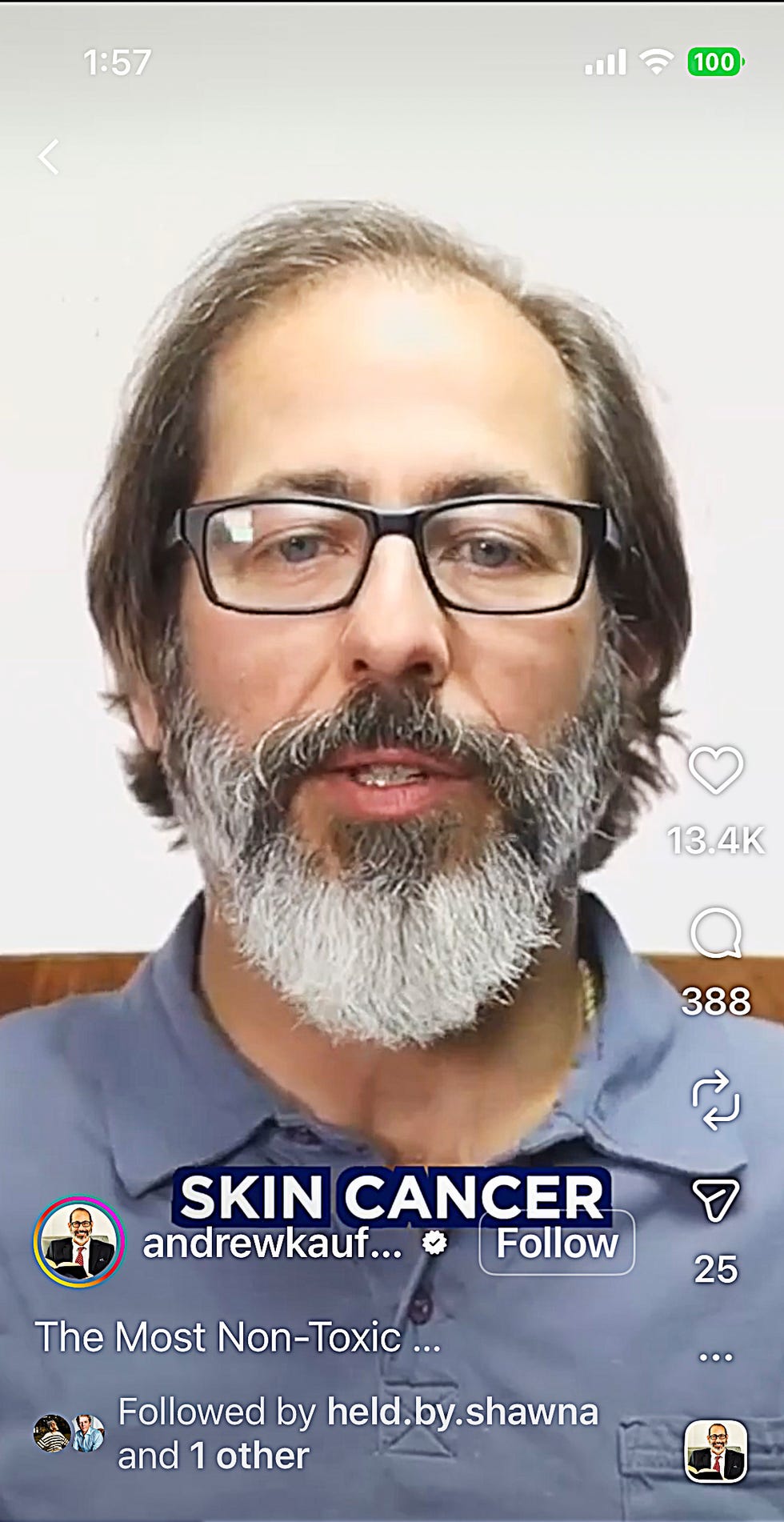
So the next time you hear something like “it’s pretty clear that actually sunscreen is what’s causing skin cancer” from someone online (in this case, @andrewkaufmanmd), remember: Social media is no substitute for advice from a doctor who specializes in skin health.
That man is a forensic psychiatrist.


Brian Underwood is beauty director at Women’s Health, where he oversees content strategy for the brand across all platforms, including digital, print, and social. Underwood previously served as beauty and wellness director at Oprah Daily and O, The Oprah Magazine. During his tenure leading beauty content for the Oprah brand at Hearst, stories Underwood commissioned were awarded the Skin Cancer Foundation Media Award and a Fragrance Award for Editorial Excellence (his second). He was the launch Beauty Director of Dr. Oz THE GOOD LIFE, and has held additional editorial positions at Fitness, Organic Style, Good Housekeeping, Life & Style Weekly, and Woman’s Day and has written for Self, Shape, Seventeen, Redbook, Cosmopolitan, and many more. Underwood previously served on the Skin Cancer Foundation’s gala committee and as partnerships director of the Trans Beauty Clinic, a New York-based charitable organization that provided beauty services and workshops to the city’s trans community.
Read the full article here


