








This piece is part of our first-annual Health Care Heroes series, where we spotlight people doing amazing things in the health care and medical fields. Read the rest of the stories here.
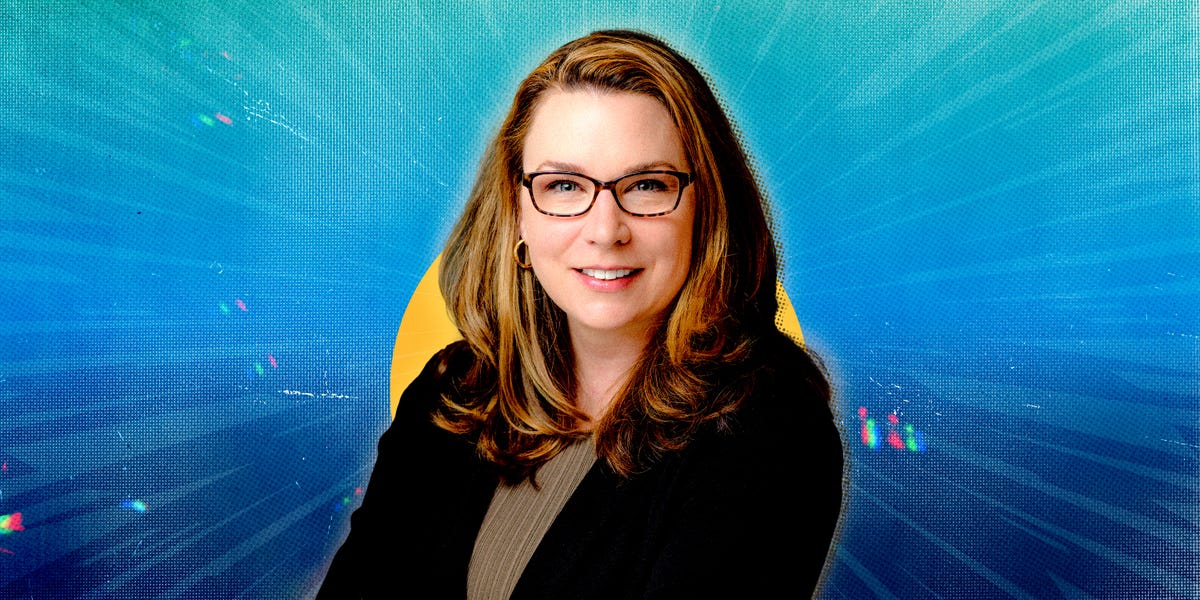
WORKPLACE VIOLENCE. BARRIERS to education. Faculty shortages. Burnout. Nurses are the backbone of the health care system (Nurse Dana hive, please rise!), yet they’re also facing an unprecedented number of challenges right now. Nobody knows this better than Jennifer Mensik Kennedy. The president of the American Nurses Association (ANA) and nurse of three decades advocates for the nation’s over five million nurses. Currently, one of her top priorities is taking on President Trump’s Department of Education. The agency has threatened to remove nursing as a professional degree, which would prevent nurses from receiving graduate school loans.
“These barriers to education and graduate school loans will trickle down to our high schoolers because there’s only a small pool for scholarships,” explains Mensik Kennedy. “And now this group of people who maybe can’t get loans to pay for their school might turn to more scholarships. So there’s going to be more competition. This is really going to affect everybody. ”
Mensik Kennedy has led the ANA since 2023, but her work at the organization started over a decade ago. She’s been on the ANA board of directors on and off since 2010, and has taken on various roles throughout the years as director at large, second vice president, and treasurer. To say she’s made a significant impact would be an understatement—she continues to advance the field of nursing in a post-COVID health care industry that’s undergoing a rapid AI revolution (no big deal, really).
For Men’s Health’s first-annual Health Care Heroes series, we spoke to Mensik Kennedy about the most pressing issues nurses are facing today, how AI will shift the nursing landscape (for better or for worse), the new men’s health nursing speciality, and the biggest accomplishment she hopes to achieve before her presidential tenure is up next year.
Men’s Health: Can you tell us a little bit about your path into nursing and what first drew you to the profession?
Jennifer Mensik Kennedy: I grew up in a small town, where the major employers were the school system and the hospital. I made the decision to go into nursing. My mom actually was in nursing school when I was in high school. At the time, I wanted to be a nurse practitioner. I created this pathway on how I was going to go to the community college and all the way to the graduate program. Through my journey where I was a licensed practical nurse (LPN) and then a registered nurse (RN) and then got my bachelor’s degree, I actually decided not to be a nurse practitioner. I wanted to do more stuff in leadership and management.
So I got my MBA instead because I really wanted to help change the system and the structures. That’s where my passion lies. After I got done with my MBA, I finished my PhD in nursing, which also focuses on health systems and public administration because so much of what we encounter is related to policies. And if you don’t make the policies, you are living in someone else’s policies.
MH: What are the most pressing issues nurses are facing today?
JMK: There are definitely several. We’ll start with workplace violence. I think people are always surprised when I say that nurses are more likely to be assaulted at work than a correctional officer or a prison guard. We really need to step up and create prevention programs and work with the Occupational Safety and Health Administration (OSHA) and others so that nurses are safe in their environment. And it doesn’t only affect nurses—it really affects all of the clinicians and all of the providers and all of the patients if the environment isn’t safe.
We also really need to look at our advanced practice registered nurse (APRN) colleagues—which are our nurse practitioners, our certified nurse midwives, our clinical nurse specialists, and our nurse anesthesiologists—and remove unnecessary barriers. As nurses being the largest workforce, our APRNs are providing invaluable services to those who are underserved and those in rural communities who don’t have the luxury and ability to get care or might be the only provider for 100 miles. There are unnecessary federal barriers still that don’t allow them to order or write for things. We do have 30 states and territories with full practice authority. There’s only 11 left that have total restrictions. So we’re making headway, but we still need to remove state barriers and federal barriers to full practice authority because it adds costs to the system unnecessarily.
And then of course the Department of Education issue. It’s really important because not only will it affect nurses going to graduate school, it’ll affect people going to graduate school who want to teach nurses. We’re going to have less nurse faculty. In 2024, over 80,000 qualified nursing school applicants were turned away primarily because there wasn’t enough faculty. So it’s not that people don’t want to go into nursing. A big reason is there’s just not enough faculty to teach. We need to be very thoughtful and ahead of the game in educating nurses for the future.
MH: For people who aren’t aware, can you explain what the Department of Education is doing with the loan program?
JMK: In H.R.1 that President Trump signed last July, it got rid of the Grad PLUS Loan program. It said to create this Reimagining and Improving Student Education (RISE) Committee to look at who should qualify for loans and try to limit them because they believe that the federal government shouldn’t be in the business of school loans.
This committee went back and looked at the definition that the Department of Education initially published back in 1965. But the important part about this is it didn’t say this was an exhaustive list. So we always assumed nursing to some extent still belonged there because it talked about physicians and other individuals. So we sent letters to the Department of Education in the fall as a very large group of over 90 organizations asking to ensure that APRNs are still considered as eligible for the professional caps. Because they said we were not going to be professional or considered professional, that limits our loans.
The limit of the loan is $100,000 max or $20,500 per year. That is a big barrier because we know that these loans are not just for tuition; it’s also for living expenses. These individuals who are going to school have these clinical rotations, they have these clinical hours they need to get, and they can’t work full-time. A recent study found that 29 percent of nurses in Michigan who are advanced practice nurses had loans over $100,000. This is going to limit people’s ability to go to school.
MH: Is this in effect yet?
JMK: No. When this first came out in December, we started a petition prior to the public comment period. And we actually got almost 250,000 signatures urging the Department of Education to take action to change this. That’s different from the open comment period, which closed on March 2. We had over 14,000 comments submitted to the Department of Education advocating for nursing to be a professional degree. We had 150 members of Congress sign a letter and send it urging the Department of Education to make sure that graduate level nurses are considered in the professional loan cap.
When we go back to that 1965 date, that’s the year the first nurse practitioner came into existence. So these roles that we’re advocating for didn’t exist in 1965 to the extent that they do. We have to modernize our rules, particularly as health care changes and evolves, if we really are serious about decreasing costs and improving patient care in the United States.
Now the Department of Education looks at all the comments and then they determine if they’re going to change it or not. If they don’t change it or if they do change it, it goes into effect July 1. So we’re watching this very closely and working with our coalition partners to determine what next steps might be if they do in fact not change it.
MH: What structural changes are needed overall to improve nurse retention and workplace safety?
JMK: Employers need to partner with nurses and others to create prevention programs and cultures of safety where nurses feel that they can safely report a violent act. I have had nurses tell me that when they went to their manager to report that a patient had hit them, the first thing the manager says is, “What could you have done differently or what did you do to cause it?”
From a hospital perspective, a lot of work we’ve done is related to safe staffing. There’s a whole host of other things that organizations can do to improve the work environment and the workload for people. That’s really important because we know that the more patients that a nurse takes care of, the more likely the nurse is going to burn out, but also the patient’s more likely to die within 30 days of discharge. It’s very important that we have nurses who can do the care that people need and expect. We want people to look at the work we’ve done with our staffing think tank because there are a lot of ways to go about improving staffing.
We also need to get nurses involved with shared governance and shared leadership, which means managers and executives shouldn’t be making decisions about what nurses are doing or not doing. Nurses are at the point of care with that patient and they know what they should be doing to improve the care or the processes that may need to be. But quite often, nurses are not at the table in that decision-making. Often people assume nurses only work in hospitals, but a little over 40 percent of nurses in the United States work in all of these different settings. We really need to support nurses in the community and we actually need more nurses in the community so that people have access to care.
MH: How do you see AI changing the day-to-day work of nurses?
JMK: AI can do a lot to help us organize tasks. Now, I would ask all of the tech companies out in the world to make sure you’re developing products alongside nurses. And for the health care organizations, if you think you want to implement some AI thing, you need to have those direct care nurses at the table so you can successfully operationalize it and get it up and running. Oftentimes organizations say, “Here’s another tool, here’s something else you have to use.” And then nurses take on the burden of adding it on top of everything else.
There are really great examples of how AI actually has started to improve care. There’s a program that started at Columbia called Communicating Narrative Concerns Entered by RNs (CONCERN). Nurse researchers have been working on this AI product that actually reads the nurses notes. And it can identify, based on the nurse’s documentation, the likelihood of a patient having a negative outcome or a negative event up to 72 hours ahead of time.
So that’s a great use of AI. What we’ve also seen that’s kind of negative that we want to avoid is when hospitals add in an AI, and then don’t allow nurses to use their clinical judgment. AI is not always going to be correct and the nurse knows a lot. Oftentimes policies are written so that if the nurse is using the technology, they can’t question it and there’s no escalation for them. They have to do whatever it says.
We’ve seen over-utilization of antibiotics and other things when the nurse can’t raise their hand and say, “Wait a minute, I’ve got a question. I don’t think this is correct.” So we need to make sure policies are put in place that allow nurses to use their clinical judgment and escalate concerns when AI and other technology may not be accurate for a single patient’s scenario. Overall, I’m hoping that we continue to use tools that really help decrease that cognitive burden in some way for the nurse and allow the nurse to spend more time with the patient.
MH: I imagine some patients may be concerned about where their personal health information is getting fed into.
JMK: I’ve seen organizations do separate waivers or separate types of consents when they’re trialing or using some type of AI and having patients opt in or opt out of that utilization. This is why it’s important that the AI technology companies continue to work with organizations so that they are HIPAA compliant because they are useful. At the same time, patients should be rightly concerned about where their data is going and ensure that everyone is safeguarding their data.
MH: What kind of changes are needed to prepare this next generation of nurses for the AI world we’re living in?
JMK: We’re moving really fast. We need to help the faculty who, like me, lived in a very different world before Google so that they can bring this into their teaching methods and styles. Then we need to teach the nurse that their assessment will guide their decision-making and that the technology alone should not guide their decision-making.
MH: Do you find there’s still a stigma around male nurses? Is the organization involved in increasing the amount of male nurses in the workforce?
JMK: My husband’s a nurse. There’s a stigma that it’s somehow a female role or position, but I do see that’s changing. Our national workforce data does show about 13 percent of nurses are men. When we talk about increasing diversity, it’s very important that nurses represent the communities they serve. As a female, my conversations with a male patient are probably fine, but it might fall differently coming from another male. It’s important that men have access to men that are nurses and that our high schoolers, our middle schoolers, and others see that men make great nurses.
We just recognized men’s health as a new nursing specialty. The American Association of Men in Nursing wrote a document related to men’s standards. What it does is it standardizes professional expectations and ethical responsibilities specific to the unique needs of men and boys. It affirms the responsibility of nurses within the code of ethics to confront persistent preventable disparities in patient care because we know there are health disparities where men and boys experience higher rates of premature mortality, suicide, occupational injury, substance use, and delayed engagement in preventative care.
I’m hoping through this specialty more people will specialize in men’s health and be able to address the disparities we’re seeing in this population. Because we just approved it a few months ago, it’s going to start trickling into education and it’ll be a certification.
MH: If you could accomplish one major thing during your time as ANA president, what would it be?
JMK: One thing that I would love to accomplish is having RNs (not just advanced practice nurses like NPs) recognized as qualifying health providers by the Centers for Medicare and Medicaid Services (CMS) so that they could bill for their services instead of being considered a cost to the health care structure. We have therapist billing, social work billing, physician billing, but an RN cannot bill for their services.
A patient comes in and they see their provider and the provider bills for the visit, but then the nurse might come in and do education or the nurse might call and do some care management and follow up. The physician bills for that nurse’s education and says that they did it. This would allow nurses to bill saying, “I’m the one that provided the education to the patient. I’m the one that provided this care management to the patient.”
Part of this is making the work of nursing visible. People know how nurses make them feel, but we don’t have a lot of good data on what nurses do as a whole. If we looked at physician billing, you could say 30 percent of physicians are doing teaching and 10 percent of this physician’s time is spent doing X, Y, and Z. We don’t have that data for nurses. And if we had that data for nurses, we could actually connect that better to patient quality.
MH: What’s the main message you want nurses across the country to hear right now?
JMK: I want to tell them thank you for all of their work and that their hard work has made us the most trusted profession year after year. Sometimes nurses wonder if they make a difference or they think what they’re doing is just their job, but I want to remind them that there is a patient out there somewhere that remembers them very fondly for the help that they received from them.
This interview has been edited for length and clarity.


Describe your job in three words.
Nurse’s biggest advocate.
Favorite medical show to watch?
The Pitt.
Best career advice you’ve ever received?
You don’t pick the time, time picks you.
Robotic surgery: Yay or nay?
Yes.
Describe the future of AI in health care in three words.
Exciting and cautious.


Rachel Epstein is the features director at Men’s Health and Women’s Health, where she leads the brands’ most ambitious storytelling across platforms from reported narratives, profiles, and investigations to buzzy, expert-backed service packages. Her work has been nominated for two National Magazine Awards. Offline, she’s likely watching a Heat game or finding a new coffee shop.
Read the full article here


