








IF YOU CAN remember the type of car your eighth grade social studies teacher drove, but not what you had for lunch yesterday, you’re not alone.
According to recent CDC data, about 12% of Americans between 45 and 64 say they’ve experienced worsening memory or confusion and research following people through later middle age have found that episodic memory, the ability to remember the events and experiences of our lives, gradually declines as we get older, which raises two important questions: How much of that is just normal aging and how much of it can we actually do something about?
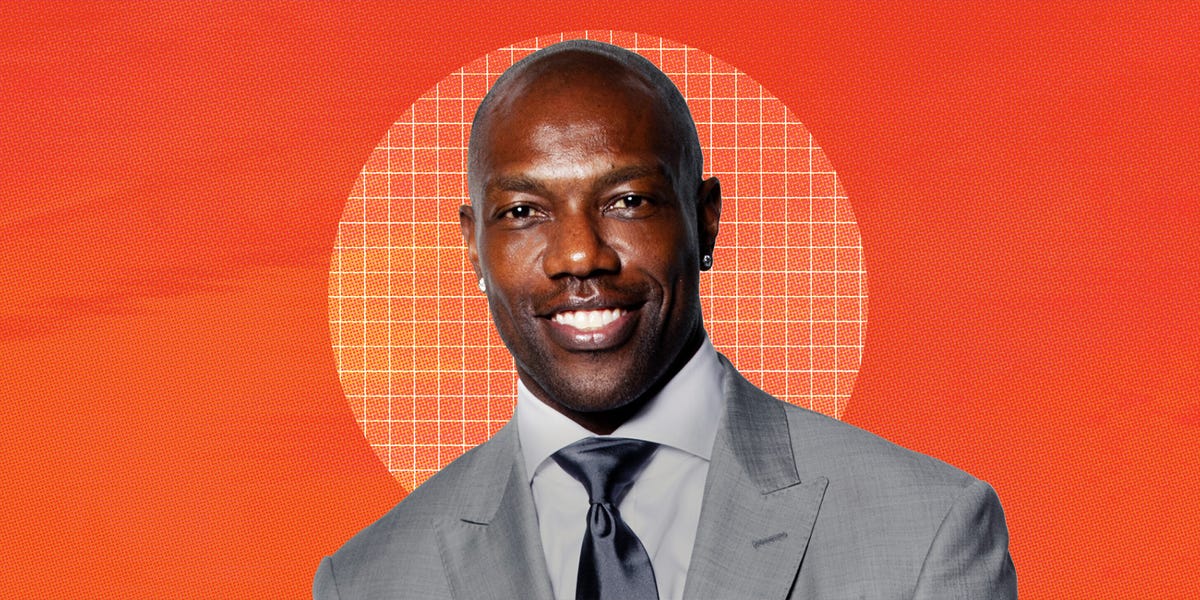
That’s what we’re delving into in the latest episode of The Future You. Host and editorial director of Men’s and Women’s Health Rich Dorment is joined by Terrell Owens, NFL Hall of Famer, co-host of the new podcast Get TO the Point, and longtime advocate for Alzheimer’s research, as well as Arjun V. Masurkar, MD, PhD, a cognitive and behavioral neurologist at NYU Langone Health.
For Terrell, this is a topic close to his heart. In 1996, the same year he was drafted by the 49ers, his grandmother was sadly diagnosed with dementia, which eventually progressed to Alzheimer’s. Just a few weeks ago, his father, who also had dementia, passed away at 83 years old.
Here’s a look at some of the themes covered in the episode:
How memories get made
This is something that neuroscientists have been trying to understand for decades, and they’re starting to make progress, Dr. Masurkar says. “What we can say is that it fundamentally is a chemical reaction that happens where connections between our brain cells, called neurons, become stronger to form a memory.”
Why you can remember some things, but not others
Some of it has to do with your mental state at the moment an experience is happening. “For example, if you’re having a lovely dinner where you’re in a good mood or it happens to be the first date with your future spouse, you remember the name of the restaurant, you remember how the food tasted because there’s an emotional quality to that memory and that gets embedded in that chemical reaction that makes the memory,” Dr. Masurkar says.
What Terrell remembers about his Grandmother
What made him feel proud, even in her final days, is the fact that she would light up when she saw him. “I was very fortunate to be one of the only ones that she remembered,” he says.
Why making memories is like a filing system
Dr. Masurkar shares an office analogy when talking about memory with his patients. “It’s kind of preparing a file, putting it in the file cabinet, and getting that file [out] later on,” he says. Making the file requires attention, the file cabinet itself is memory storage, and then getting it out is also based on attention.
In what ways memory was an important part of playing football
“I had to create a database to remember some of the plays, the formations, some of the routes,” Terrell says. Today, he still uses the memory skills he developed as a player, and can recite things like credit card numbers seamlessly after learning them once.
How Terrell keeps his memory and recall sharp
“On a plane, I’m doing crossword puzzles and things of that nature to try to keep my mind sharp,” he says, adding that he also plays different brain games and gets his daughter in on it, too.
Dr. Masurkar’s advice for future-proofing your memory
There are three key elements, Dr. Masurkar says: aerobic exercise to get the heart pumping, good sleep to help restore the brain, and keeping blood pressure under control, since cardiovascular health is important to prevent future cognitive decline.
What moves the needle when it comes to cognitive health
Dr. Masurkar says the brain is a muscle just like any other, and if you don’t use it, you’re going to lose it. He suggests doing a variety of mentally challenging tasks, some that are more mathematical and others that are creative.
When run-of-the-mill forgetfulness starts to become problematic
Dr. Masurkar discusses the red flags people should be aware of, including frequency of forgetfulness, if it’s impacting your day-to-day activities, and if family and friends are noticing.
What do to if you’re concerned about your own memory or the memory of a loved one
The first thing to do is talk to your primary care doctor, per Dr. Masurkar. From there, they may refer you for cognitive testing to get a better sense of what’s going on.
What Terrell is most excited about as he continues to raise awareness for Alzheimer’s research
“I’m always proud to wear that purple and be an advocate,” he says. “Even though my grandmama’s gone, I always try to do what I can to educate people on what Alzheimer’s is about.”


Caitlin is a health and fitness journalist based in New York City. She writes for publications including The Wall Street Journal and Runner’s World. She’s completed 12 marathons, including the six World Marathon Majors, is semi-fluent in French, and volunteers as a greeter on The High Line. Follow her on Instagram or LinkedIn.
Read the full article here


