


Swelling in your legs (also known as edema) occurs when there’s an excess amount of fluid trapped in your body’s tissues, according to MedlinePlus. If you develop edema, it makes it difficult for your blood to circulate from your legs, causing it to pool in the veins, leak into nearby tissues, and trigger swelling.
While edema can develop anywhere in the body, it most often causes swelling in the legs, ankles, and feet, Cleveland Clinic says. Edema is common, especially if you’re aging or pregnant. But Mayo Clinic explains that edema can occur for several other reasons too, including sitting in the same position too long, eating a high-sodium diet, or taking medications that treat conditions like high blood pressure or nerve pain.
That said, there are lifestyle changes that you can do right at home that may help alleviate mild or temporary edema. Here are some strategies to consider.
Wear Compression Socks
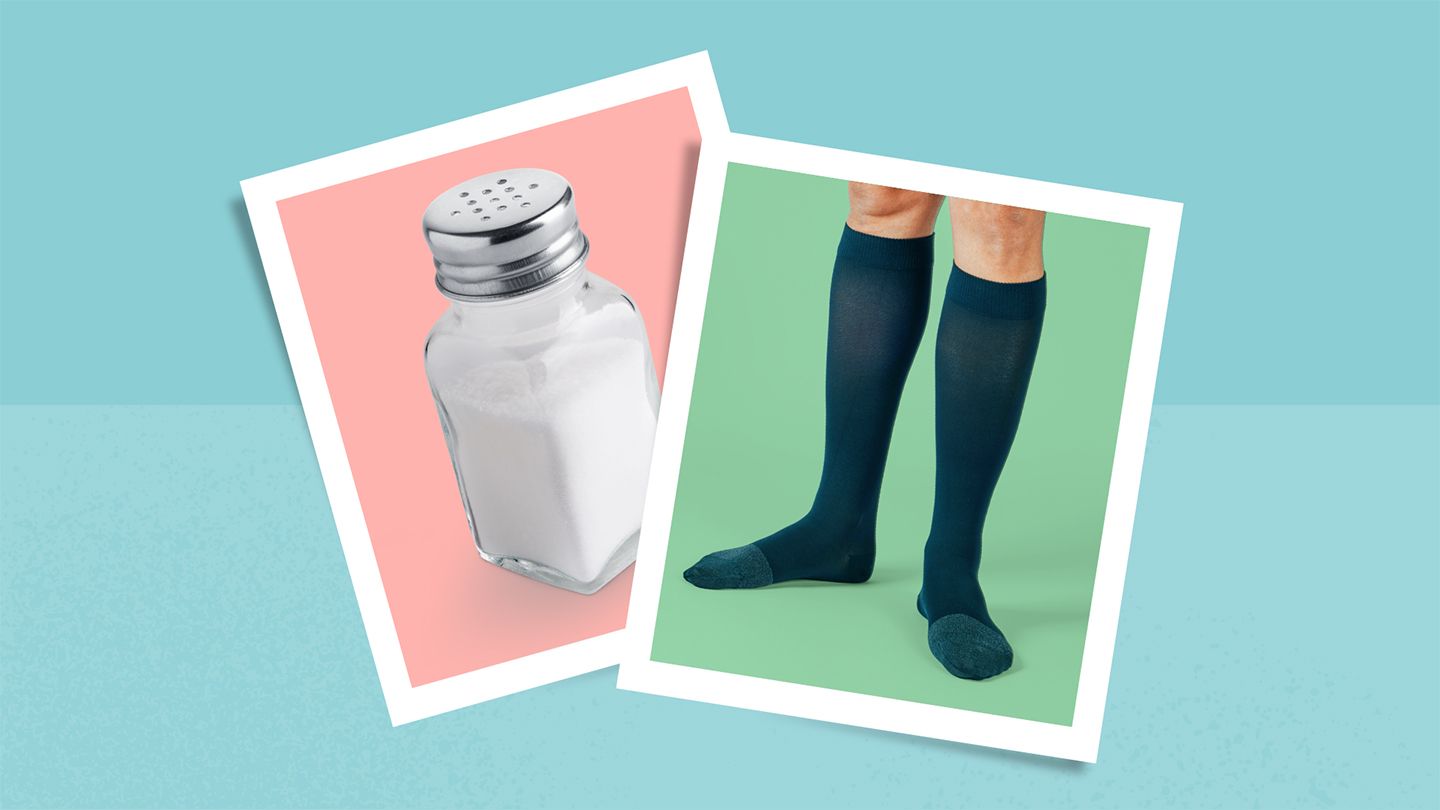
Healthcare providers often recommend compression socks as a treatment option to reduce swelling. But compression socks aren’t your average socks. Harvard Health Publishing notes that compression socks are a little tighter and are made to increase pressure on your legs, so that the blood that’s pooling in your lower body can flow back up to your heart. This helps prevent fluid from building up in your legs and, as a result, can reduce swelling and any pain you’re experiencing.
Elevate Your Feet
Another way to combat swelling is to raise your legs, ideally above your heart. You might do this by placing a pillow (or two) under your legs when resting, or by putting your feet up on the wall when lying on the floor. Cleveland Clinic says that elevation can be helpful for swelling because it encourages the excess fluid in your legs to drain out of your legs and up toward your heart.
Walk More Often
Edema can directly affect your blood circulation, and one way to improve it is to move your body. The Arthritis Foundation explains that walking is beneficial for your overall health for several reasons. But one of the primary benefits is that it boosts blood circulation and strengthens the heart.
When you walk, you’re activating your leg muscles, which can help promote lymphatic drainage and pump the excess fluid upward to your heart, according to Mayo Clinic.
Massage Your Legs
You can also take edema treatment into your own hands, literally. Doing a self-massage by gently pulling or stroking the trapped fluid in your legs upward may help reduce swelling, Mayo Clinic explains.
However, some people may opt for a lymphatic drainage massage to relieve their swelling. During this massage, a licensed massage therapist or healthcare provider will stimulate your lymph nodes and then massage the swollen tissues toward them to help with drainage, according to Cleveland Clinic.
Eat Less Salt
Adjusting your eating habits may help reduce swelling too — especially if you’re eating more salty foods. Harvard Health Publishing says that excess sodium (salt) can cause water retention in your body. As a result, this fluid buildup can trigger swelling. If you notice your legs are swollen, and you eat a high-sodium diet, consider reducing your salt intake.
Be sure to check those food labels in your fridge or pantry as well. You might just be unknowingly eating food from the grocery store that contains excessive levels of sodium.
When to Seek Medical Support
While these lifestyle changes are great starting points for mild edema, it’s still a good idea to reach out to your healthcare provider if you notice swelling (or more swelling than usual). In some cases, swelling in the legs, especially if it doesn’t go away with home remedies, can be a sign of a more serious underlying health condition that requires proper medical treatment.
Your healthcare provider can help you understand what’s causing your symptoms and offer personalized treatment options that improve your quality of life and get you back on your feet.
Read the full article here