







No one wants to come back from vacation with the sniffles or diarrhea — or worse. Unfortunately, getting from here to there and back again often involves situations where germs tend to spread: enclosed spaces, crowds, and surfaces that lots of people are touching.
At the same time, travel can disrupt our sleeping, eating, and fitness schedules, and that can add up to a less-than-optimal immune response, leaving us more vulnerable to all those new, unfamiliar pathogens.
But getting sick after or even during a trip isn’t inevitable. Read on to find out how to avoid germs and stay healthy while traveling.
Some Germs Can Survive on Hard Surfaces for Days
Airports, trains, hotel rooms, and restaurants can be germ magnets. That’s because things many people touch can harbor bacteria and viruses.
And unfortunately, viruses can live longer on those types of surfaces compared with soft surfaces like fabric (such as the hotel duvet).
Know Where Germs Congregate
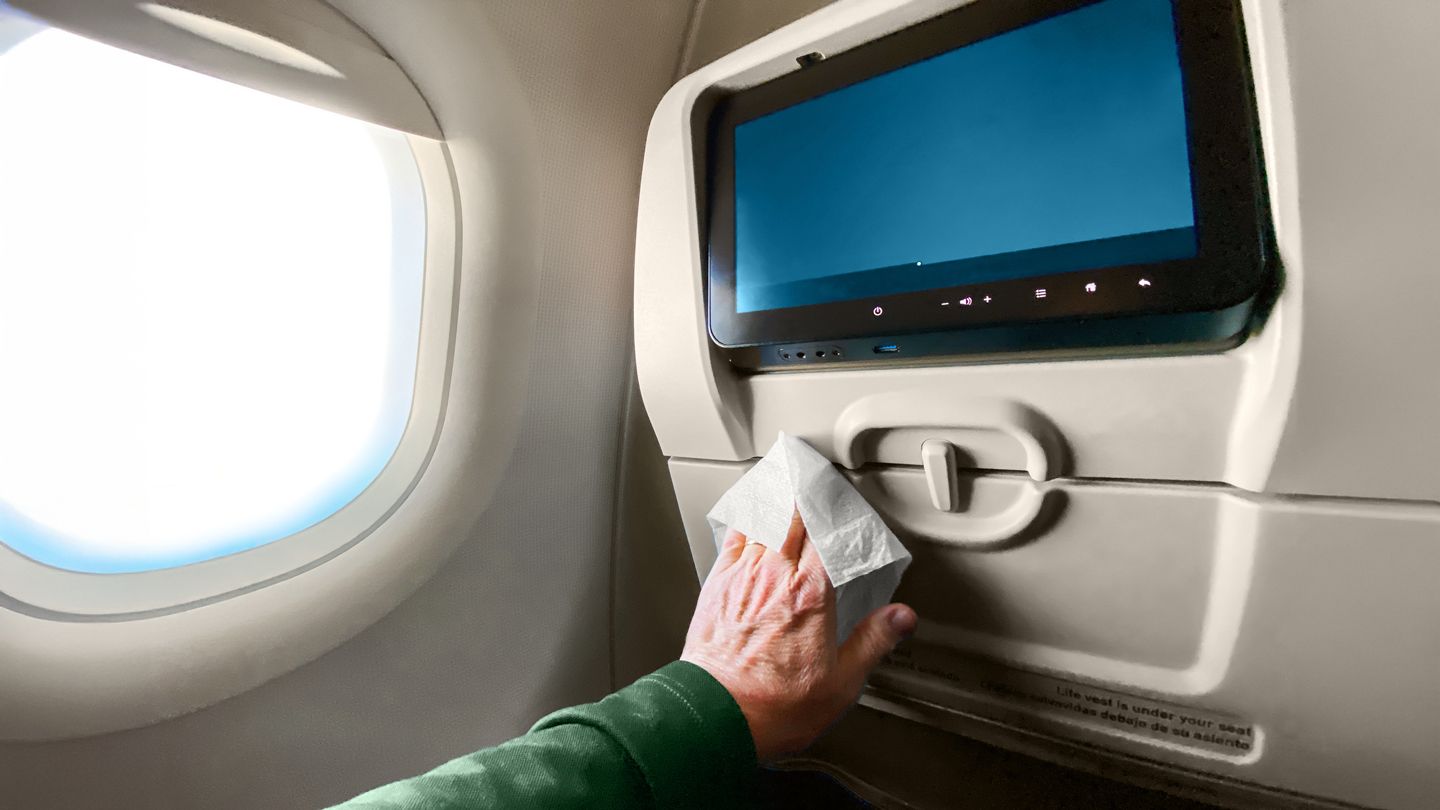
Public bathrooms are never going to be a bastion of cleanliness, but they’re far from the only spots that harbor lots of germs. You’re likely to pick up pathogens on anything that strangers tend to touch frequently: airplane tray tables, train poles, restaurant menus, and, especially, surfaces or objects in hotel rooms.
That doesn’t mean you need to stay on the couch (covered in plastic that can be sanitized), but knowing the risks can help you exercise caution and good judgment to avoid contact with pathogens.
At hotels, “Don’t throw clothing and towels on the floor and then reuse them. Don’t set your toothbrushes on the counter. Remove the comforter or bed coverings when you arrive,” says John Gobbels, a former flight nurse and paramedic, and chief operating officer of Medjet, a company that specializes in medical transports and travel safety. “Basically, be cognizant of contacting surfaces with items you might put near your face.”
Handwashing Is the Best Way to Kill Germs
The best way to protect yourself from the germs you encounter while traveling is to wash your hands regularly. Really wash them.
“You can’t always ‘not touch’ things,” says Gobbels. But keeping your hands as clean as you can — and avoiding touching your eyes, nose, and mouth with unwashed or unsanitized hands — can cut down on a lot of transmission, he notes.
- Wet your hands with clean, running water (warm or cold), turn off the tap, and apply soap.
- Lather your hands by rubbing them together with the soap. Lather the backs of your hands, between your fingers, and under your nails.
- Scrub your hands for at least 20 seconds. Need a timer? Hum the “Happy Birthday” song from beginning to end twice.
- Rinse your hands well under clean, running water.
- Dry your hands using a clean towel or an air dryer.
Vaccinations Can Boost Your Immune Response
If you’re taking a trip abroad, make sure to check with the Centers for Disease Control (CDC) to see if you need a special travel vaccine. These can provide protection against potentially serious conditions such as malaria, yellow fever, dengue fever, hepatitis, and other insect- and water-borne illnesses.
You should also check the CDC’s travel health notices to find out about the levels of risk of ongoing disease outbreaks and healthcare accessibility in foreign countries.
How to Avoid Getting Sick on a Plane
You’ve gotten your shots and you’re armed with hand sanitizer — but now you’re about to settle in for a long flight on a plane full of people. This can be a nightmare for those worried about germs, particularly the virus that causes COVID-19, which spreads mainly from person to person via respiratory droplets emitted into the air.
Masks that fit well against your face and cover your nose will do a better job of filtering out germs compared with loose fitting masks. Check for gaps by cupping your hands around the outside edges of the mask. If the mask has a good fit, you will feel warm air come through the front of the mask and may be able to see the mask material move in and out with each breath.
Can You Boost Your Immune System Before Traveling?
Self-help gurus and Instagram influencers are full of ideas for how to prep your body for travel, from “detox” teas and juices to vitamin-boosting shots.
“While you may think that you should ‘load up’ on vitamins and minerals like vitamin C to boost your immune system before your trip, this won’t really help in the short term,” says Amanda A. Kostro Miller, RD, a registered dietitian based in Chicago. “A diet that is usually full of vitamins and minerals will keep your immune system running at its best.”
The Takeaway
- Germs thrive on high-touch surfaces like airplane tray tables, doorknobs, and TV remotes in hotel rooms, so be mindful of what you touch.
- Wash hands thoroughly or use sanitizer when soap isn’t available to reduce your risk of infection.
- Vaccinations are a crucial preventive measure because travel increases your exposure to viral illnesses like COVID-19 and flu.
Read the full article here


