








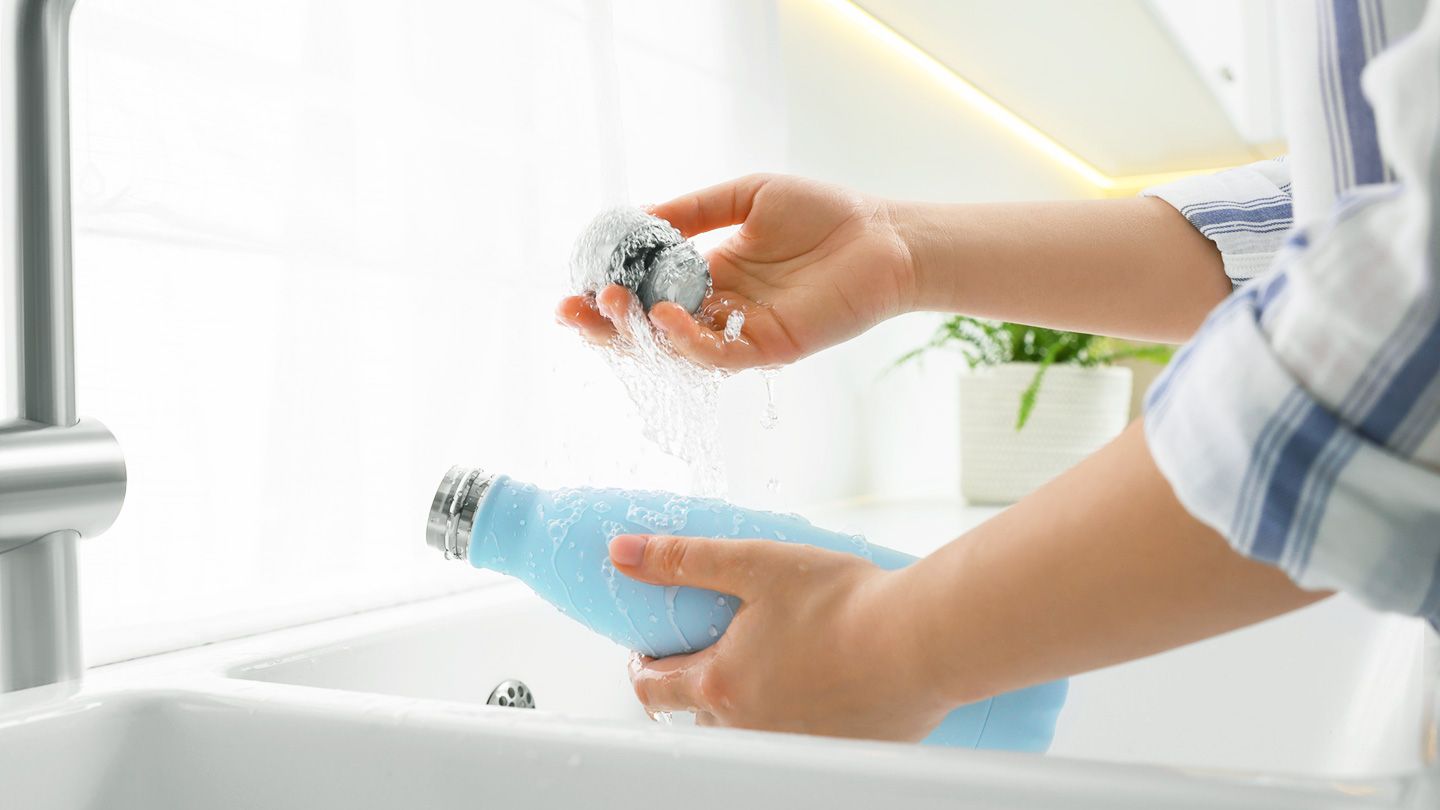
There’s not much wiggle room for washing delays, but if you do it less frequently, consider following these tips from Fukuta:
- Only fill your water bottle with clean water, rather than drinks that contain sugar.
- Avoid touching the mouthpiece with unwashed hands.
- Consider using sanitizing wipes for lids or areas near the mouthpiece.
- Rinse with hot water if soap is not immediately available.
- Keep your bottle completely dry in between washes and uses.
- Don’t leave bottles in cars in the summer or in warm climates.
- Replace bottles that are cracked, scratched, or have persistent odors.
- Maintain hand hygiene, as “a lot of germs often stay on our hands, and we tend to touch many places including mouthpieces unconsciously,” Fukuta says.
- Don’t share your water bottle with anyone else.
For times when frequent washing isn’t convenient, consider having an extra bottle or two on hand so you can rotate them between loads of dishes.
It’s also worth noting that the material used for your water bottle may impact how clean it can be. Fukuta prefers metal or glass bottles over plastic ones, as it’s possible for plastic to develop tiny cracks that can become a haven for germs. If you have a plastic one, select a BPA-free version and replace it regularly to help prevent this, she says.
While there’s not much large-scale research available to confirm the germ load on different materials, one small pilot study found less germ buildup on stainless steel bottles than those made from the common plastic polyethylene terephthalate.
Water bottle design might also influence its susceptibility to accumulate germs. Behnke’s research suggests that bottles that require frequent touching of the drinking surface for opening and closing — like straws, spout lids, and nozzles — had the potential to lead to more recontamination, and bottles with smaller diameter openings could make sanitizing more challenging.
To help simplify reusable water bottle shopping, Fukuta recommends versions with larger mouthpieces, detachable components, and simple lids without complex straws.
Read the full article here


