






If you’re taking a GLP-1 drug for weight loss, you’re likely eating a lot less than you used to and maybe not getting all the protein, fiber, and other nutrients you need from such a small quantity of food.
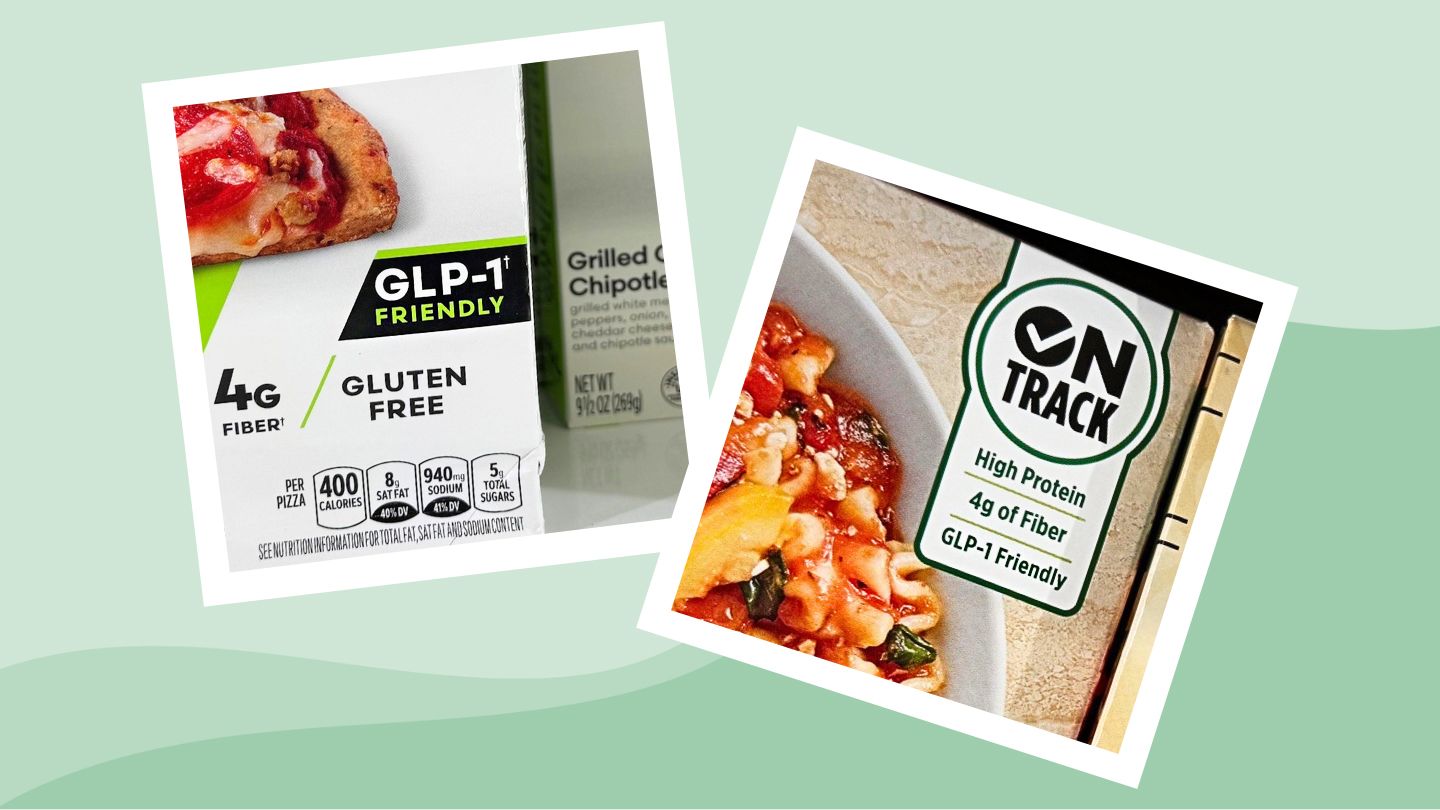
Perhaps you’ve noticed meals and snacks labeled “GLP-1 friendly” in the freezer section of your supermarket, and thought they might be a useful shortcut.
But what exactly does it mean for a frozen food to be “GLP-1 friendly” and can these products really help you meet your weight loss and nutrition goals? Experts have some thoughts.
What the ‘GLP-1 Friendly’ Label Means
At this point, “GLP-1 friendly” could mean pretty much anything. “It is a marketing term, plain and simple,” says Jacquelin Graham, RD, a registered dietitian at Banner Health in Scottsdale, Arizona.
People Taking GLP-1s Need to Get Enough Protein and Other Nutrients
For people on GLP-1s, protein is a priority to help maintain muscle mass during weight loss. From a protein standpoint, most frozen “GLP-1 friendly” foods provide enough to meet Graham’s “practical target” of 20 to 40 g per meal (with the recommended amount depending on a person’s size and body composition).
Samantha Snashall, RDN, a registered dietitian-nutritionist at The Ohio State University Wexner Medical Center in Columbus, says that the meals appear to meet her general guideline for protein: 10 g of protein per 100 calories.
Fiber is also important on a GLP-1 because it can help with constipation, a common side effect due to the digestion-slowing effects of the medication.
To combat that, Graham recommends aiming for 28 to 32 g of fiber per day. Both the Vital and On Track meals typically provide anywhere from 3 to 12 g of fiber per meal.
Meals on the low end of this range may not be providing as much fiber as would be ideal, Graham says. You should aim for about 2 g of fiber per 100 calories, says Graham, and the calorie count of these meals ranges from 200 to 410.
It’s not unusual for people on a GLP-1 to eat 200- to 300-calorie meals — it can be appropriate in certain phases, says Graham. But that’s provided the meals are nutritionally dense.
“At our clinic we recommend at least 800 to 1000 calories per day to those on a GLP-1 and smaller, frequent meals where the protein intake is distributed throughout the day — for example, 15 g for breakfast, 25 g at lunch, 30 g at dinner — to enhance absorption,” says Elisabetta Politi, RD, LDN, certified diabetes care and education specialist at the Duke Lifestyle and Weight Management Center in Durham, North Carolina.
Are ‘GLP-1 Friendly’ Frozen Foods Okay in General?
To be clear, people on a GLP-1 don’t need special “GLP-1 friendly” foods to stay healthy, says Graham. The fundamentals, she says, are the same for everyone on the medications or not: enough protein, enough fiber, and nutrient-dense foods that are not overly processed.
But “GLP-1 friendly” meals in the freezer case are highly processed foods. While they may check all the right boxes for protein, fiber, and calories, many are also high in saturated fat and sodium.
Many experts recommend limiting saturated fat intake to below 10 percent of total calories — the American Heart Association recommends 6 percent — so a person eating 1,200 calories per day would aim for about 7 g.
By that measure, a Vital Pursuit Chicken Fajita Sandwich Melt would take up the full daily budget, with 7 g of saturated fat. The same sandwich has 650 milligrams of sodium — close to 30 percent of the daily recommendation.
Read the Back of the Box Before You Buy
If a food product says “GLP-1 friendly,” the ingredient list on the back still matters more than the claims on the front.
Ingredients are listed in order from greatest to least by weight. If the first few ingredients are recognizable foods — chicken, beans, yogurt, vegetables, oats, nuts — that is generally a better sign than a long list of isolates, gums, starches, and additives.
Politi recommends a simple rule: “Don’t buy anything with more than five ingredients” or anything with ingredients you cannot pronounce, she says.
By that measure, these GLP-1 meals, as with most frozen convenience foods, wouldn’t make the cut. For example, the labeling on the Vital Pursuit Chicken and Spinach Garlic Alfredo highlights only four categories — sauce, cooked pasta, grilled chicken and vegetables — but each category (with the exception of veggies) has anywhere from 4 to 10 ingredients.
Simple Meals and Snacks Work Best When You’re Pressed for Time
While frozen meals may help in a pinch, less-processed meals and snacks are usually a better nutritional bet.
Politi’s suggestions for quick whole food meals if you’re on a GLP-1:
- Breakfast: 2 hard-boiled eggs, 6 ounces of Greek yogurt, or ½ cup cottage cheese; plus fruit
- Lunch: A mixed salad with chicken strips or tuna, or a bowl of bean-and-vegetable soup
- Dinner: 4 to 5 ounces of chicken, fish, or lean beef or pork with vegetables
Snashall recommends aiming for snacks that are a mix of fiber-rich carbohydrates, protein, and a bit of fat.
Examples include:
- An apple with peanut butter
- Low-fat or low-sugar yogurt with berries
- String cheese stick with an orange
- Wheat crackers with low-fat cheese
Preportioned packs with cheese, nuts, and dried fruit can work, too, says Snashall.
Meal prep can make all of this easier. Batch-cooking a protein, vegetables, and a whole grain on a day when you have more time can make it much easier to throw together meals later.
Read the full article here