






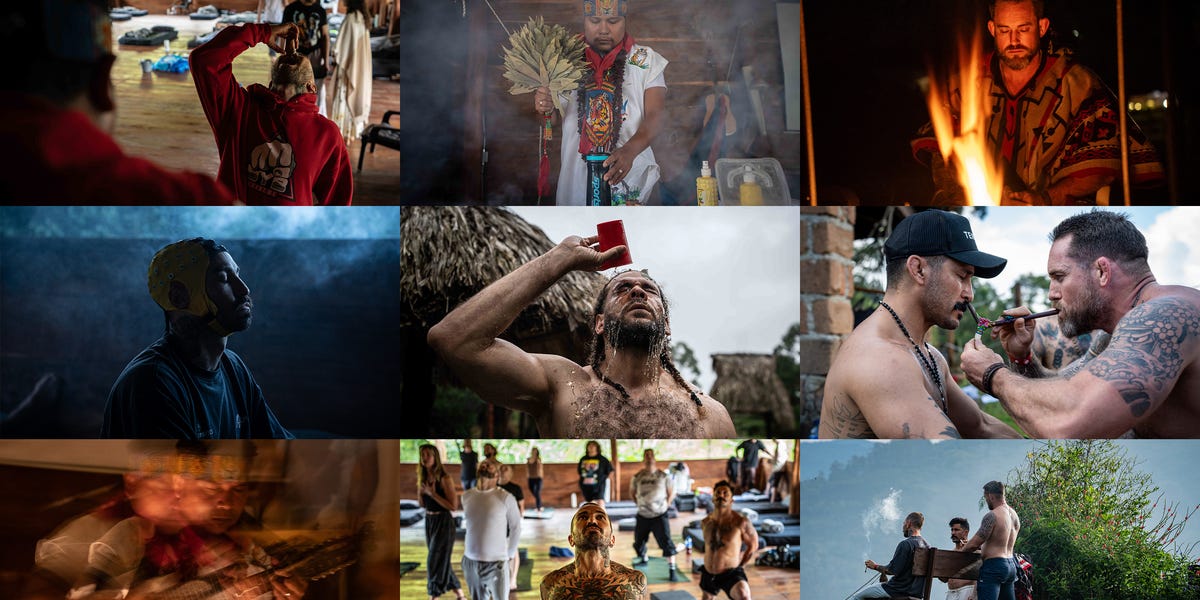
A DEEP-BLUE DARKNESS hangs over the lush forested mountains 60 minutes south of Medellín, Colombia, as the shaman, with reverent eyes and without saying a word, pours doses of ayahuasca tea into a single wooden cup. In the back of a ceremonial teakwood longhouse, known as a maloca, at a boutique lodge called LaWayra, 10 fighters—a scrum of boxers, mixed martial artists, and wrestlers—step forward one by one to drink the thick Amazonian potion, intensely bitter and instantly nauseating, like burnt coffee dregs and vinegar. LaWayra calls itself an “authentic ancestral medicine retreat” and claims that “the healing will be swift and refreshing like a breeze.”
Mattresses are laid out side by side beneath the maloca’s cathedral-like palm-thatch roof. Eucalyptus trees surround the structure, their silvery blue-green leaves rustling gently in the wind. Tropical kingbirds chirp sharply, and saffron finches sing in cheerful, melodic bursts. The occasional toad ribbits, and the weird array of noises merge into a soothing orchestration. As twilight fades to darkness, the birdsong fades with it and the nocturnal chorus takes over, the dry, percussive clicks of grasshoppers and the electric whining of cicadas swelling into a dense, hypnotic hum that reverberates around the maloca.
These nine men and one woman aren’t taking one of the world’s most intense hallucinogens just for self-discovery, the way Aaron Rodgers, Will Smith, Joe Rogan, and many adventurers and seekers across America have done. The fighters are part of a first-of-its-kind pilot study involving researchers affiliated with the University of California, Riverside, and University College London to determine the therapeutic potential of ayahuasca for traumatic brain injury (TBI) and PTSD among athletes and veterans.
Combat sports are built on the ritualized infliction of blows to the head with fists, elbows, knees, and feet. MMA fighters endure thousands of subconcussive blows to the head over their careers. They are celebrated precisely for their violence and their capacity to administer and withstand punishment. But the reckoning with what that violence leaves behind is only just beginning. Because mainstream treatments for the debilitating effects of TBI and post-concussion syndrome are limited primarily to symptom management—pain meds to soothe headaches, antianxiety and antidepression drugs to help with mood, and stimulants to address persistent fatigue—a shadow circuit has quietly formed. Fighters, military veterans, and others unserved by mainstream medicine are traveling to Latin America to take psychedelics, hoping for the kind of healing they have not found anywhere else.

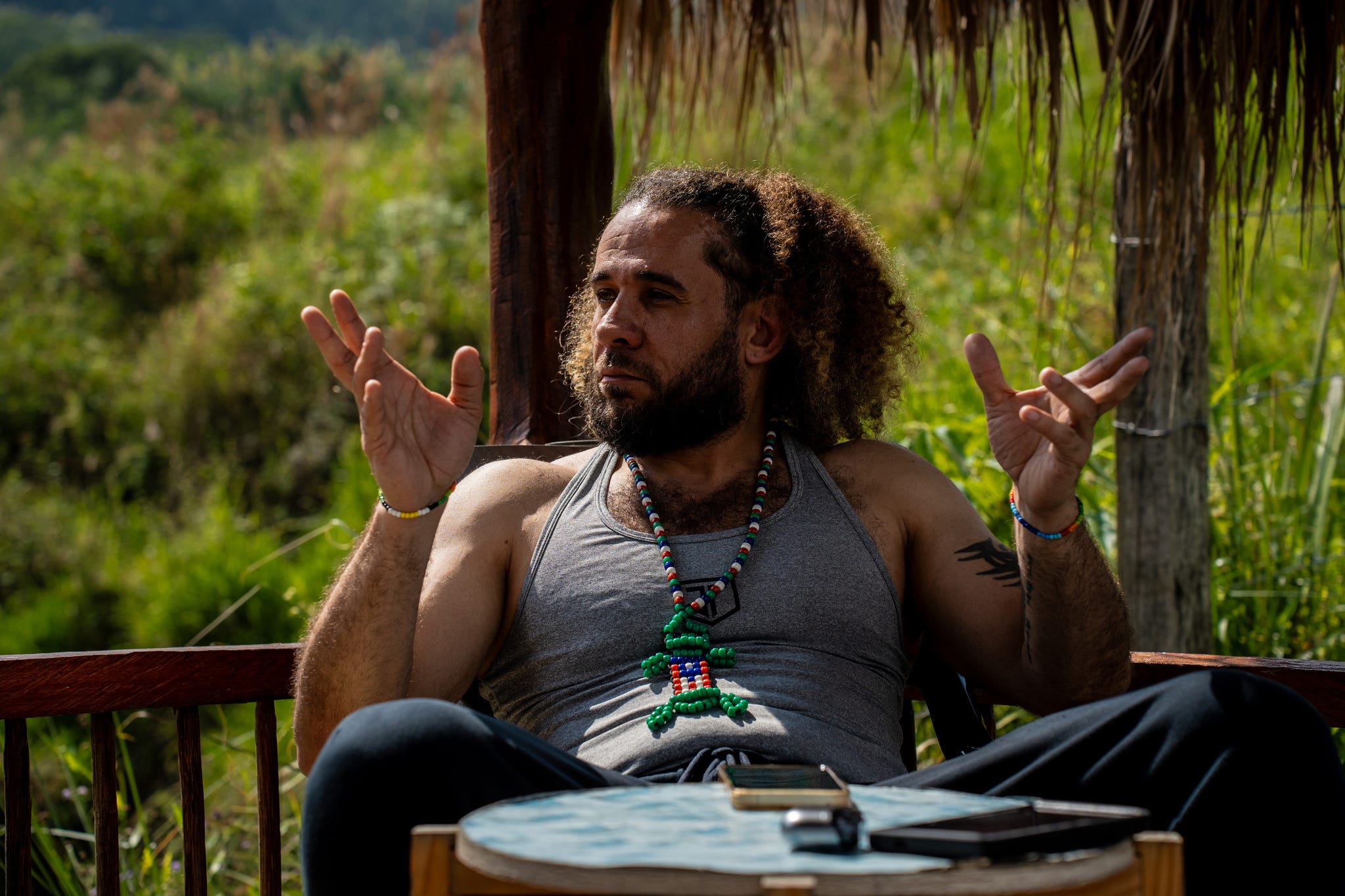
Fernando Marrero, a.k.a. the Philadelphia Bad Ass, before his first ayahuasca ritual at LaWayra in Colombia.
Ayahuasca is a brew made from the leaves of the chagropanga bush, which contain the psychedelic compound dimethyltryptamine (DMT), and the woody stems of the Banisteriopsis caapi vine. It’s been used for centuries by Indigenous people in Colombia to investigate the causes of illness, seek spiritual counsel on personal or communal problems, and facilitate communication with supernatural forces. Also known as yagé or simply la medicina, ayahuasca promises a largely unpleasant trip of about six hours, characterized by vomiting, spasms, and deep introspection. The DMT activates the body’s serotonin receptors, critical to perception and cognition, and is known to improve emotional processing and unleash long-repressed memories—often in vivid visions.
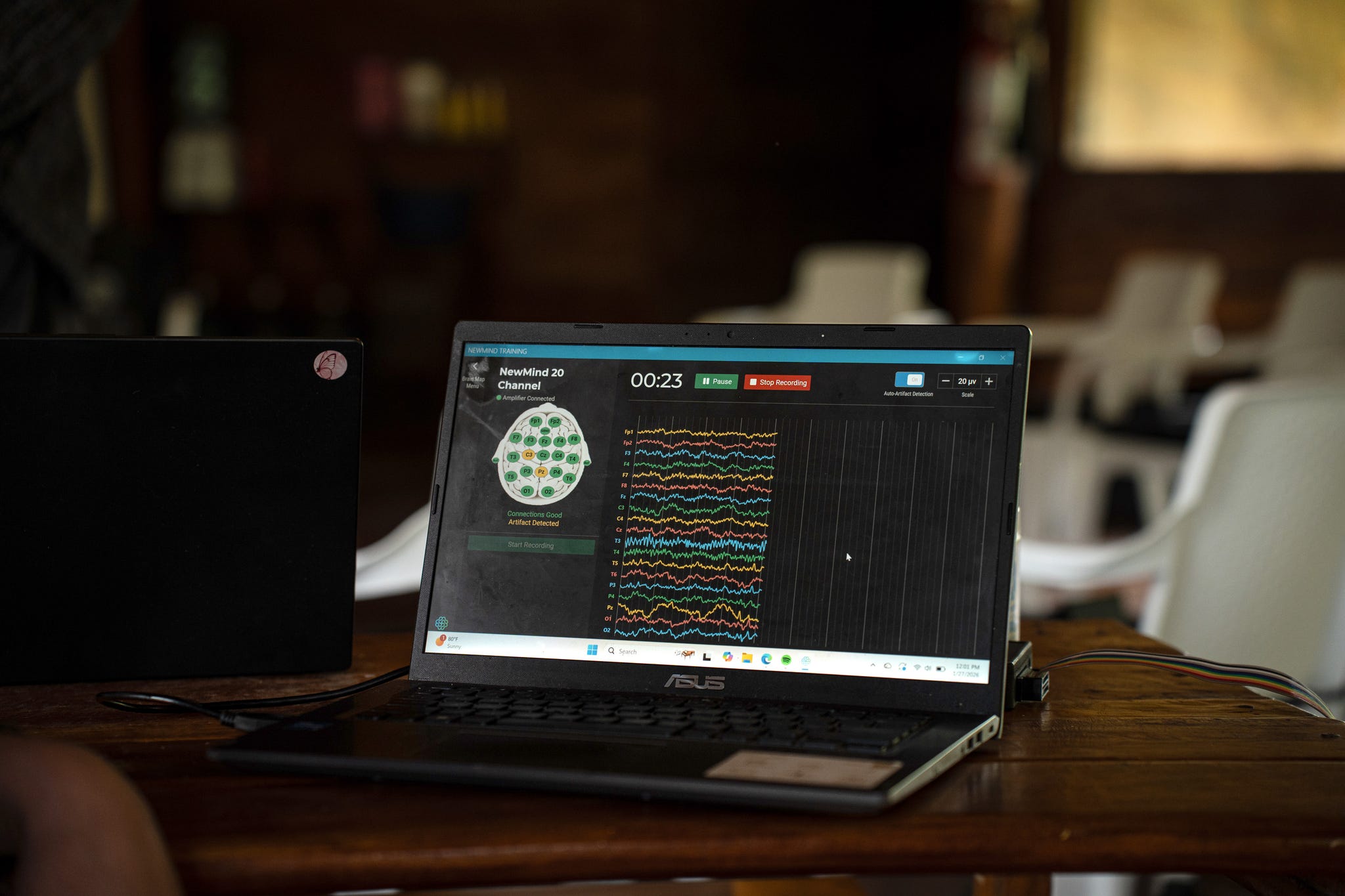
This group of fighters and researchers is hoping it can do even more. The scientists who designed the study believe several ayahuasca sessions can trigger structural changes in damaged brains and help heal them. Fernando Jojoa, the 34-year-old Indigenous Colombian shaman, mutters prayers in his white tunic with colorful embroidery depicting Amazonian river dolphins leaping and macaws gazing out upon the jungle. A brilliant beadwork jaguar pendant sits upon his chest, symbolizing not only a predator but a figure of power, knowledge, and transformation. Some of the fighters sweat and twitch as they await their dose. Others stand unmoving and serious, their game faces locked in, bowing when they receive the cup. Four look goofy and completely out of place. They are wearing tight fabric caps on their heads, with electrodes wired to an electroencephalogram (EEG) machine that will monitor their brain activity. This data, along with brain scans of all the participants taken before, during, and after the ayahuasca ceremonies, will help a team of scientists track how the psychedelic affects the brain. Three of the scientists are here with us, along with Ian McCall and Nige Netzband, two of the cofounders of Athletes Journey Home, the nonprofit that helped organize the retreat. The subsidized cost is $495 for each fighter, which includes four ayahuasca ceremonies over eight days.
One by one the fighters sip their doses. Former MMA champion Fernando Marrero—a 44-year-old middleweight known as the Philadelphia Bad Ass—goes last. In 2011, in his first professional MMA fight, Marrero was caught in a “crucifix” submission and suffered a bruising loss. He felt ready to get back into the octagon but says a doctor found signs of an impact concussion, and scans later showed evidence of traumatic brain injury, including cerebellar atrophy, a type of injury that can affect coordination, balance, and motor control. He would not be licensed to compete again for almost three years. After he finally passed his cognitive tests in 2014, he returned to the cage but absorbed a barrage of unanswered punches to the head and lost by knockout. Still, Marrero wanted to fight, and he then rattled off a 10-fight winning streak in the Gladiator Challenge. But brain fog and hypervigilance, two symptoms of TBI, stayed with him and were exacerbated by a car accident last year. “I was on edge, walking around on edge with a chip on my shoulder,” he tells me. Regular migraines and tinnitus scrambled his thoughts. “I would have something in my mind and then be like, ‘Why did it just leave my brain like that?’ ”
Marrero knocks back his cup with a grimace and crumples to the ground on all fours. His shoulders tense, his body convulses, and the hum of the jungle is punctured by a deep heave rising from his chest. Vomit strikes his red plastic bucket with a wet thud that reverberates through the maloca. His journey has begun.
PSYCHEDELICS REMAIN LARGELY illegal in the United States, but on April 18, 2026, President Donald Trump signed an executive order to speed up research and expand access to psychedelic treatments for serious mental illness, especially among veterans. “Today’s order will ensure that people suffering from debilitating symptoms might finally have a chance to reclaim their lives,” Trump said in the Oval Office. Podcaster and psychedelic superfan Joe Rogan stood behind him, along with Health Secretary Robert F. Kennedy Jr.
“I have seen so much overwhelming anecdotal evidence, but also clinical studies that attest [to the therapeutic effects of psychedelics],” Kennedy said on a recent episode of the Joe Rogan Experience podcast. Some of the fighters on the retreat were introduced to ayahuasca through the podcast, and Kennedy previously told of how one of his sons processed the death of his mother—Kennedy’s former wife Mary Richardson Kennedy, who died by suicide in 2012—in an ayahuasca ceremony. “He was completely changed, and he was very open about talking about his feelings,” Kennedy said in 2024. “The reason I really know it changed him is that he started taking out the garbage and doing the dishes.”
Soon after the order was signed, the FDA said it was fast-tracking the reviews of three therapy options (psilocybin for treatment-resistant depression, psilocybin for major depressive disorder, and methylone, structurally similar to MDMA, for PTSD). The stakes are high: The suicide rate among veterans rose in 2023, with 17 former service members on average dying by suicide per day. Looking at the general population, people suffering from TBI in America are nearly three times more likely to kill themselves than people without it.

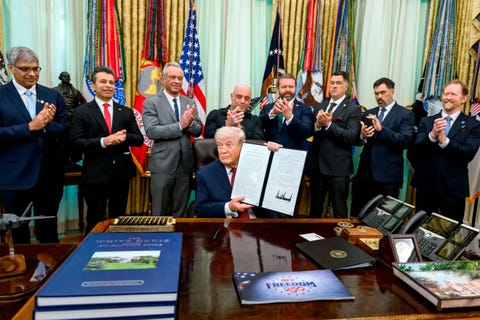
President Donald Trump, flanked by Robert F. Kennedy Jr. and Joe Rogan, signing an executive order on April 18, 2026, to speed up psychedelic research.
“In terms of long-term recovery of major [brain] functions, there’s a need for effective treatments [for TBI],” says Matthew Johnson, PhD, an associate professor of psychiatry and behavioral sciences at Johns Hopkins University. But the evidence for ayahuasca and DMT in treating TBI remains largely absent in clinical research. DMT is a DEA Schedule I drug, meaning it has no currently accepted medical use and a high potential for abuse. However, researchers at Imperial College London recently published a study of 34 people who had lived with major depressive disorder for years and had tried conventional treatments without success. They found that a single dose of DMT (administered via IV infusion) immediately reduced depression symptoms, with improvements lasting up to three months. Treating depression is different from treating TBI, but this kind of data indicates to researchers that DMT could have potential medical uses.
There is evidence that psychedelics shake up the brain, temporarily relaxing its often ego-dominated patterns and making us more open to new thoughts, feelings, and perspectives that might otherwise be hard to access. In April, a team of leading neuroscientists reported in Nature Medicine that psychedelics, including psilocybin and DMT, may make the brain more interconnected by reducing the usual separation between its networks. One of the networks affected is the default mode network, widely considered the biological counterpart to the psychological construct known as the ego, which governs our sense of self and the internal story we tell ourselves about who we are.
Normally, the brain operates like a company with separate departments that mostly stick to their own jobs, with the default mode network looming large. But psychedelics appear to open the doors between those departments, allowing information to flow more freely throughout the building. The researchers are still working out exactly how this happens, but psychedelics may promote a temporary state of heightened neuroplasticity—the brain’s ability to reorganize itself and form new connections. This could help explain why some people find it easier to break free from long-standing habits and ways of thinking after a psychedelic experience, potentially leading them to think about themselves in novel ways. In short, the ego is given an enforced break—but thankfully, it isn’t permanently benched, since it does often come in very handy. Doctors are still studying how much of this translates into lasting changes or significant healing.
Johnson notes that TBI is strongly linked to a number of disorders that show better evidence of responding well to psychedelics. For instance, 30 special operations veterans with mild TBI who took a psychedelic called ibogaine at a clinic in Mexico immediately saw a significant reduction in symptoms of depression, anxiety, and PTSD, according to a 2024 Stanford study. After a month, some measures of their mental functioning had improved even further. A subsequent paper in iScience showed that a month after combat veterans with TBI received a single ibogaine treatment, their predicted brain age had decreased by more than a year. While ibogaine and ayahuasca are different, the mechanism for healing could be similar, says Johnson: The neuroplastic changes that come from tripping could theoretically “help repair tissues and neurons in the brain.” The team in Colombia are hoping the data they collect, both neurological and behavioral, will reveal evidence that ayahuasca can have a therapeutic effect on TBI.
THE FIRST DOSE:
The Journey Begins
WHEN THEY ARRIVE at LaWayra, the fighters look like they might be soldiers in civilian clothes. Along with the middleweight, Marrero, a.k.a. the Philadelphia Bad Ass, the troop includes Brazilian jiu-jitsu black belt Gareth Hoernel, amateur jiu-jitsu champion Clinton Foshee, and bare-knuckle boxer Matthew “Spider” Morton. Another notable participant does not want to be named due to the stigma of using psychedelics.
In the maloca prior to the first ceremony, the fighters sit in a circle and talk about what brought them here. “My father was very aggressive,” says Foshee, a 48-year-old wide-eyed Alabama native with a short-back-and-sides who works as a realtor and has never tripped on psychedelics before. He begins to cry almost as soon as he starts talking, as if he has held these stories inside from the time they happened. “My dad would come home, and I still remember to this day, he would take this certain breath, and I knew he was fixing to explode and beat me.”
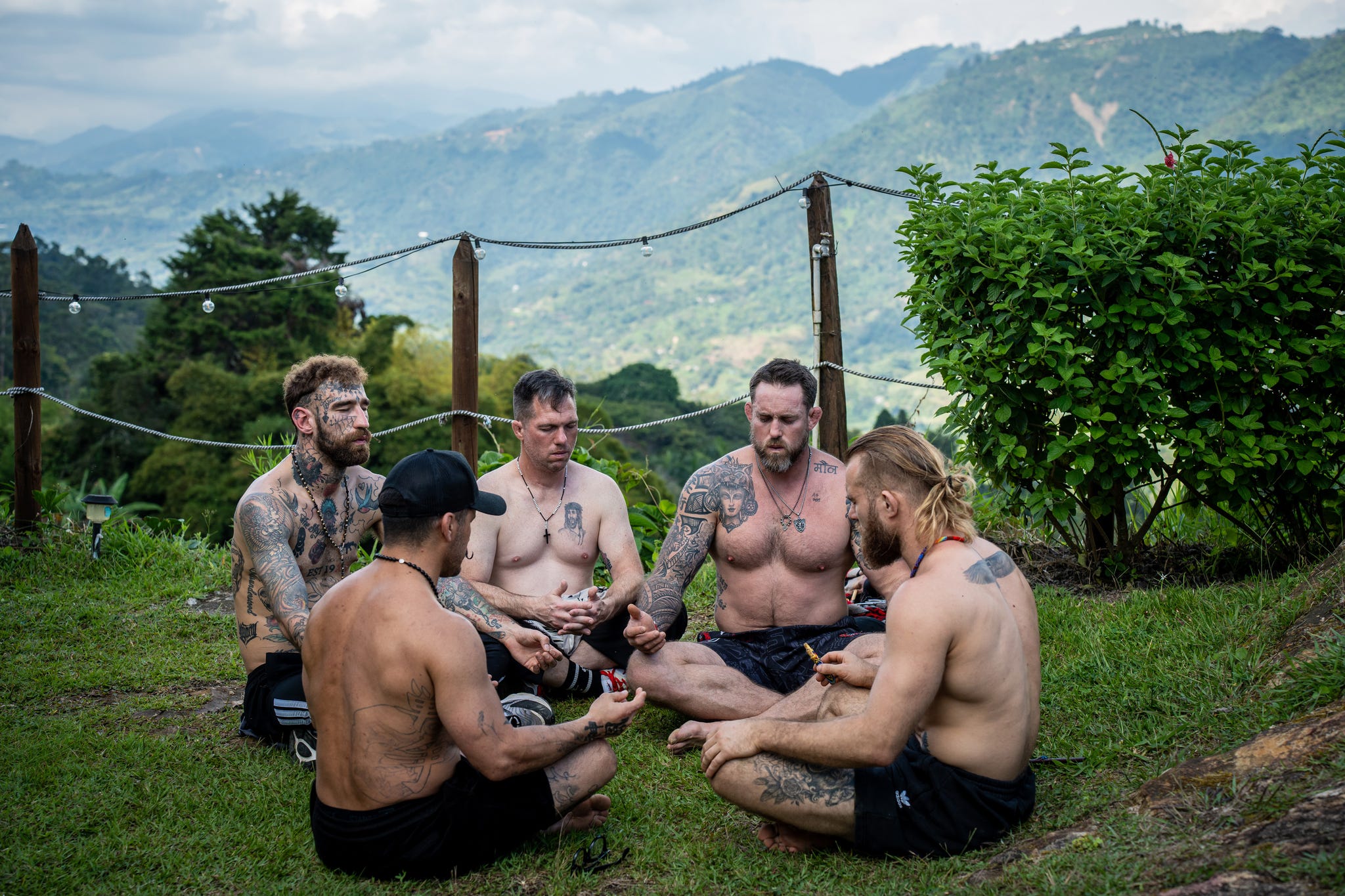
Gareth Hoernel, Clinton Foshee, Ian McCall, Jared Fekete, and Matthew Morton smoke tobacco at LaWayra. Morton received some bad news, and the others comforted him.
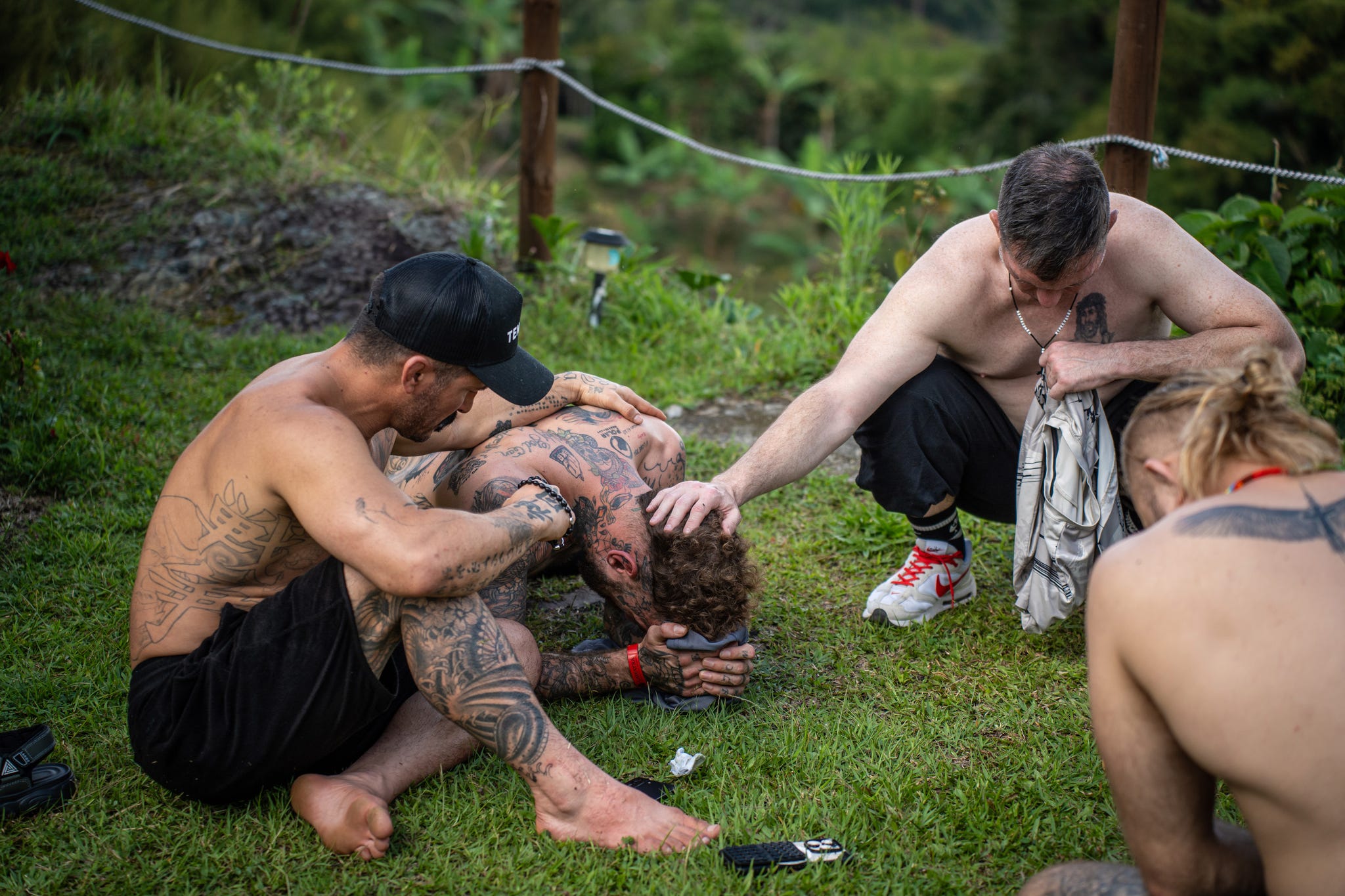
Foshee, whose ears are swollen from years of grappling, was also repeatedly sexually abused by a male relative, and much of his life became a punishing attempt to prove his masculinity—to himself and to everyone else. Like Marrero, it was a car accident last year that delivered the knockout blow. “I had my kids in the car, and when I swerved, I hit my head off the glass,” he recalls. “I’ve been hit 1,000 times harder by fighters, but that was the one that put me over the edge.” A doctor diagnosed him with a TBI, but they could not stop his spiral as his memory frayed and his business collapsed. He would black out during the day. “There were days I was waking up and I didn’t know where I was,” he says. “I literally lost all my money. I was donating plasma just to be able to live. I lost my vehicle; I was riding the bus.” He was prescribed antidepressants, anti-anxiety medication, and sleeping pills. They stabilized him, but looking back, they were “more of a numbing tool than actual healing.”
Desperate for help in April of last year, Foshee reached out to Athletes Journey Home. Its cofounder Ian McCall recommended a protocol of microdosing mushrooms, taking vitamins and supplements, and spending time in a hyperbaric oxygen chamber. “I started seeing noticeable improvements in my cognitive state,” Foshee recalls, though he “still needed meds.” Prior to the retreat, he was required to stop taking the pharmaceuticals, as they react badly with ayahuasca, and he says he was agonized by the withdrawal symptoms. “As men, we’re taught that we’re not supposed to have feelings and that we’re supposed to fight through it,” he tells me as tears well up. Foshee came to the retreat not only to address his brain damage, his childhood trauma, and the stillbirth of his daughter 23 years ago, but for his five children. “I don’t want my kids to grow up and be 48 years old, like me here, having to unearth and get rid of shit that I did to them,” he tells me, his voice cracking. “I want to be a light to them.”
THAT THIS KIND of research and treatment is possible is due to the efforts of former UFC fighter McCall and psychopharmacologist Netzband, a keen UFC fan and kickboxer. Both men are at LaWayra and partake in a lower-dose version of the ceremonies. With two others, McCall and Netzband founded Athletes Journey Home in 2023 to provide treatment and recovery to current and former combat athletes. They hope the data on psychedelics being gathered at their retreats will revolutionize how the fight world, and perhaps medicine more broadly, addresses the hidden wounds of athletes enduring TBI.
“I don’t ever want to see [combat] sports stop,” says McCall, who was considered one of the best 125-pound MMA fighters in the world in 2015. Now 42, he twizzles his handlebar mustache with a finger permanently bent from a fight injury as we talk prior to the ceremony. “I want to see it progress and for people to have wild fights and fuck each other up. But I also want to help fighters to find their version of healing and salvation.”

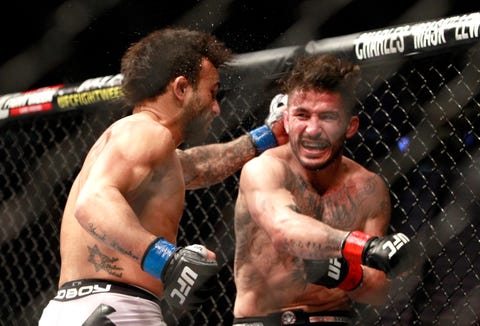
lan McCall (right) and John Lineker battle in a flyweight bout during UFC 183 at the MGM Grand Garden Arena on January 31, 2015, in Las Vegas.
McCall started fighting young. He began practicing kung fu at 4 and was a prodigy, rising to the level of black belt by the time he was 12. His chaotic teenage years were tinged by drug use and his inglorious role in a “white-kids-who-want-to-fight gang” in Orange County, California, he says. The 5’5″ bantamweight won his first six professional MMA fights, but following a win in 2010, he overdosed on GHB, oxycodone, and Xanax. His heart and breathing stopped before he was given three epinephrine shots to the heart. “I was addicted to drugs,” he says. “I thought I was a rock star.” He returned to the cage three months later and went on a three-fight winning streak, becoming an MMA champion in the Tachi Palace Fights. He then had a six-fight UFC run that was derailed by his continued use of tranquilizers, cocaine, and ecstasy.
McCall believes he was suffering from symptoms of chronic traumatic encephalopathy (CTE), a progressive neurodegenerative disease often found in those who have been repeatedly hit in the head. But CTE can only be diagnosed at autopsy. He was also fighting depression, memory loss, and mood swings. “I was highly brain damaged,” he says, fidgeting in his plastic chair as his voice picks up pace and the sound of distant thunder echoes through the valley. “I was suicidal. I stuck a loaded gun in my mouth on multiple occasions. I wanted to die.” The UFC provided him with transcranial magnetic stimulation, a therapy that sends electric pulses through the brain to stimulate nerve cells in an attempt to ease depression, but “it just didn’t work,” he says. His drug use got more extreme as he sought pain relief. “When you’re snorting fentanyl and it’s not getting you high enough, that’s not a good sign.”
McCall tried DMT, and something inside him told him he needed to quit fighting if he wanted to wean himself off the cocktail of drugs that made the pain bearable. He wanted to stop feeling “like a monster” as a result of those drugs. In 2020, he traveled to Mexico to try a longer-lasting hallucinogen, ayahuasca. “I relived every fight, every sparring session I’ve ever had,” he recalls. “It was not fun.” But it was profoundly beneficial.
McCall began lobbying behind the scenes to put psychedelic therapy on the UFC’s radar. Partly thanks to his campaigning, the organization’s president, Dana White, suggested in 2021—the same year the UFC finally introduced a concussion protocol—that it might fund research on psychedelic therapy for brain health. Netzband reached out to McCall after reading the news, but the UFC never followed up. McCall moved on to other ventures, which now include a peptide company. When it became clear the UFC would not fund research, Netzband pressed McCall. “We started brainstorming,” recalls Netzband, the coauthor of a series of papers on ayahuasca’s effects. “I was like, ‘Dude, we’ve got the team, we’ve got the scientists. If you want to roll this out, we can do this.’ ” McCall did not take much persuading.
“This is frontier science,” says Netzband, who has a labret piercing just below the center of his bottom lip, “but there’s some scientific basis to it.” Ayahuasca, he theorizes, may act as steroids do to promote muscle growth, but in this case promoting nerve tissue growth, and could help to “rewire the brain and allow new connections.” So far, Athletes Journey Home has raised $120,000 for research, almost all of it from Mike Vazquez, the founder of Bare Knuckle Boxing. This has funded two previous retreats, one in Portland, Oregon, where fighters took psilocybin, and one in Mexico, where fighters took ibogaine. The majority of participants had positive experiences. Word spread of the success of the retreats, and as McCall and Netzband planned the next trip, they finally had the funds to collect and examine the more detailed scientific evidence that might validate the positive results they were witnessing. Ten fighters signed up for the trip to Colombia.
IN THE HOURS before the first ceremony, the atmosphere tightens. The fighters meet with the research team for 45-minute health interviews and pre-dosing EEG scans intended to establish baseline measures of brain activity. Netzband says previous work has suggested that improvements in self-reported well-being usually happen later in the retreat, often by the third ceremony. The first sessions can be especially turbulent as people adjust to the intensity of the experience. “It’s often very uncomfortable,” he says. By the third ceremony, he adds, participants often report confronting repressed memories, anxieties, or deeply emotional experiences. “Sometimes it looks like scenes from The Exorcist—strange noises, contortions, crying, and screaming. I have learned over the years that this is a necessary purgative release.” For the fighters gathered here—desperate for treatment and hope—it’s worth the risk.
The group then calls their loved ones. Bare-knuckle boxer Morton, whose body is covered with tattoos—barbed wire adorns his forehead, spider webs stretch across his cheeks—hangs up his phone and crumples onto the grass beside the pool, sobbing. A slender cruiserweight from Carlisle, in the north of England, he has been sober from heroin and crack for almost six years. McCall puts an arm around his shoulder, and Foshee tenderly places a hand on the back of his head. Morton tells the group that he and his partner have lost their baby in a miscarriage at 12 weeks, tears streaming down the spider webs, onto his beard and into the earth. “I felt so powerless and unable to help, on the other side of the world,” he says, “to hear her heartbreak, for all our hopes together to vanish.”
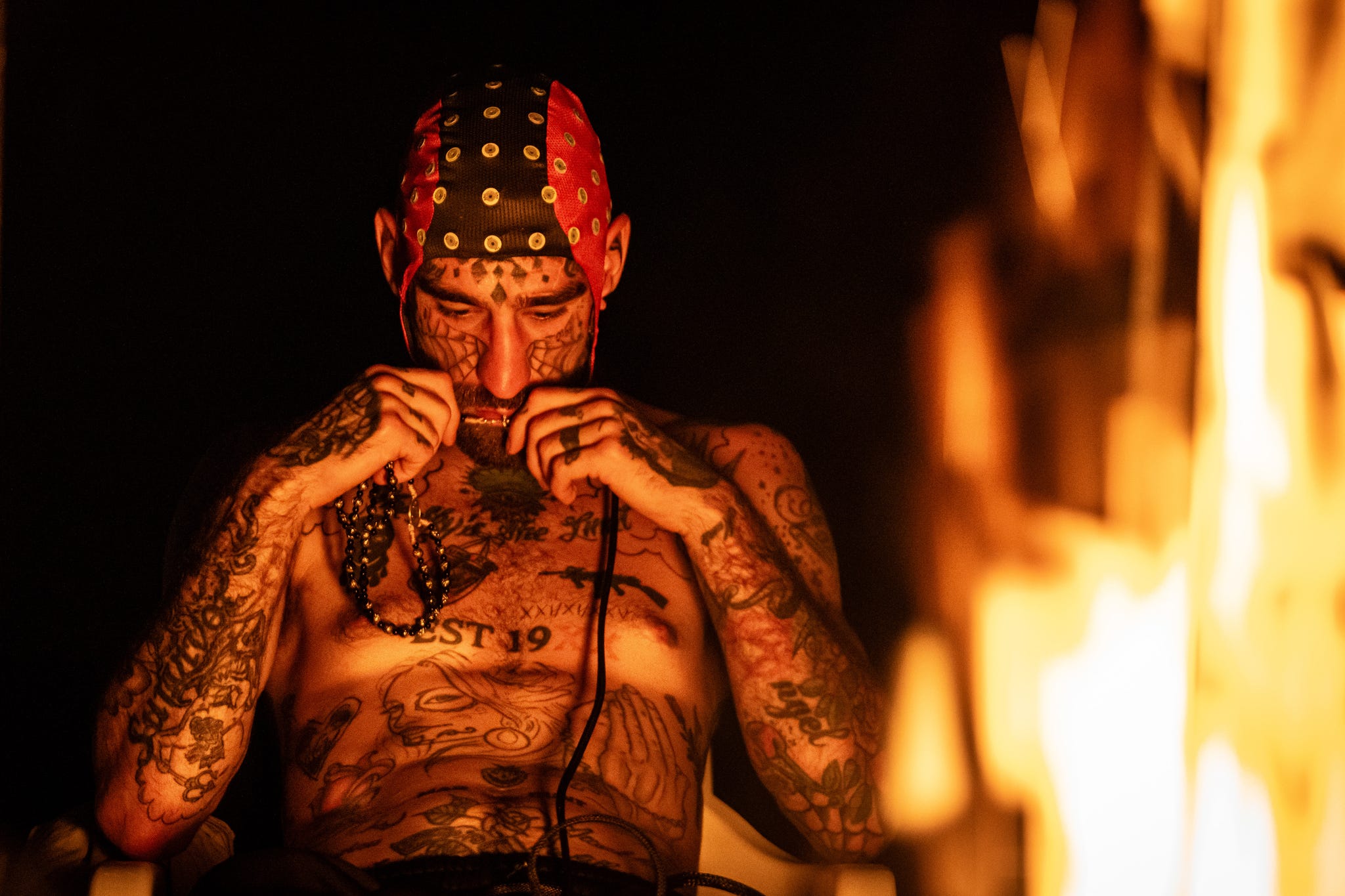
After taking ayahuasca, Morton prays in front of the campfire at LaWayra.
The group carries his grief, and their own, into the maloca, where beds have been laid out across the dark floorboards. Four of the rotating cast of fighters who have volunteered to wear EEG caps, including Morton, have gel smeared on their heads so the electrodes can better record their brain activity. Everyone else fidgets and throws anxious glances until the shaman, Jojoa, arrives with his two sons and their musical instruments—a guitar, an Andean lute, a leather bass drum, a traditional pan flute, and a recorder. Jojoa changes into his eye-catching ceremonial gown and shakes a bunch of dried leaves to bless his bottle of ayahuasca as he mutters prayers. He then instructs everyone to approach his altar and measures each serving of ayahuasca into the communal cup, providing a fruit-flavored, hard-boiled sweet to mask the horrific taste afterward.
The darkness is illuminated by candles and fireflies, which flash past as Jojoa sings ethereal songs about the ojos del cielo—the eyes of heaven—and devoting one’s heart to God. Over the six-hour ceremony, tears fall, and a few fighters vomit like Marrero, the Philadelphia Bad Ass. Talking is not permitted. They groan, writhe, and mutter to themselves deep into the night.
THE SECOND DOSE:
Emotional Overload
THE NEXT MORNING, back in the sharing circle, a few of the fighters say they had life-changing experiences. Marrero, whose history with psychedelics extended to having taken mushrooms a few times prior to the retreat, is the first to be asked by McCall to reflect on the evening.
“I just felt this overwhelming sense of empathy and compassion for each and every one of you,” says Marrero, who has a mosaic of photos of his loved ones, past and present, in front of his bed, along with one of the three liter-size bottles of coconut water he drinks per day. “It was as if the spirit of God descended upon me. I just felt the most overwhelming sense of calm.” As the final song faded, he says, he received a divine instruction: “It was God conveying to me that I don’t have to fight anymore.” He had already retired from wrestling and MMA, but he was still fighting himself.
Morton says he communed with his lost baby: “It was like a child was talking to me, going, ‘Don’t worry, Dad, I’m all right. I’m safe.’ ” The ayahuasca, he says, “helped me reconnect with myself.” Others stoically report experiencing minimal effects from the potion, and they hope the next day will bring them liberation from pain.
“This was the first time the Athletes Journey Home team ran a trial with in-ceremony EEG,” says Netzband. “We were super involved in the process, with people needing to go to the bathroom, vomiting, and having to unplug them.” Perhaps they could have foreseen the potential issues, but they may have underestimated just how intense the effect of the psychedelic would be.
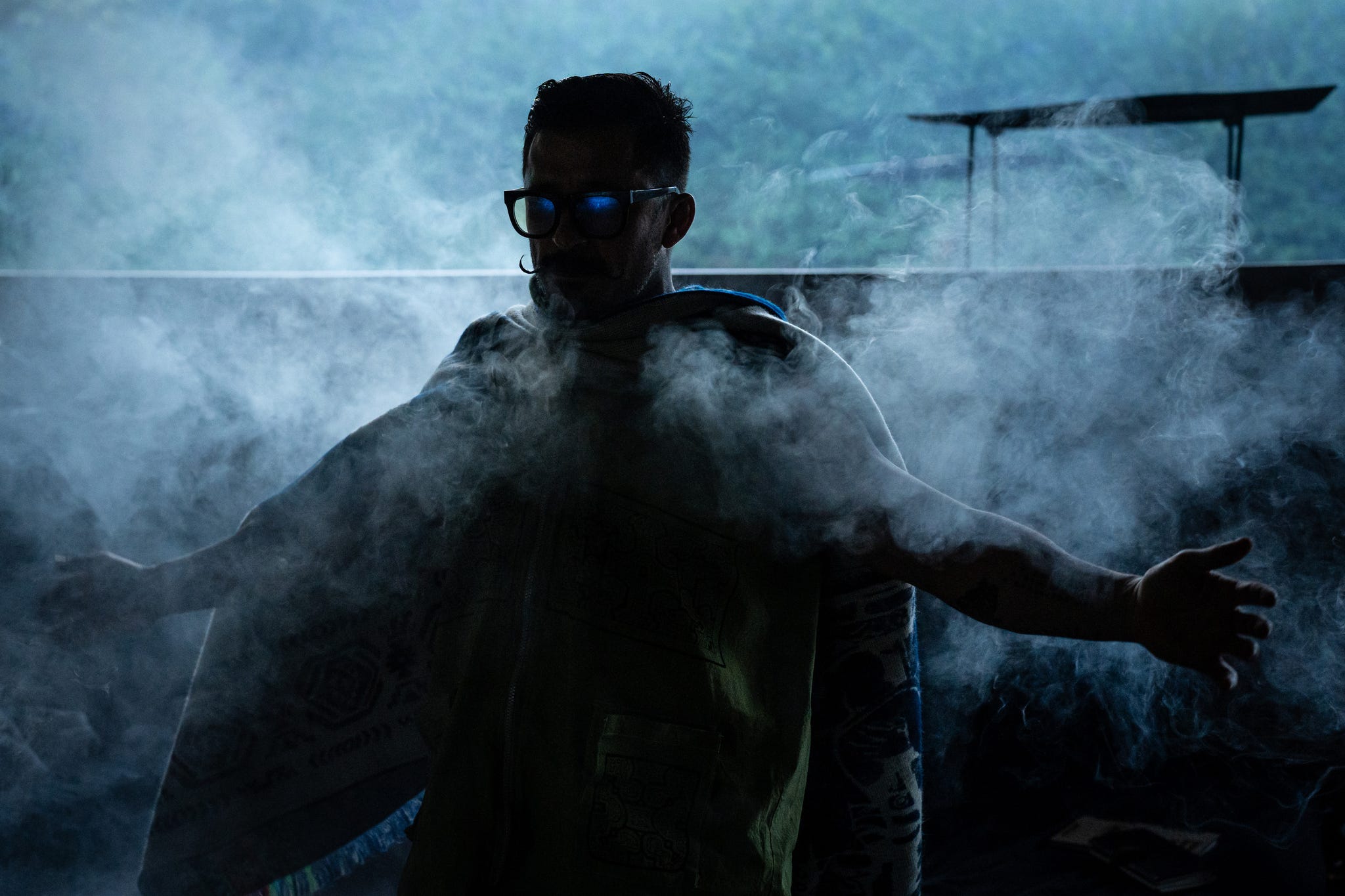
The shaman wafts incense smoke around Ian McCall to begin the ayahuasca ritual.
A rainbow appears out of the clouds in the valley immediately before the second ceremony later in the day. At the beginning of the ritual, Foshee, the jiu-jitsu champ turned realtor, freezes upon being invited to drink his cup of ayahuasca. He looks petrified and dissociated, as if he doesn’t know where he is, like he is on the verge of blacking out, a sign of TBI. Mark Irwin, a former bare-knuckle boxer who now works with McCall, tries to stir him, but he flinches and cowers. Foshee, who is wearing an EEG cap, asks Irwin whether he is on a camping trip and stares back blankly when he is told he’s in an ayahuasca ceremony. He regains a degree of his composure within 15 minutes and ambles up to the shaman to receive his cup. His eyes stare ahead despondently, as if he is looking into an abyss. His brow is intensely furrowed, and his face is tense around the mouth. His back hunches forward. He does not look like a man with a lust for life.
Soon after knocking back the ayahuasca, Foshee curls onto his side, and then the apparent catharsis comes. He soaks his pillow with tears while snoring. At one point, I watch the teardrops stream from the corners of his closed eyes, darkening the pillow beneath his face. Every so often his expression shifts—his mouth twitching faintly, the lines on his forehead fluttering—as though some unseen drama is unfolding behind his eyelids. Somehow, it seems clear that he is witnessing extraordinary visions. His silent, unconscious sobs go on for hours.
The next morning, Foshee says that he asked the spirit of ayahuasca if he could see his stillborn daughter during the trip. She appeared before him. “She was so beautiful, like a grown woman. She smiled, and I smiled, and I said, ‘Can we talk?’ And she said, ‘I’ve been waiting,’ and she held my hand.” She stepped back and looked deeply into Foshee’s eyes and said, “I forgive you, and I know that every day I live on in your heart.” He also communed with the baby’s mother, his late partner, who died from brain cancer eight years ago, and his grandmother who died around the same time. “There was so much grief, love, guilt, loss, and unresolved emotion all surfacing at once,” he says.
OUTSIDE OF THE ceremonies and the sharing circles, the retreat’s emotional intensity at times gives way to a more familiar register. The same men who have wept through visions of lost children and abused younger selves now go shirtless in the midday heat, grapple on the grass, compare testosterone scores, and discuss romantic prospects. Some also take turns blowing a type of tobacco snuff, a meditation aid known as hapé, up each other’s noses. And, of course, there’s a gym.
I lift weights with Irwin, the former bare-knuckle fighter who now serves as McCall’s right-hand man. The men on this retreat, who include two military veterans, broadly represent a new modern kind of guy who is at ease showing his vulnerabilities and not only wants to make America healthy again, but is equally convinced of its greatness. Their spiritual father, the muscular health secretary Kennedy, is directing federal health policy, and teetotaler Trump is joking about taking psychedelics himself: “Can I have some, please?” he said when he signed the order.
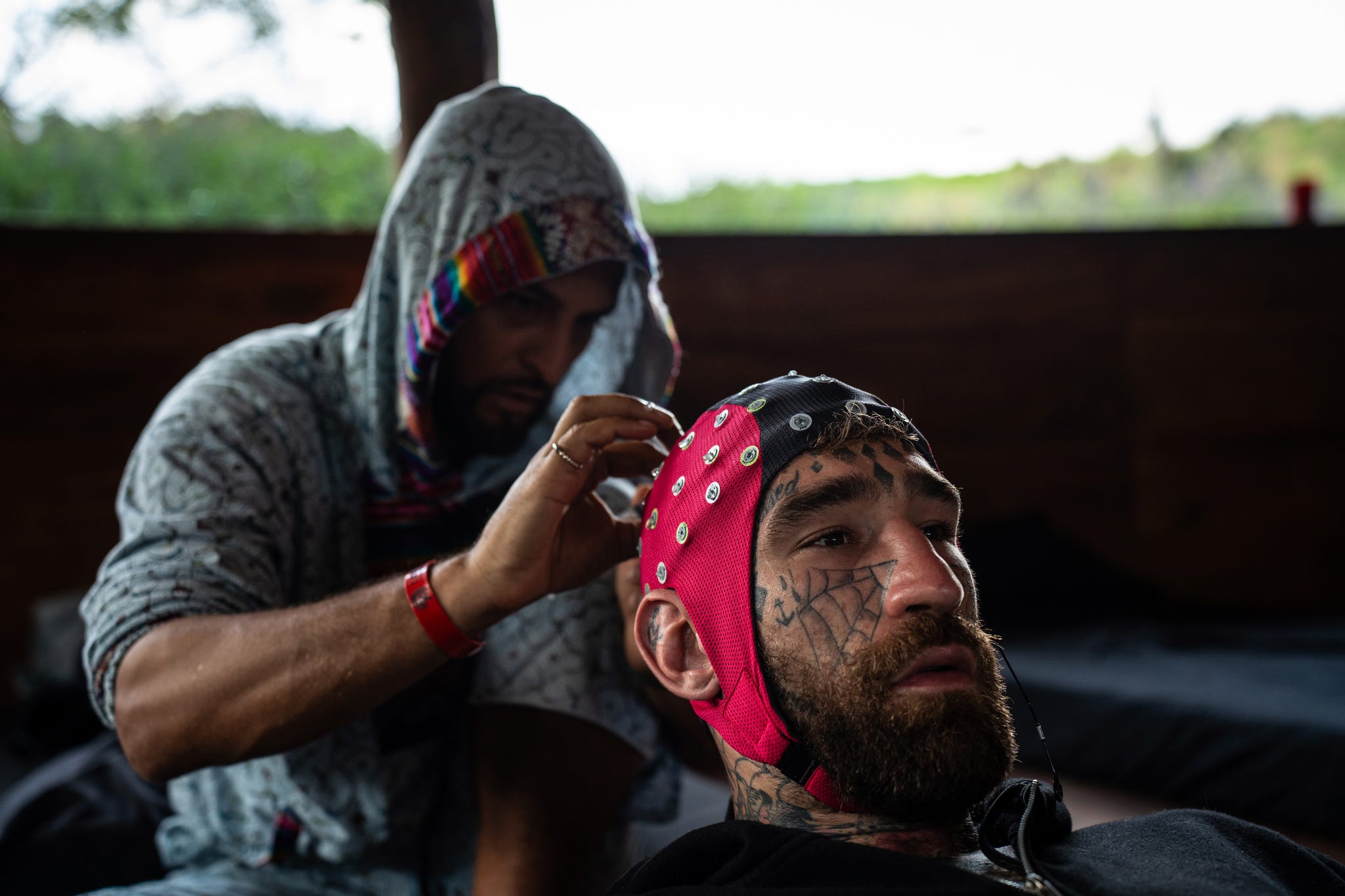
Netzband preps Morton by placing the electrodes of an electroencephalograph on his head to measure the electrical activity of his brain before he takes ayahuasca.
Irwin tells me that McCall has also worked with another advocate in the wider movement to heal sports stars’ brain injuries: Daniel Carcillo, two-time Stanley Cup winner with the Chicago Blackhawks. Carcillo says he was involved in 164 brawls during a 10-year NHL career in which he suffered seven diagnosed concussions. The broad-shouldered former enforcer tells me later over Zoom that he retired at age 30 due to post-concussion syndrome symptoms and early-onset dementia. “I had slurred speech, headaches, insomnia, balance issues, memory loss, and weight loss,” he recalls. “I saw the writing on the wall.”
Carcillo went through the medical system for four years and had all the means in the world to get the best care, he says. “I had a lot of pharmaceuticals prescribed and had some seizures coming off those.” He checked himself in at specialist centers for stroke rehabilitation, concussion, and neurological health and spent more than $500,000 on various treatments but didn’t get any better. He was “stuck in suicidality. I didn’t want to be here. I’d lost hope with all of the symptoms,” he recalls. “After a few treatments with mushrooms, I had no abnormalities with my brain scans. My cortisol levels dropped after being three times as high for a man my age.”
Carcillo decided to devote his life to helping other sports veterans access psychedelics, just like McCall. In late 2024, Carcillo opened the psilocybin service center Experience Onward in Portland, Oregon, which was the first state to legalize supervised therapy with psychedelic mushrooms. The center is the first of its kind in the U.S. to focus on TBI and post-concussion syndrome, and it is where Athletes Journey Home, in April 2025, conducted its first retreat, with eight athletes, including former UFC fighter Mac Danzig. In some ways, McCall and Athletes Journey Home are hoping to follow Carcillo’s model and eventually find a partner to open an athlete-focused psychedelic center in America, but they need changes in the law and more data like the kind they’re gathering at LaWayra. McCall describes Trump’s executive order as a godsend, desperate measures for desperate times. “This is giving us everything we’ve ever dreamed of,” he says. “It just comes down to us not fucking it up now.”
THE THIRD DOSE:
Psychedelic Pandemonium
DURING THE THIRD ceremony, the fighters go deeper into revisiting their traumas, as Netzband predicted. There is a degree of chaos and movement, absent from the first two nights. Some of the fighters look as if they’re about to spontaneously combust—fizzing with energy, glistening with sweat, and overflowing with insight. They vigorously shadowbox or pump out pushups in between bouts of praying and crying—and they make increasingly mad dashes to the bathroom. One even does a headstand. It’s psychedelic pandemonium.
With more instances of vomiting than the previous two ceremonies put together, the scene at times borders on the surreal. Marrero is speaking in tongues with a guttural edge for long periods before dancing and vigorously shaking. Some hold their vomit buckets up to the stars as an offering, while members of the shaman’s team rush to ensure nothing spills out. Multiple fighters later report seeing demons rising from one of their fellow participants. One describes a “demonic battle with my shadow self,” and it almost feels as if a cosmic battle between light and dark is taking place. By the fire, McCall is uncontrollably sobbing. Midway through the night there is a group purge, with almost everybody throwing up immediately after drinking their second cup. The facilitators burn copal, a pine-like tree resin with notes of honey and frankincense, to mask the ubiquitous, overpowering smell of vomit. For a moment, it feels like if any of the fighters completely lose control, they could be lost forever.

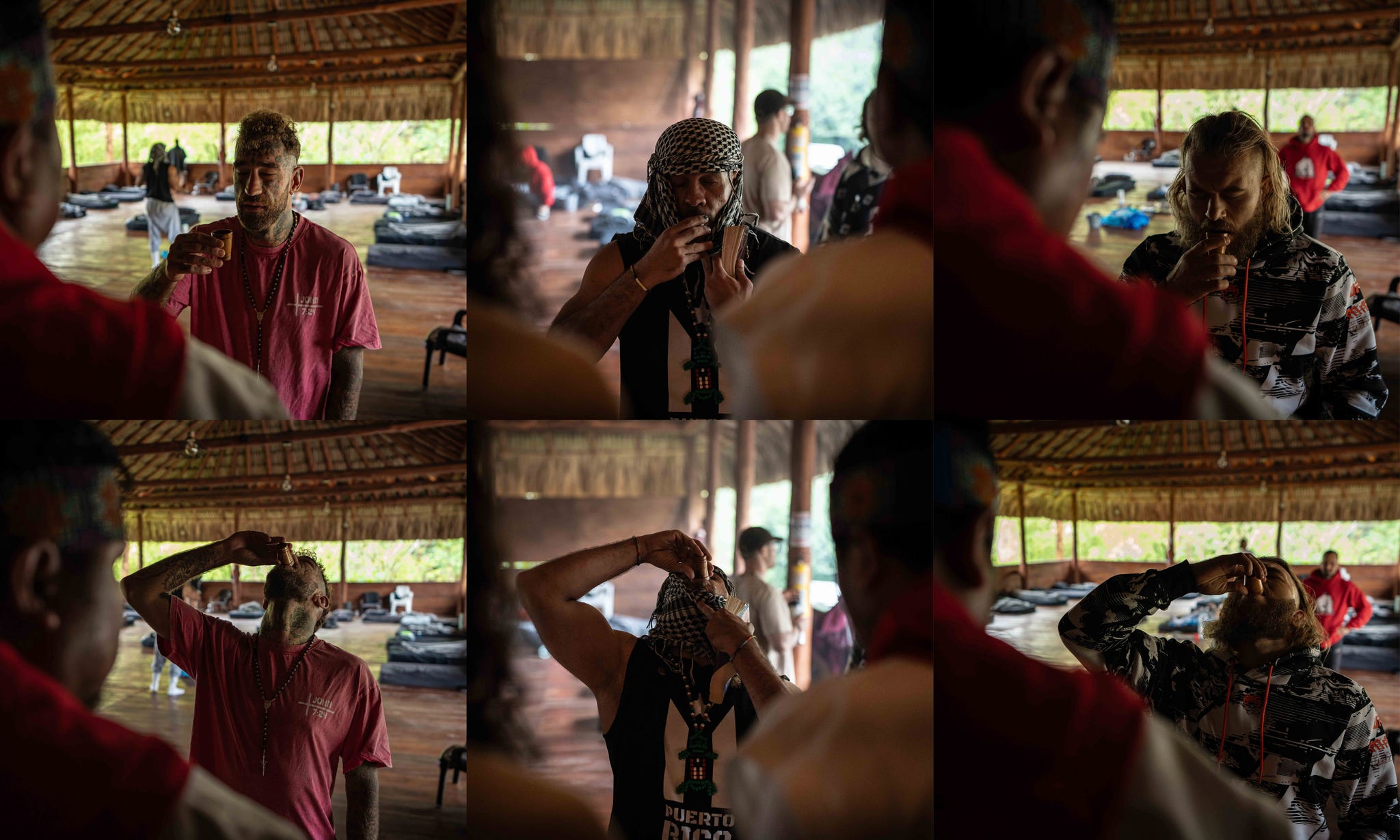
Morton (left), Marrero (middle), and Fekete taking their doses of ayahuasca.
The shaman, Jojoa, tells me in Spanish that there is a method to the madness he is unleashing—though it’s a delicate art. “The medicine can be something very beautiful, but it can also be very intense,” he says. “It is reaching many places around the world and helping many people, but it can also be harmful. We must be very careful about who is given the medicine.” In South Florida in October 2024, a participant in an ayahuasca ceremony had a psychotic break and attempted to murder the shaman, stabbing him five times with a kitchen knife, almost killing him. The case mirrored a similar tragedy in 2015 in Peru, when a 26-year-old was killed in an apparent act of self-defense by a man he had attacked with a knife. When ceremonies are improperly facilitated, ayahuasca can send people over the edge. But Jojoa is cautious with his dosing and resolutely watchful.
Almost seven hours after the first cup was drunk, the ceremony draws to a close, the fighters gather around the fire quietly, and celebration creeps in as they acknowledge each other one by one and smile. Some exchange long bear hugs imbued with sheer relief that they’ve emerged on the other side.
The morning after, in the sharing circle back in the maloca as drizzle falls from the clouds, they try to make sense of it. “There was a dark energy that seemed to pervade the room,” says the athlete who did not want to be named. “My eyes were open. It had some outlines almost like a demonic kind of beast.” But somehow he managed to accept his powerlessness over where it might rear its head. “And all of a sudden it was just gone,” he recalls. “There’s still a lot battling inside of me, but less than there has been. I think that’s slowly being eaten away and replaced with a little bit of lightness and, dare I say, almost happiness, inside.”
Multiple others acknowledge that they have long struggled to receive love, because they didn’t love themselves. “Last night was just radical self-acceptance and love, not only for everyone else, which I’ve always had, but for myself,” says Hoernel. Two nights later in the maloca, the group animatedly watches UFC 325 on a projector as featherweight champion Alexander Volkanovski defends his title.
THE FOURTH DOSE:
Finding Forgiveness
THE FINAL CEREMONY occurs the next morning. It’s less explosive—though it reaches a crescendo when each fighter is given a bucketful of water mixed with flowers and medicinal herbs to pour over their head as part of a cleansing process. McCall is drenched, wearing only star-spangled-banner boxer shorts, with a few petals matted in his hair. “The relief you feel is incredible,” he tells me later. “Ayahuasca just lets you forgive yourself. It teaches you that you’re just human. You have to forgive, you have to forget.”
Netzband says the “integration phase” that now follows—a period without tripping in which the participants focus on their goals and on supporting themselves to make positive changes in their lives—is of vital importance. Ayahuasca treatment is most effective when it is paired with high-quality coaching and therapy to help keep the participants disciplined and focused on their objectives. “Failure to do so might result in them returning to how they felt before—or even worse, having a negative effect on their mental health,” he says. Integration can include meditation, journaling, and working with a licensed psychedelic integration therapist.
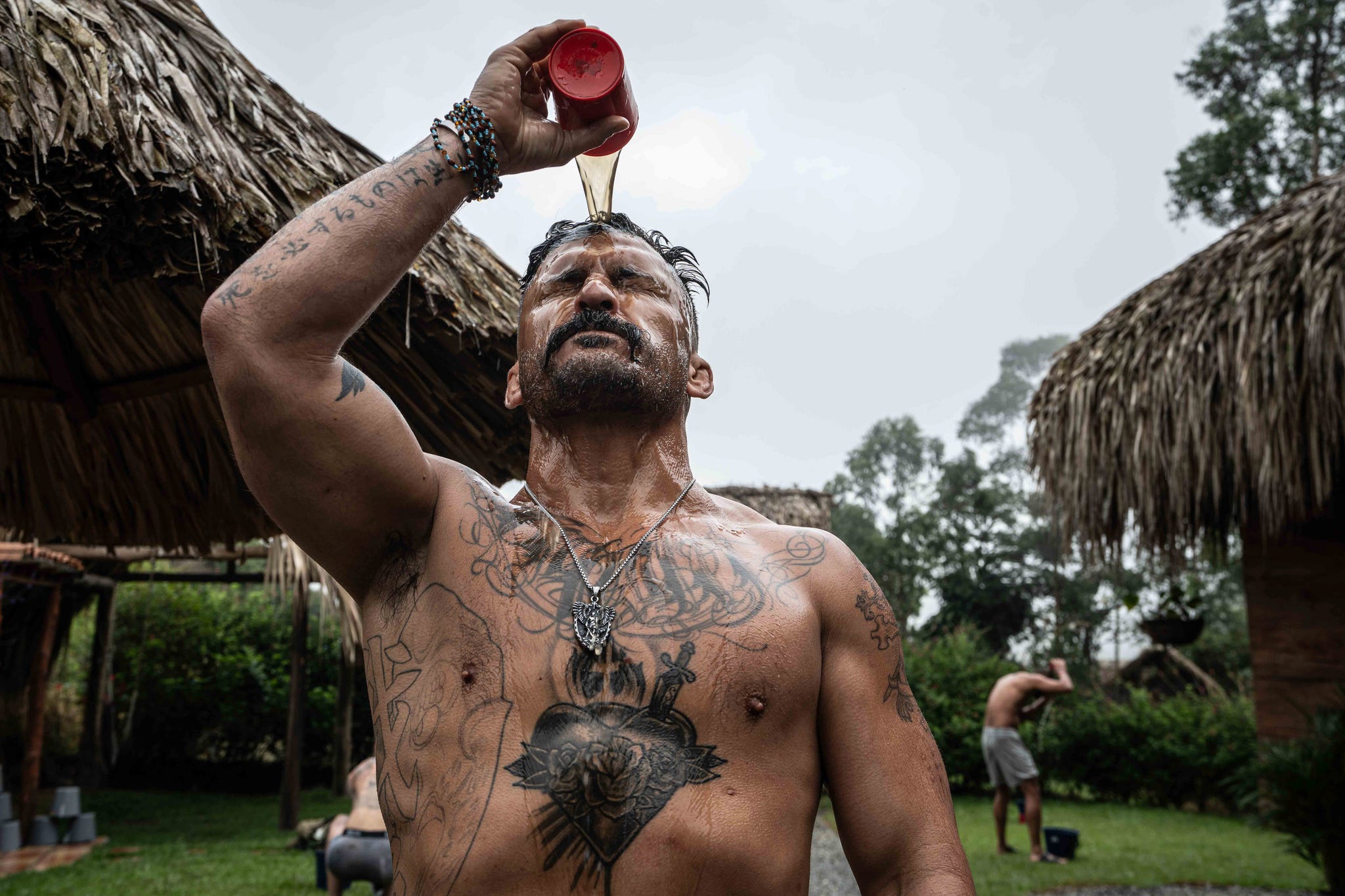
McCall concludes his ayahuasca ritual by rinsing his face with a brew made from herbs and flowers.
This process may be particularly necessary for the fighters leaving the retreat wrestling with whether or not they should continue their combat sports careers. Others are cognizant that the road to inner peace can be a bumpy one—especially outside the setting of an idyllic retreat center. Still, the attendees near-uniformly say the retreat has been life-changing and that they feel they’re on firmer ground with their mental health.
In the final sharing circle, on the morning of our departure, Marrero tells everyone, “You guys are my brothers and sisters for life.” Morton looks ahead to hard work and discipline. “You can’t pray to God for strength and then get mad when he hands you a gym membership,” he says to the group. Foshee says: “I really forgave people that did a lot of things to me.” McCall leads the fighters in a line in which they hug each other one by one, and some duos spend more than five minutes debriefing amid tears, backslaps, and promises to stay in touch. They all cram into a school bus and head back to Medellín.
FIVE MONTHS AFTER the Colombia sojourn, Netzband and his team are still analyzing the behavioral and neurological data ahead of writing up a paper that encompasses Athletes Journey Home’s three retreats. They hope to submit their findings to a journal this year, he says, and the preliminary indications are promising and suggest ayahuasca may be able to deliver effects beyond just symptom relief. “All markers point toward therapeutic potential,” Netzband says. Across the three groups, “we observed increases in extroversion, agreeableness, open-mindedness, with ‘complete shifts’ seen through boosted conscientiousness and reduced negative emotion.”
Ninety percent of the 26 participants in the three retreats showed significantly reduced depression scores within two days of the last ceremonies, according to the nonprofit’s pilot data. There were also meaningful reductions in PTSD symptoms. Perhaps more important, their QOLIBRI (quality of life after brain injury) scores, measured on a standardized psychiatric scale, shot up too, the data indicated. The questionnaire covers physical condition, cognitive functioning, emotions, ability to carry out daily activities, personal relationships, and overall life satisfaction. The team has also done other questionnaires with the guys, including a depression assessment, an anxiety inventory, and a PTSD checklist, and Netzband says they’ve seen improvement across the board. It takes around 45 minutes to answer all the questions, which were asked pre-retreat, post-retreat, and three months later, and data collection for a six-month follow-up will be happening soon.
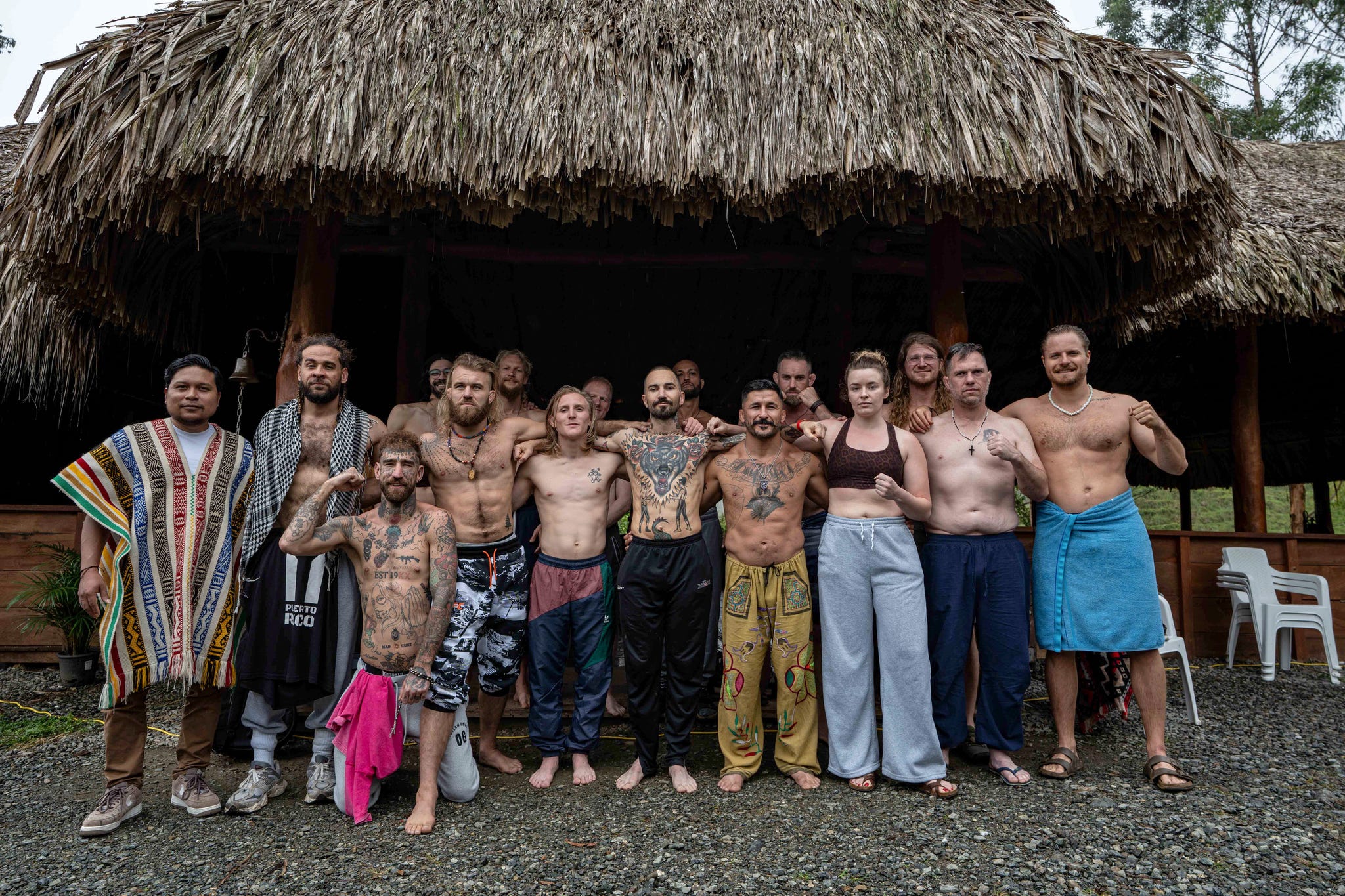
Everyone in front of the maloca after a week at the ayahuasca retreat at LaWayra.
Netzband is also scrutinizing all the data from the EEGs and is cautiously optimistic. During the first psilocybin retreat they did, the two hemispheres of the brain were firing up more often in a more synchronistic fashion, whereas before, they were seeing one side fire up more than the other, which is called frontal asymmetry, a marker of depression. They’re still working on this level of analysis from the ayahuasca data and also cross-referencing the EEG readings with blood work to see potential reductions in cortisol (indicating reduced stress levels) and neuroplasticity markers (revealing changes in the brain).
But the question is, how long will any improvements last?
Marrero says he felt as if “a weight” was lifted, and his memory is better. But the psychedelic experience was not a panacea, and three months after the retreat, he feels that some of the benefits are fading. “The longer you’re removed from that setting and the plant medicine, you kind of disconnect,” says Marrero, who is considering joining a future retreat.
Foshee says that after the retreat, he experienced a curious combination of both “a level of peace I’ve never felt before” and a sense of heaviness, as he continued to mull feelings of guilt and past traumas. He sees the retreat as the catalyst for a door opening to a new way of relating to his mind and body. “It wasn’t like a quick fix.” There have been days he has felt “emotional, raw, and kind of off,” but “instead of suppressing it like I used to, I actually face it now.” Plus, he still hasn’t taken any of the medications that he had been relying on just to function. “I can’t fully explain it, but something shifted,” he says.
The psychedelic afterglow has worn off by now for most of the fighters, and some have since taken more blows to the head. Healing is not a linear path, but they took the plunge in the grasshopper click–filled maloca—and dared to feel better. Even if it led them on journeys they could never have imagined.
This story was reported with support from the Ferriss-UC Berkeley Psychedelic Journalism Fellowship.


Mattha Busby is a journalist who covers drug policy, culture, and health.
Read the full article here


