




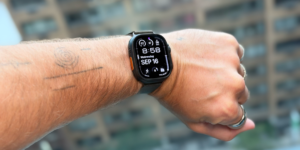



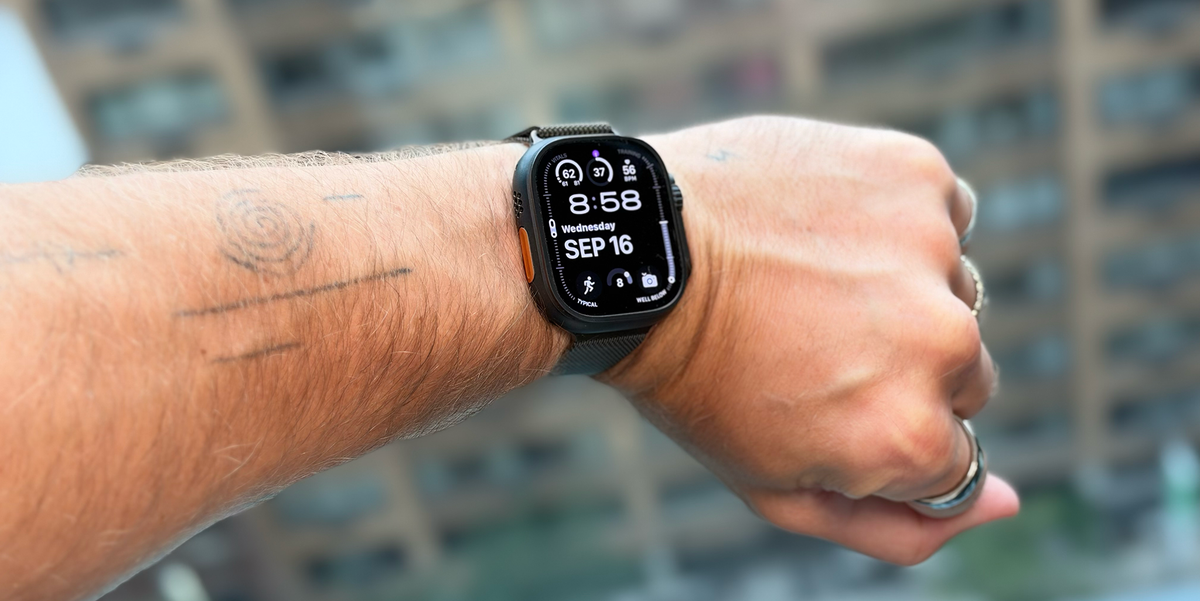
MUCH LIKE YOUR mother, the Apple Watch Ultra is checking in on your heart. The adventure-oriented smartwatch, now on its fourth iteration since being introduced in 2022, has a new sensor suite (which Apple calls its “Health Sensing System” that ramps up the device’s heart rate tracking capability.
But the Ultra 4 isn’t alone. The new Apple Watch Series 12 also sports the new system, along with the same sensors and health features as the Ultra 4. The two device lines are becoming more similar than ever in 2026; other than the form factor, battery, and some of the Ultra’s backcountry and diving capabilities (precision dual-frequency GPS and emergency SOS via satellite, for example)—these two wearables will give users a fairly uniform experience.
Given the choice, I have always tended to pick the Ultra. I love the heft of the larger device, and given all the workouts I tend to pack into my week, I treasure the extra battery power. To keep my testing focused on just one device after Apple’s hardware event, I stuck with the Ultra 4.
I tested the Ultra 4 for about a week to see just how much of a difference the bigger battery and new sensing system make. Here’s what I thought.
New Apple Watch Ultra 4 Features
THE MOST NOTABLE addition to the Apple Watch Ultra 4 is the Health Sensing System. The new design overhauled the sensor, which is on the rear of the watch and sits against the wearer’s wrist. Even though the casing is still the same 49-millimeter size as previous versions of the device and the sensor takes up the same amount of space (see below for a comparison to the Ultra 3), there’s now more surface area for device-to-skin contact for ECG readings, a new, circular optical sensing array, and larger, more efficient LEDs for heart rate sensing.

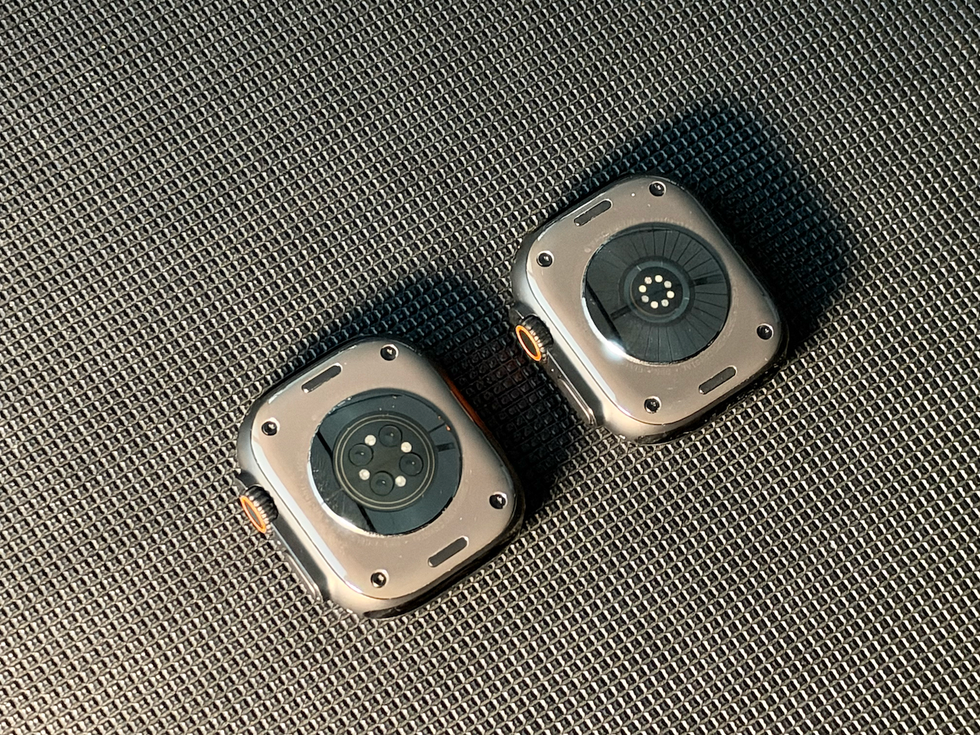
Last year’s Ultra 3 (L) compared to the new Ultra 4 (R).
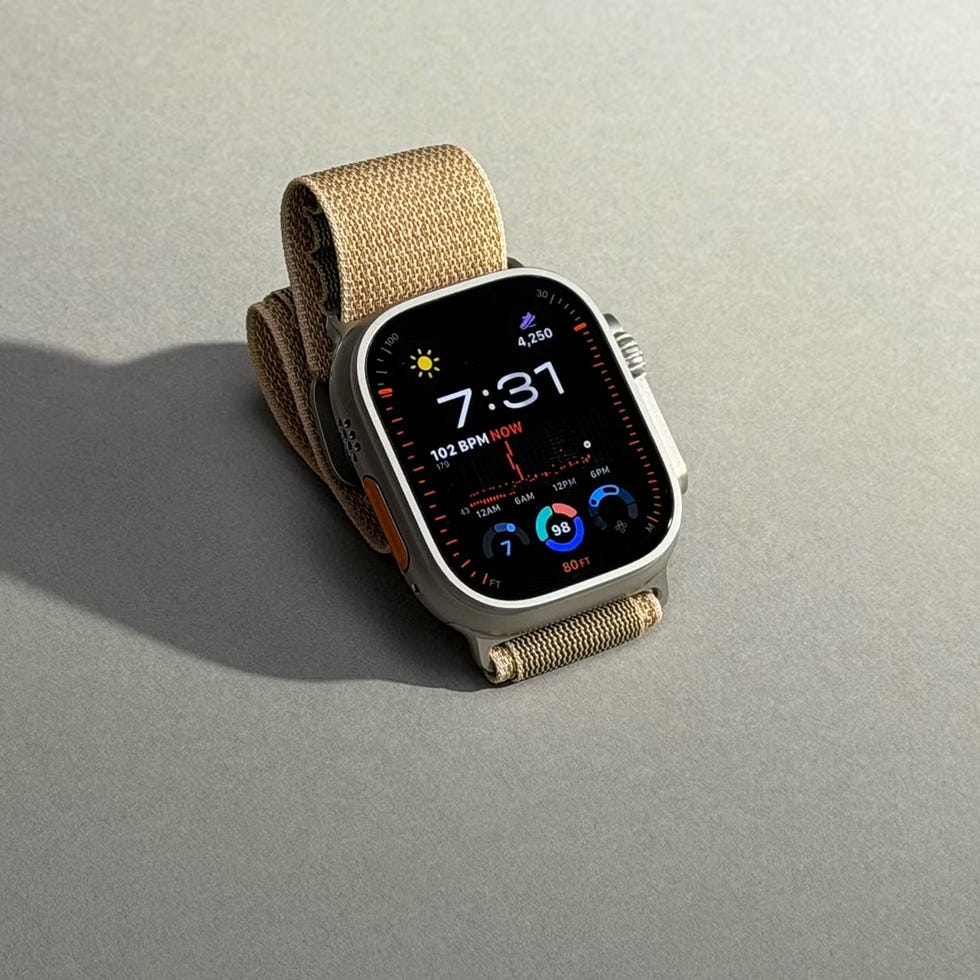
This new system vastly improves heart rate tracking over previous generations, which processed background readings every five minutes. Now, the Watch continuously provides updated heart rate data every five seconds. You can see this in action in a new heart rate complication (one of the pinned data points on a Watch face), which I enjoyed checking in on at intervals throughout the day.
This is a big deal for Apple Watch, since this stream of data will help to make its health readings even more useful and allow for more frequent heart rate variability (HRV, a measure of the variations between heartbeats) estimates, too. This is just new for Apple, though; some other devices have even shorter reporting intervals (Garmin says its devices read multiple times per second, while Whoop claims to take a reading every second).
In part thanks to the new system, Apple says that the Ultra 4 and Series 12 have the most accurate heart rate sensing in any wearable. This isn’t total bluster—the company produced a 1,000-plus subject study testing its system against competitors like the aforementioned Garmin and Whoop, along with devices from fellow tech giants Google and Samsung and recovery-focused Oura, using a Polar chest strap as a reference (the industry standard for checking wearable heart rate data). The data is compelling, but since we didn’t reproduce the test ourselves, we’ll take it with a grain of salt. When I compared my live heart rate data between my Ultra 4 and Whoop MG, which I wore on opposite wrists, the readings were consistently around two to five BPM apart.
SHOP THE APPLE WATCH ULTRA 4
Accuracy is a difficult thing to gauge with wearables, since true medical-grade readings require specialized equipment that typically never leaves a lab setting. I think about it this way: As long as I wear my device consistently, the trends I can spot over time (and potentially flag for my doctor) are what will be truly useful for my health versus the accuracy of a to-the-minute reading.

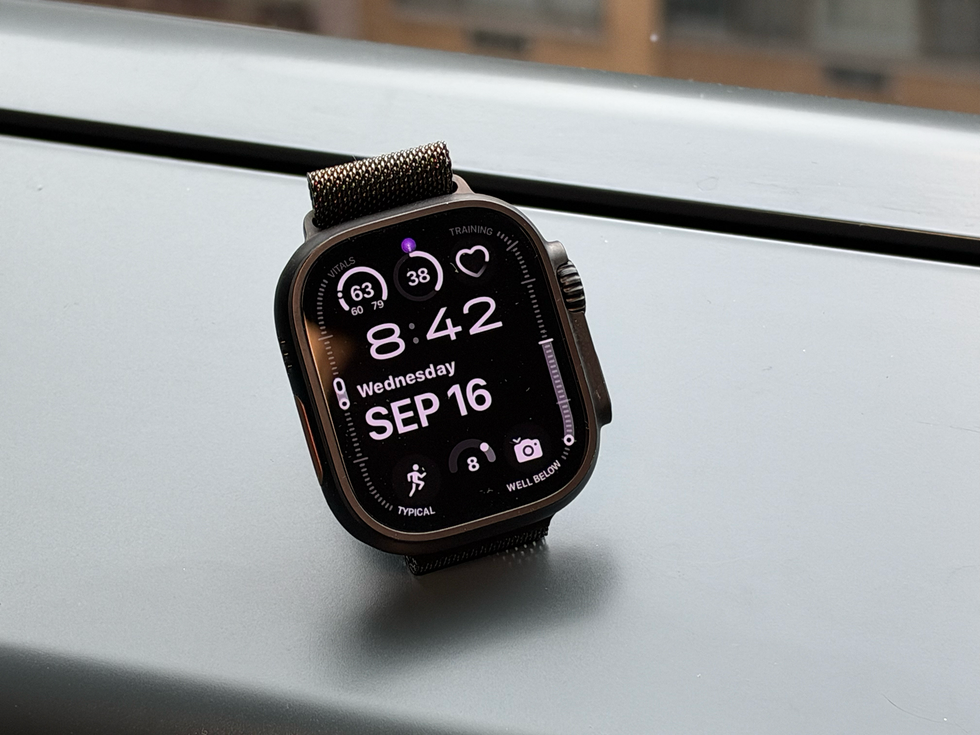
Apple Watch now also has two HRV scores, one of which can be measured every five minutes when you’re at rest. Recovery HRV, which is on the Watch, is better for daily data and is used in the Vitals app, while overall HRV is more for broad data patterns and cardiovascular health (and will be used to determine the new Health Age score, coming later this year). The higher the number, the better.

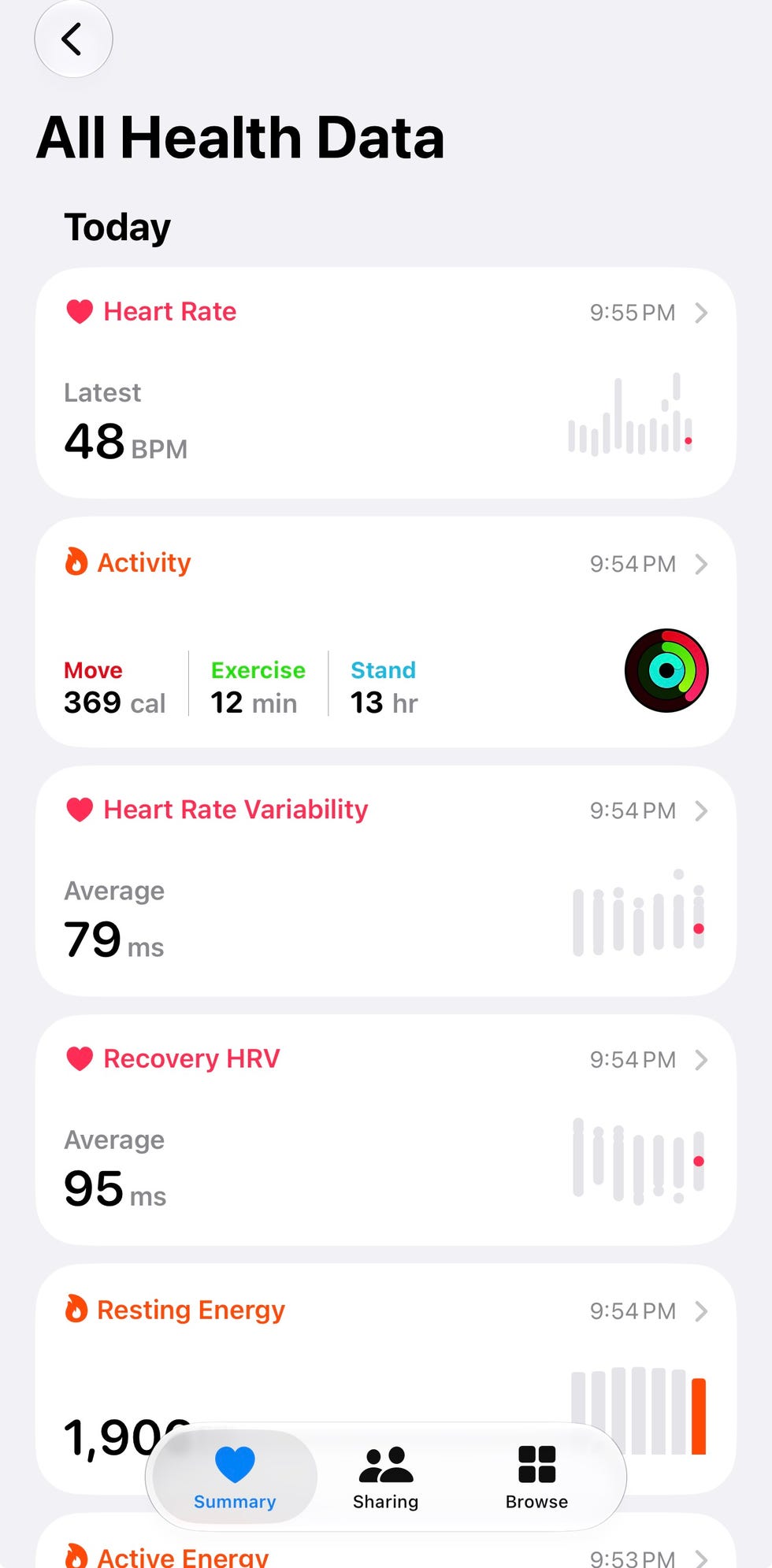
I compared my Recovery HRV to the measure calculated by my Whoop and Oura devices for the day, since both use the same RMSSD formula. Apple Watch was 95 ms, Whoop was 106 ms, and Oura was 107 ms. They’re fairly close—but I do wonder why there’s a nearly 10ms difference with the Apple Watch data. Helpfully, I can track these trends over time to determine what might be the cause.
HRV data also plays into another new feature for the Watch: Readiness. The function crunches health data in three categories—Fitness, Vitals, and Sleep Score—to produce a rating from 1 to 10 to help you gauge how prepared your body is to take on the day. It’s similar to features available from other performance-focused wearables, so it’s great to see Apple leveraging its health data in such a simple, easy-to-understand measure.
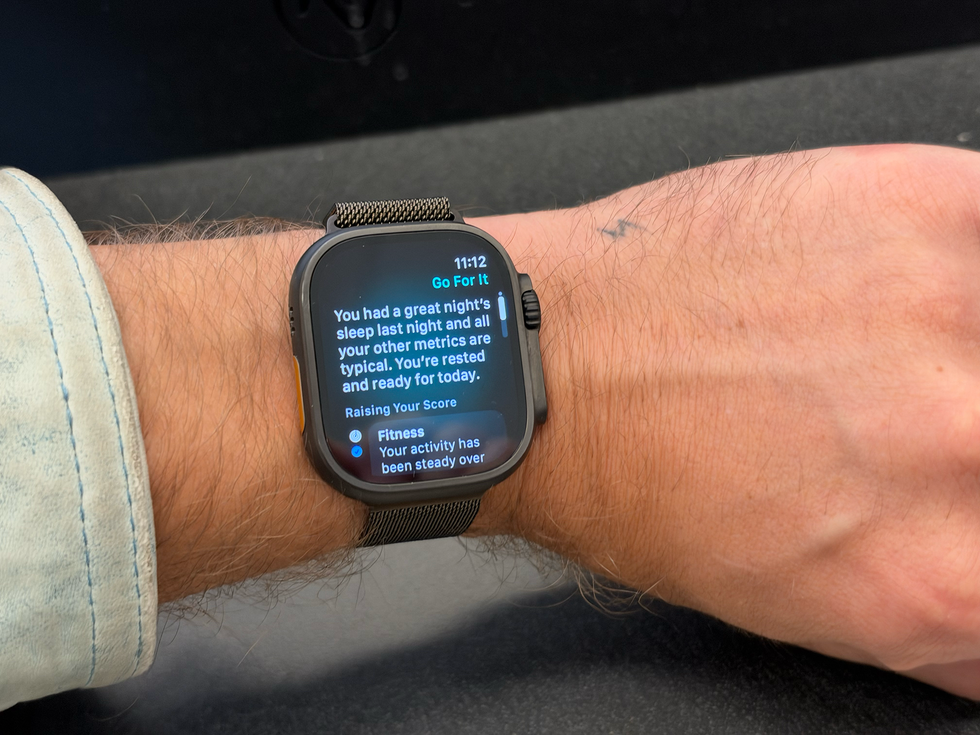
This was an 8 out of 10.
You’ll need to sleep with your device for a few consecutive nights to enable the feature, so I’ve only had the chance to receive one score at press time. I’ll follow up with a more detailed account of the Readiness functionality soon.
Other improvements to the Health app that take advantage of the Watch’s data collection—including a new longevity tab and a “Health Age” measure similar to scores from Whoop and Oura—will be available at some point later this year, according to Apple.
The key driver of the Ultra 4’s performance is its S11 chip (also in the Series 12). This processing powerhouse allows for zippier functionality, a new pedometer tool and complication—yes, Apple knows that you still love counting your steps—and enhanced Siri functionality. I used the digital assistant to set up timers more often than ever during my testing period. But there are a few other notable advanced audio functions worth highlighting that use Siri AI, too.
SHOP THE APPLE WATCH ULTRA 4
Apple is calling the features Audio Intelligence. Sound Recognition, an accessibility tool for users who are hard of hearing, notifies the wearer of common sounds. Music Recognition puts the Shazam app directly into the Watch’s Smart Stack, so you can simply raise your wrist, then use the Double Tap gesture. The tool recognized “Haunted” by Spanish Love Songs, “Jackie Down the Line” by Fontaines DC, and “Mystery” by Turnstile for me in quick succession. It’s a nifty little function, but not something I see myself using on a daily basis.
The other two Audio Intelligence features will come later in the year as well. They’re much more… interesting: Live Rewind provides a 15-second transcript of a conversation with a double-click of the Watch’s Digital Crown, while Siri Recap creates summaries of conversations you have throughout your day during periods you’ve selected to be recorded. Both features require opt-in and are controlled manually—but the first thoughts I had hearing about them were about privacy issues and how the tools might conflict with audio recording laws in some states.

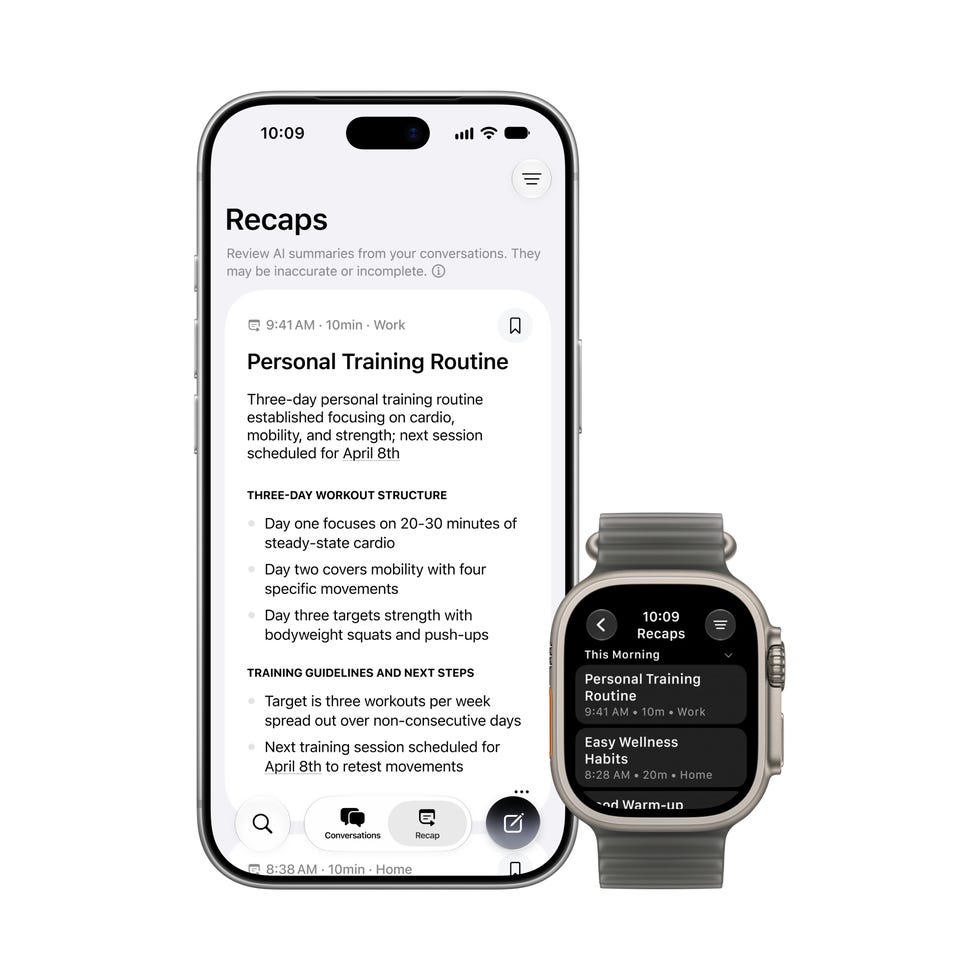
Apple says the Watch does not create or store audio recordings, all of the transcripts are “end-to-end encrypted through iCloud syncing,” and neither feature “identifies or attributes speakers” (and provided a longer resource about its privacy measures here). I can’t speculate any more, since I can’t test the tools yet. But I am very curious how they will be used and received by the general public.
The Apple Watch Ultra 4’s Battery Life
BATTERY LIFE HAS always been a pain point for Apple’s wearables, but over the last few iterations (especially since the introduction of the Ultra line), the devices have steadily improved. This year, the Ultra 4 is more capable than ever, both thanks to a larger battery and more efficiency. Apple claims the device will yield up to 50 hours of power for everyday use (and up to 84 hours in low power), with up to 18 hours of continuous workout tracking (or up to 25 and 45 hours in extended and max extended modes, respectively).
SHOP THE APPLE WATCH ULTRA 4
In practice, the Ultra 4 stood up to these claims. My battery lasted for two nights of sleep during the first charge cycle. After that, I powered up twice more—and the charging is also much improved. Apple says that in 15 minutes of charge time, the Ultra 4 can juice up to the equivalent of 18 hours of use. Before going to sleep one night, I realized the device’s battery had dipped to about 10 percent. Between the time it took to brush my teeth, get into bed, and set my alarm, I was almost three-quarters charged.
Yes, the Ultra 4 still trails its competitors in the adventure smartwatch space, which can often last for weeks between charges, not days. But I don’t care. I ran a 24-kilometer trail race in the Alps last month, and I used an Apple Watch Ultra 3. It took me almost eight hours to finish, and the device had plenty of juice left. I’m rarely going to be going any further than that without access to a charger. The Ultra 4 lasts even longer—so I think it will be able to handle my needs.
Should You Get the Apple Watch Ultra 4?
WHETHER YOU SHOULD the new Ultra 4 depends largely on what you want to do with your watch—and what you already have. If you’re considering buying an Apple Watch, you should absolutely get one of the new models rather than an older device. The improvements to the Health Sensing System for the Ultra 4 and Series 12 make them far superior to the previous generation, and you’ll need it to unlock the new features like Readiness.
Choosing between the Ultra 4 and Series 12, however, is going to be less cut and dry than in previous years. Outside of the form factor and some of the more adventure-ready capabilities, they’re largely offering the same functionality—and aside from a fairly niche user base, those features are likely not going to be a make-or-break point.
Your decision between the two should ultimately be based on battery life, form factor, and price. If you have a limited budget, the $399 Series 12 will likely be a better pick than the $799 Ultra 4. Same if you have small wrists—some wearers still can’t square with the 49 mm case. But if you’re able to shell out a little more dough and you’re not worried about wearing a big watch, the Ultra 4 and its long-lasting battery will be the best pick. Over the last few years, the Ultra is the smartwatch I continue to find myself going back to, and I don’t expect that to change anytime soon. It just works.


Brett Williams, NASM-CPT, PES, a senior editor at Men’s Health, is a certified trainer and former pro football player and tech reporter. You can find his work elsewhere at Mashable, Thrillist, and other outlets.
Read the full article here


